Some links in my articles are affiliate links. I may earn a commission when you buy through them.
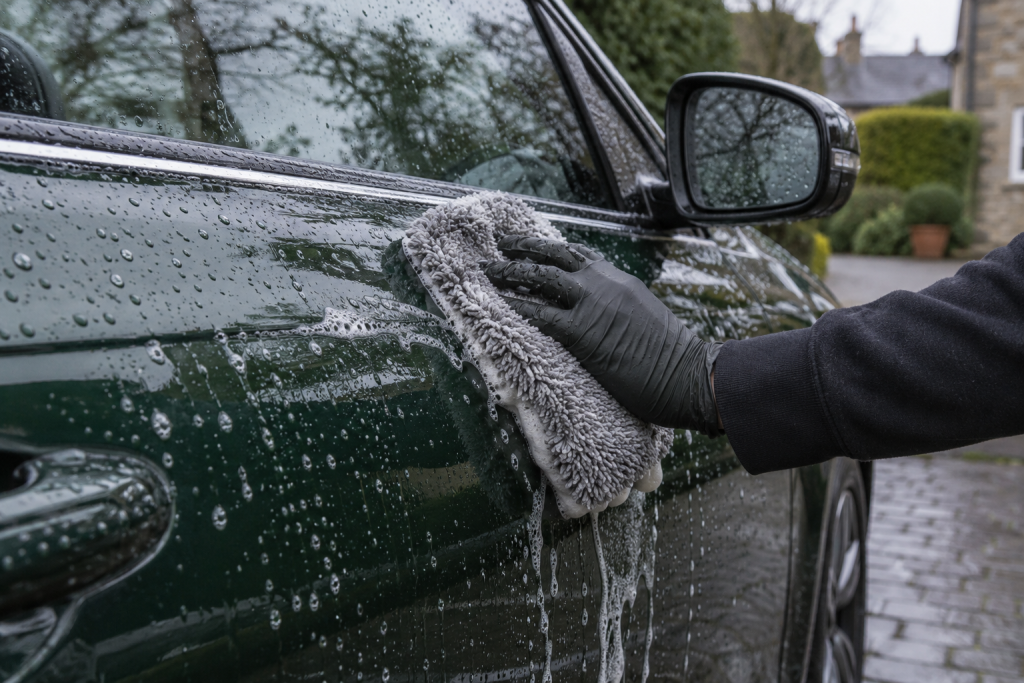
A ceramic coating should help make washing more manageable, but it doesn’t stop a car collecting dirty road spray. If you’ve started worrying that every shampoo will undo the finish, keep the routine simple: loosen the dirt, use a suitable wash solution, rinse properly and dry without dragging contamination around.
For an established Gtechniq coating, I’d start with the maker’s recommended plain Gtechniq GWash, clean wash media and a separate drying towel. It lets you clean without deliberately adding another protective finish. For another coating, use its recommended maintenance wash. Save targeted decontamination for an actual problem, and observe the coating’s first-wash instructions before starting.
Check whether this is the first wash
The first wash after application needs the coating’s own aftercare interval. Don’t treat the initial rain-free period as automatic permission to use shampoo or a pressure washer. If someone else installed the coating, get the exact product name and care instructions from them.
There is no benefit in guessing that all ceramics need the same number of days. The curing-time guide explains the separate application, water-exposure and washing stages. This routine is for a finish that is ready to be washed.
Choose shampoo by what it leaves behind
Two bottles from the same brand can have very different purposes. Plain shampoo cleans; a wash-and-wax or ceramic wash also aims to leave something on the surface. Choose according to whether you want to clean the existing finish or deliberately add protection.
For routine cleaning and especially for assessing how the existing coating behaves, a suitable shampoo without added protection makes the result easier to interpret. Gtechniq specifically recommends GWash for its coatings and distinguishes it from products that add gloss or protective ingredients. Read the selected variant carefully when buying: a similarly named ceramic shampoo is a different choice.
Use the current bottle dilution and measure against the actual water in your bucket. More concentrate can make rinsing harder without giving you a useful improvement. If you want to compare costs, calculate the amount used per wash from the label rather than comparing bottle prices alone.
With another coating system, follow its maintenance recommendations. If it expressly supports a protective shampoo or topper and you enjoy that finish, you can choose it deliberately. Just don’t use the fresh beading afterwards as proof that the original coating underneath is unchanged.
Remove loose dirt before contact
Assess the car before reaching for the mitt. A lightly dusty vehicle and a car covered in winter road film need different amounts of preliminary cleaning. Rinse loose dirt away and use a compatible pre-wash where the soil level calls for it. Keep products within their directions and don’t let them dry on the surface.
Wash in shade on suitably cool panels, with the hose and clean tools ready. If conditions are making the product dry before you can rinse it, reduce the area you are working rather than carrying on around the whole car.
The existing snow-foam guide explains that stage if it belongs in your setup. Inspect the dirt that remains after rinsing before choosing the contact-wash method.
Keep the wash media clean as you move down
Start on the cleaner upper areas and leave the dirtiest lower sections until later. Rinse or change the wash media as it becomes loaded. Don’t take a mitt from a gritty sill straight back to the bonnet because there is still shampoo in it.
Use gentle contact and let the wash solution do its job. If a mark stays put, stop scrubbing it with the mitt and decide what it is. Sticky tar and bonded deposits require a different decision from loose road dirt. The coating doesn’t make forceful rubbing harmless.
Keep wheels, tyres and arches on their own tools. Clean around spokes and bolt recesses, then rinse those spaces carefully. My alloy-wheel cleaning guide covers that stage. Put the wheel tools away before you return to the bodywork.
Rinse the places that release suds later
Work methodically around the car, checking handles, mirrors, trim joins and badges. A clear broad panel can still receive a stream of shampoo from a gap as soon as you move the vehicle. Avoid directing a concentrated jet into seals or damaged areas; follow the washer’s vehicle-cleaning guidance and keep a suitable distance.
If water seems to sit differently on one section, finish rinsing before judging the coating. Uneven shampoo residue and the way water is being applied can change the appearance. A beading comparison made while one door is still soapy tells you very little.
Dry before the water leaves its own marks
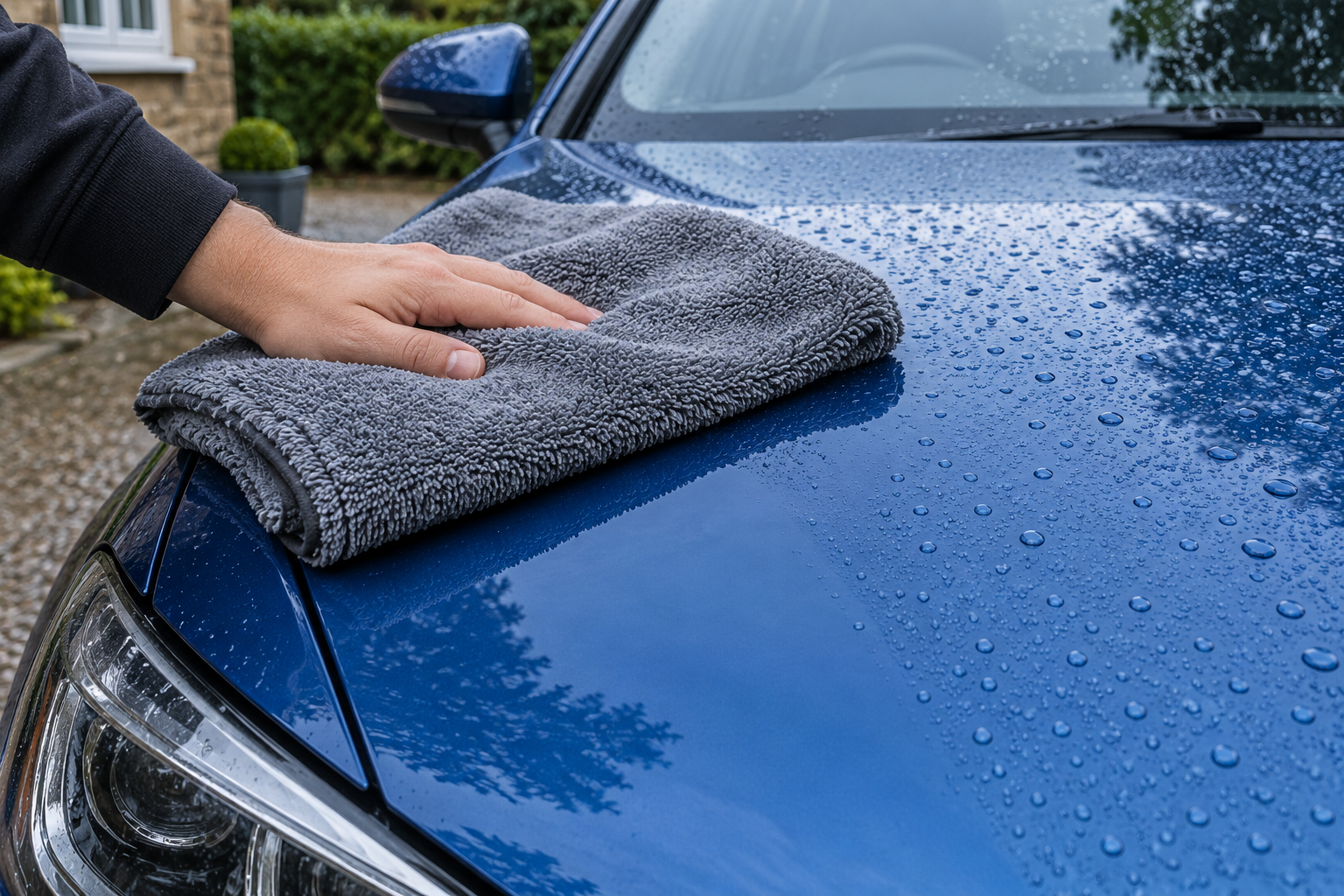
Use a clean suitable drying towel, inspect its working face and change it if it collects contamination. Let the towel absorb rather than scrubbing the panel. Water repellency can help water move, but it doesn’t guarantee every droplet leaves a horizontal surface before drying.
Check for the delayed drips after the first pass. Mirrors and handles are worth a second look. Move a towel that has picked up grime out of paintwork duty rather than folding that problem out of sight indefinitely.
See drying a car without streaks and drips for the full process, and hard-water washing if mineral marks keep returning. A clean car left to air-dry in the wrong conditions can still leave you with a second cleaning job.
Add a topper only for a reason
If you like the extra finish from a compatible maintenance product, use it at the interval and amount the system recommends. Adding one after every wash is not an obligation. When the clean dry car already looks how you want it to, you can finish there.
Autoglym Rapid Ceramic Spray gives a tidy finish when applied sparingly to clean prepared paint. Check the existing coating’s guidance before mixing systems, particularly during early curing.
If water behaviour has changed and you want to diagnose it, delay the topper. First use the stopped-beading checks. Otherwise a fresh protective layer can make the car look excellent while leaving your original question unanswered.
Keep the routine easy to repeat
Afterwards, clean and dry your wash media and towels properly. Store them where they won’t gather garage dust, and keep the wheel items separate. My microfibre washing guide covers that maintenance.
Note any persistent marks once the car is dry. Deal with those as targeted problems at the next suitable opportunity rather than making the routine wash progressively stronger. For preparation and application before that stage, see ceramic coating at home.