How to Use Snow Foam Before Washing Your Car
Some links in my articles are affiliate links. I may earn a commission when you buy through them.
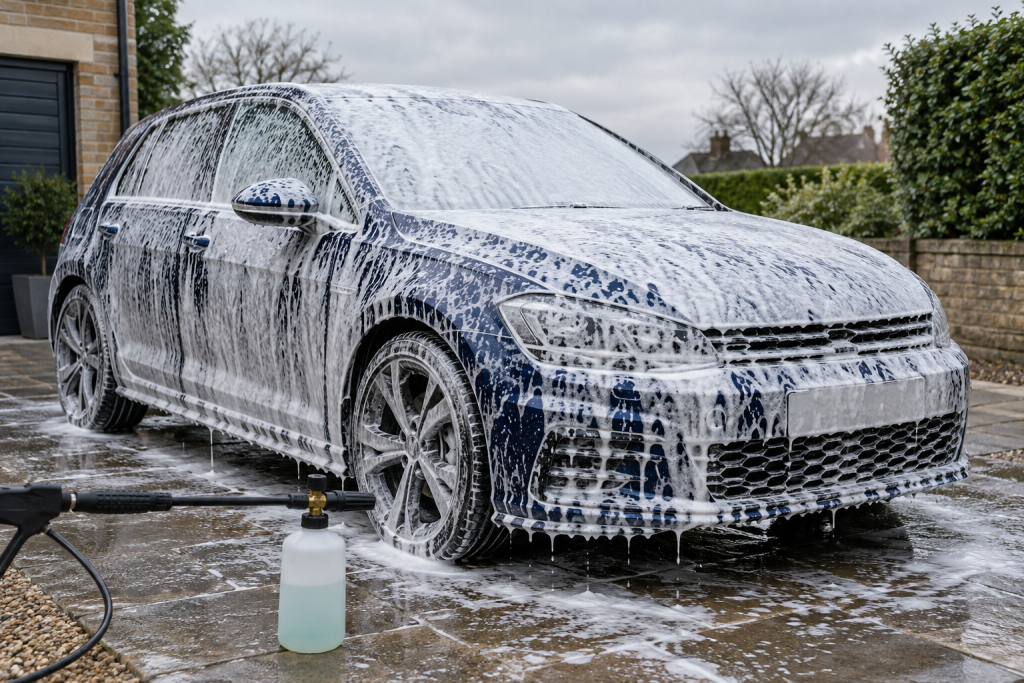
Snow foam is useful when you want to loosen road film before touching the paint with a mitt. The satisfying white covering is only the start: the rinse is where you see what it has done. Get the mixture and timing right, then follow with a controlled contact wash.
Where it fits in the wash
Use foam on suitable, cool surfaces as part of the pre-wash. Deal with heavy loose deposits as the product and surface instructions require, apply the foam, allow its working period and rinse thoroughly. Ordinary road film may still need shampoo and a mitt afterwards.
Polar Blast has given me an even covering through a lance before the contact wash. That clear separation between pre-washing and hand washing is its useful role in the routine.
Mix for your product and your equipment
Read whether the dose refers to the lance bottle or the solution reaching the car. The washer adds water after the reservoir, so those two concentrations are different.
For Polar Blast, Autoglym gives 100ml product with 500ml water in the lance reservoir as a starting mixture. The pressure washer then adds more water: this is not the concentration on the paint. Keep the same lance setting while you learn the mixture; changing the dose, dial and nozzle together makes it difficult to see which adjustment helped. The foam-lance guide explains the equipment side.
Apply an even coat you can manage
For Polar Blast, apply from the bottom upwards with a comfortable fan width. Check the lower doors, rear panel and bumper corners rather than concentrating all the foam on the bonnet. Keep the jet away from vulnerable edges and use the washer’s car-appropriate operating method.
Watch the sun and wind across the car. One side can begin drying while the other is still wet. Treat a smaller area when conditions require it, and keep the rinse equipment ready before applying product.
Give it time to work, then rinse it away
With Polar Blast, allow up to ten minutes, shortening that whenever drying threatens, then rinse from the bottom upwards. Leave agitation for the contact-wash stage. Foam sliding down a panel has not necessarily removed every trace of road film; rinse recesses where cleaner can collect too.
Once the water drains, look at the lower panels and behind the wheels. The surface after rinsing is a better guide than the thickness of foam a few minutes earlier. Continue with the contact wash using clean wash media.
If the result isn’t what you expected
| What you notice | What I’d check first |
|---|---|
| Thin or uneven output | Correct mixture, reservoir pickup, lance setting and washer compatibility |
| Good covering but road film remains | Whether the soil still needs the planned contact wash |
| Product drying too soon | Panel temperature, wind, area covered and time before rinsing |
| Weaker output than last time | Pickup tube, connections and the lance’s maintenance instructions |
More concentrate isn’t the first answer to every problem. Keep notes of the mixture and setting that work with your equipment, then change one thing at a time.
Flush the lance before putting it away
Run clean water through it according to its care instructions, rinse the reservoir and let the parts drain. A lance that is ready for the next wash makes the whole pre-wash stage easier to repeat.
If you’re choosing your first bottle, start with the snow-foam product guide. If the wash already works well without foam, add it for the pre-wash job it will actually perform.