Foam Lance Buying Guide: Fit, Control and Easy Cleanup
Some links in my articles are affiliate links. I may earn a commission when you buy through them.
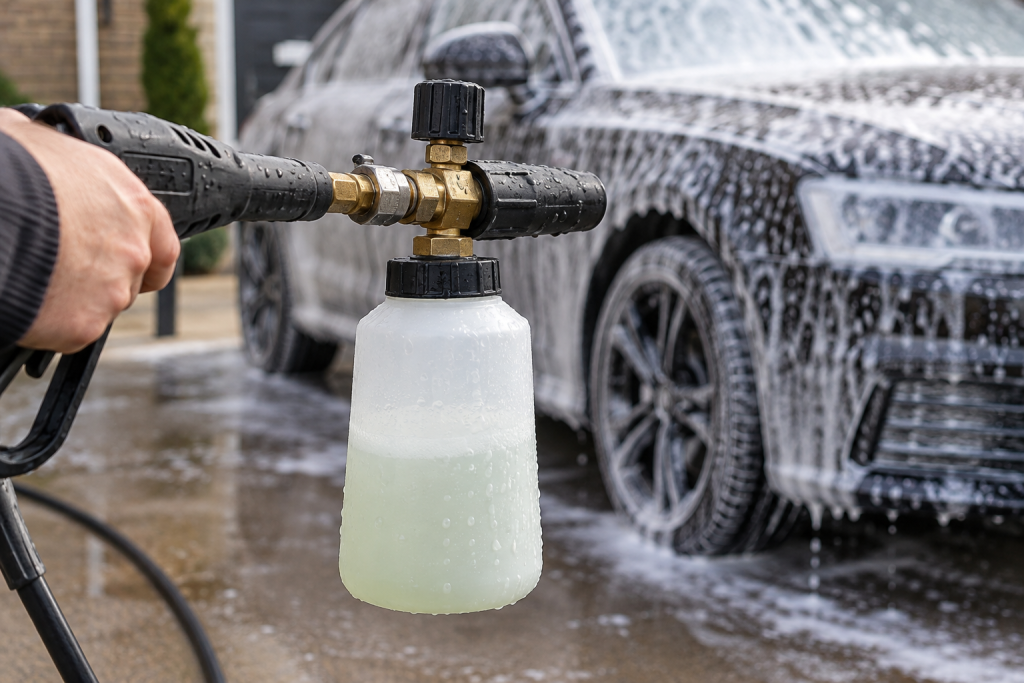
A useful foam lance gives you an even covering without leaking at the connection or making the bottle awkward to handle. Before buying one, check exactly how it will attach to your pressure washer. That small detail decides whether the rest of the specification matters at all.
Start with the gun connection
Find the washer’s model and the connection at the end of its gun. Compare that with the lance’s fitting description and photos. Some lances include a particular adapter; others need one separately. Keep track of the complete connection rather than assuming everything from one brand uses the same fitting.
The lance also needs to suit the machine’s pressure and flow requirements. Use the maker’s compatibility information for the model you own. If you need an alternative nozzle or adapter, include it in the total purchase.
Choose controls you can repeat
| Feature | Useful reason to choose it |
|---|---|
| Adjustable fan | Covers broad panels or narrower areas without spraying everywhere |
| Accessible mixture dial | Lets you adjust output deliberately and repeat the setting |
| Wide filling opening | Makes measured pouring and rinsing easier |
| Stable bottle | Reduces awkward handling when putting the lance down |
| Visible pickup and serviceable parts | Makes changes in output easier to investigate |
Balance matters when the bottle is full. Picture reaching the roof and then working around the front bumper. A comfortable grip and manageable weight are worth more than an attachment that only looks substantial on the shelf.
The foam and the lance work together
Polar Blast has given me an even covering before the contact wash. Start with the foam maker’s mixture and a compatible lance, then adjust the output methodically.
Keep reservoir dilution separate from panel concentration: the washer adds more water after the bottle. If your chosen product specifies a concentration at the car, calibrate using its method. A copied dial position doesn’t tell you the dose leaving a different machine.
What to do when output changes
If the lance previously worked well, check the mixture, pickup tube, seals and connections before increasing the dose. Follow the maintenance instructions for filters or internal components. A restricted pickup can make the output inconsistent even with the same bottle mixture.
Change one setting at a time and check the pattern away from the car in a suitable place. Then apply an even coat to manageable areas, allowing enough time to rinse before the product dries.
Make cleanup part of the buying decision
You will need to empty, rinse and flush the lance as its maker directs. A reservoir you can easily fill and clean is useful on every wash, particularly if equipment has to fit back into a small cupboard.
For occasional use, choose the simplest compatible setup that is comfortable to handle. For repeated jobs, add serviceability and repeatable settings to the comparison. Keep spare connections organised so you aren’t searching for a tiny seal with a car waiting to be washed.
Once the fitting is settled, choose a suitable foam and follow the pre-wash routine. Judge the result after rinsing; the lance’s job is controlled application, and the cleaner still needs its proper working time.