Hard-Water Car Washing: Prevent Spots Before Treating Them
Some links in my articles are affiliate links. I may earn a commission when you buy through them.
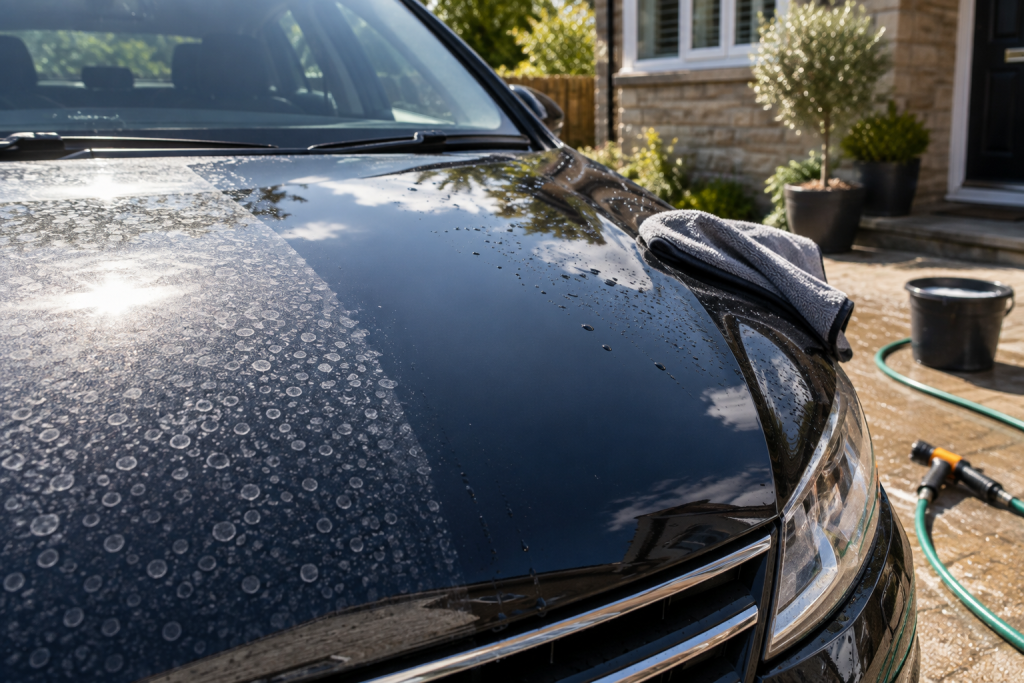
If a freshly rinsed car dries into little rings, the wash can feel wasted. I’d first shorten the time water sits on the panels: cooler surfaces, smaller sections and a clean towel ready before the rinse. Then you can see which marks are new deposits and which need a separate treatment.
Notice where the spots begin
If the roof starts drying while you’re still rinsing the lower doors, change the order or section size. Shade helps, but a breeze can also dry droplets quickly. On a large vehicle, wash, rinse and dry manageable areas rather than keeping the whole car wet until the end.
If the marks appear only beneath mirrors or badges, trapped water may be arriving after your first drying pass. Revisit those recesses with a smaller clean cloth while finishing the rest of the car.
Make the drying stage reliable
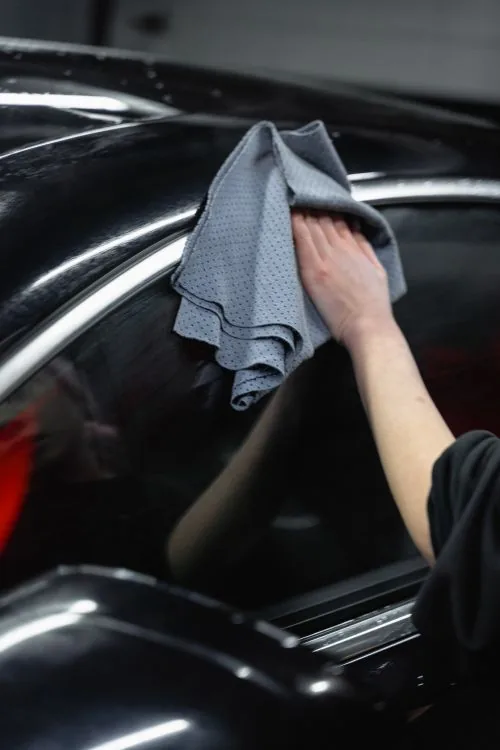
Use the CarMax drying towel with a fresh area exposed as it absorbs water. Keep a clean reserve ready. A saturated towel can leave a thin film behind even when it feels as though you are drying every panel.
Check that the surface is clean before moving a towel over it. If dirt remains, wash that section again. Drying should finish the wash, not become a second, rougher cleaning stage.
Work out what remains after washing
| What you see | Useful next decision |
|---|---|
| Fresh rings appearing as droplets dry | Improve rinse-to-dry timing and towel capacity |
| Drip marks below a recess | Catch the later runoff with a clean detail cloth |
| Deposits still visible on a clean, dry surface | Identify a treatment compatible with that paint, glass or coating |
| A mark unchanged after suitable deposit removal | Assess whether the finish itself needs attention |
Paint, glass, matte finishes and films do not share every water-spot treatment. Choose the method for the surface. A mineral deposit and a mark etched into the finish are different jobs, so a cleaner that removes one may leave the other visible.
Would filtered water help?
Compare what the system actually does. Sediment filtration, softening and deionisation are different processes. For a low-residue final rinse, understand the output the supplier specifies, how it is checked and when the treatment medium needs replacing.
Allow for your incoming water, the volume used and running costs. For one car, improving the drying routine may solve the practical problem. For repeated work, a suitable water-treatment setup can be worth comparing once you know the consumption and maintenance it will involve.
Don’t let a finishing product hide the diagnosis
A spray applied over an unidentified mark can make it harder to judge the surface. Clean, dry and inspect first, then choose any protection step. On matte paint, use the matte-specific route rather than polishing a spot until it turns shiny.
The drying guide covers towel handling and the second round of drips. Get that stage working consistently before deciding how much extra equipment the water problem really needs.