How to Dry a Car Without Chasing Streaks and Drips
Some links in my articles are affiliate links. I may earn a commission when you buy through them.
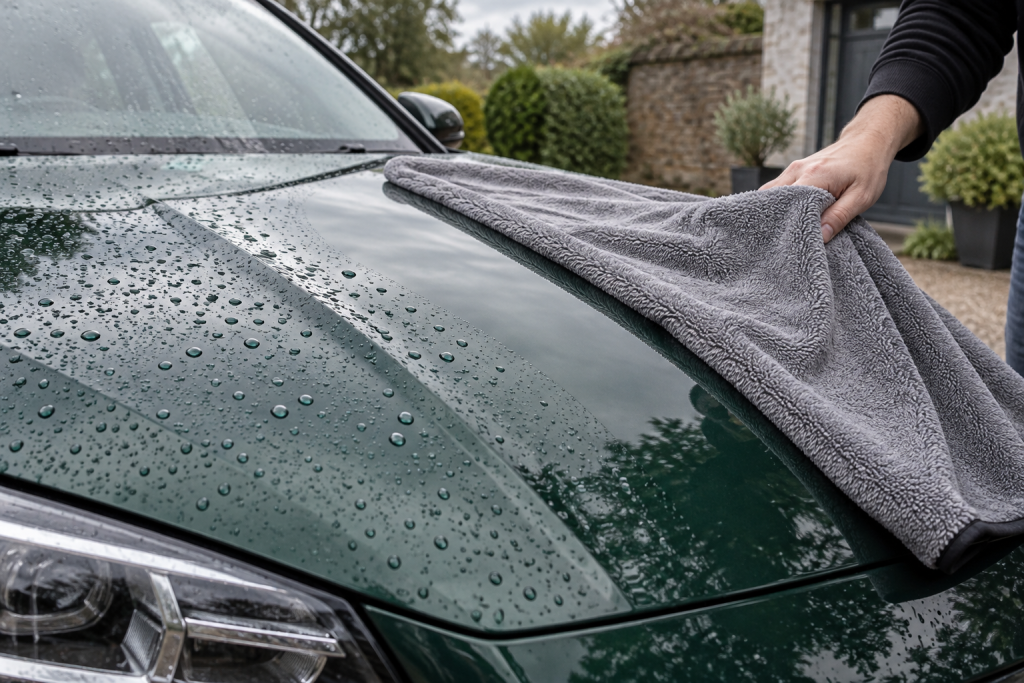
A clean car can collect water marks while you’re still putting the hose away. Have the towel ready before the final rinse and drying becomes a much calmer job. I’d work around the car in manageable areas, then come back for the small drips hiding in mirrors and trim.
Choose a towel you can control
Turn the CarMax drying towel to a fresh area as it picks up moisture. Its broad size is useful on open panels; keep a smaller clean cloth ready for mirrors, edges and awkward lower sections.
A towel needs enough absorbency for the job without becoming cumbersome. Around low panels, fold it so nothing trails along the driveway. If it becomes saturated and starts moving water around, swap it for a dry reserve rather than leaning harder on it.
Finish the rinse with drying in mind
Make sure the wash residue is gone, including around badges and the number plate. Look for missed dirt before putting a towel onto the panel. A drying cloth should be collecting water from a clean surface.
On a warm or breezy day, shorten the time between rinsing and drying each section. You may need to complete areas in stages instead of leaving the whole car wet until the last wheel arch has been rinsed.
Work from broad panels to the details
Start with the roof and upper areas so water running down doesn’t immediately revisit finished lower panels. Lay or guide the towel gently, using the method suited to its weave. Keep contact light and turn the towel to a fresh section as needed.
Follow with doors and lower panels. Around handles, mirror bases and trim, use the smaller cloth to collect water precisely. Keep a separate cloth for door shuts; even after the exterior wash, those areas may carry dirt you don’t want on the bonnet.
Deal with the second round of drips
Mirrors, badges and number-plate surrounds can release water after the first pass. Let them drain, then revisit them while you finish the rest of the car. Open a door carefully and check the clean edges before closing it again.
A suitable blower can help move water from recesses when used according to its instructions. Plan where the water will go and keep its air path clean. It complements careful finishing rather than making every towel unnecessary.
Do you need a drying aid?
Use one when it suits the finish and the application method you want. It is another product touching the car, so check compatibility with coatings, matte paint or film. A conventional gloss-enhancing spray may be the wrong addition to a matte routine.
For an ordinary gloss finish, Rapid Ceramic Spray offers a wet-application route as well as a dry one. Decide before you wash, then follow its specific spreading and buffing process. The spray-sealant guide explains that choice.
When marks remain
If the towel is leaving streaks, inspect its cleanliness and saturation before adding product. If little rings remain after drying, use the hard-water guide to distinguish fresh deposits from marks that need separate treatment.
Drying is finished when the surfaces are clear and the main drips have stopped. Put the used towels straight into the laundry container, ready for proper washing before the next clean.