Some links in my articles are affiliate links. I may earn a commission when you buy through them.
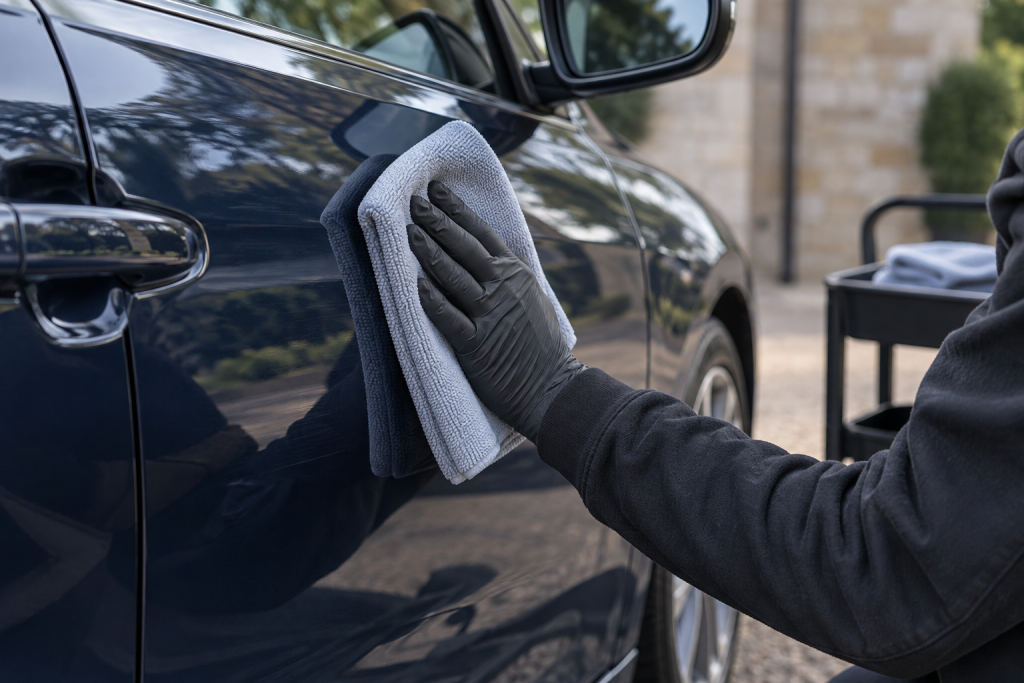
A spray sealant is a lovely way to finish a wash without setting aside a day for coating the car. The tricky bit is that similar-looking bottles can require completely different application. One goes onto wet paint and gets rinsed off; another needs spreading and a final buff.
If you have strong rinse pressure ready, I’d choose Gyeon WetCoat for a wet-panel spray-and-rinse step. My first choice for a simple dry-paint spray and buff is Autoglym Rapid Ceramic Spray. For maintenance within a Gtechniq coating routine, I’d look at Gtechniq C2 Ceramic Sealant, checking the version and the coating’s aftercare first.
Best for spraying on and rinsing off
WetCoat suits a wash routine where the car is still wet and a strong rinse is immediately available. The appeal is adding water-repellent protection before drying, with no separate application-and-buff pass over dry paint.
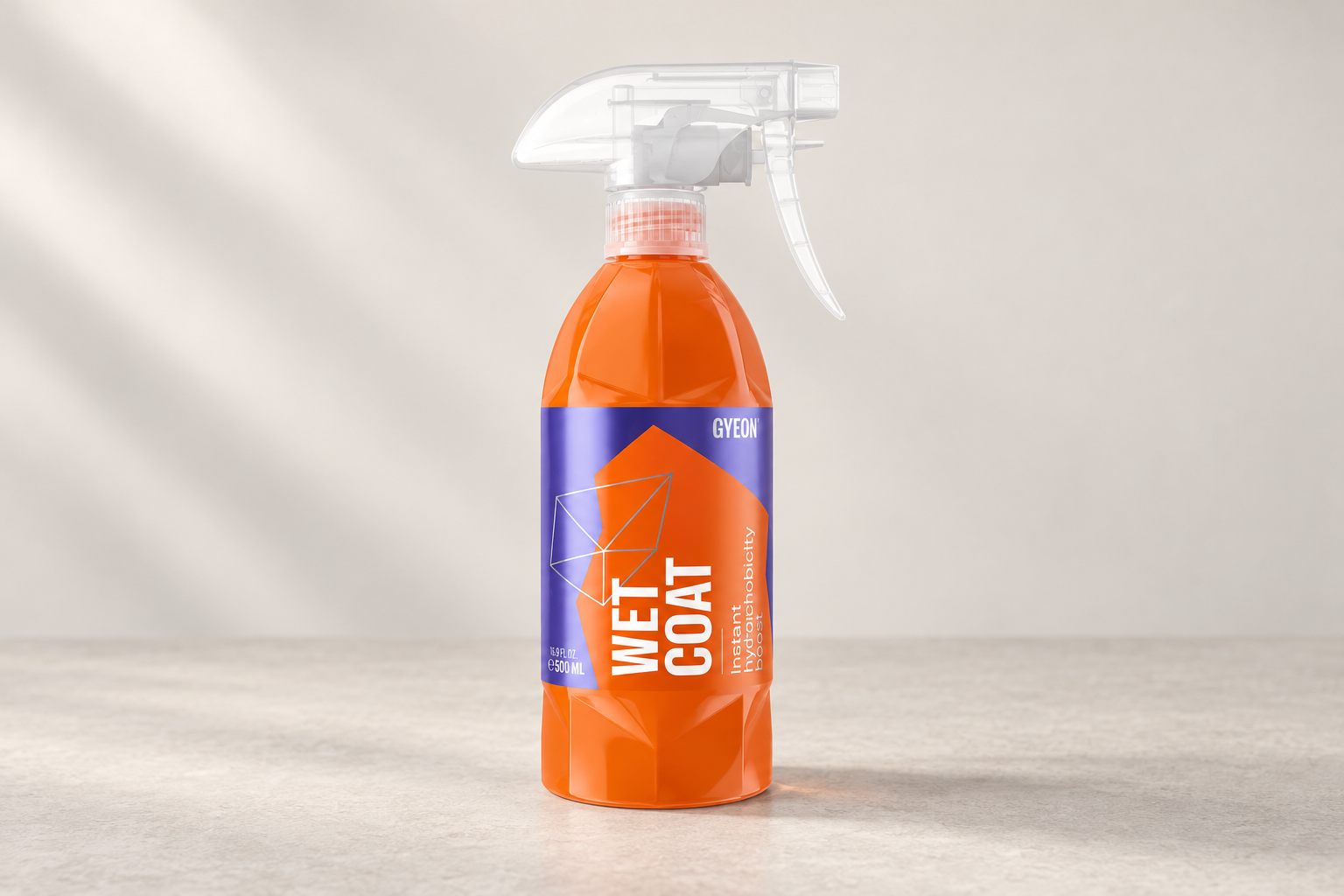
WetCoat adds a water-repellent finish, but I’d choose it primarily for the way it fits the wash: apply to a wet panel, rinse straight away and move on.
Gyeon’s current directions specify one or two sprays on a wet panel followed immediately by strong water pressure. Don’t let the product dry. Work one panel at a time, then dry the car with a suitable towel once the treatment has been rinsed properly.
I wouldn’t use WetCoat as though it were a dry spray wax. Keep the hose or pressure washer ready before spraying. A warm bonnet, direct sun or stopping to fetch equipment makes a quick process much harder to control.
Gyeon lists suitable exterior paint, trim, metal, wheels and glass, and approves coated and uncoated cars. I’d still follow the aftercare of an existing coating or specialist finish, especially during its initial cure. On wheels, make sure the finish is clean and compatible; protection doesn’t remove the brake dust underneath it.
For a driveway wash with everything ready to rinse, this is the best fit in the shortlist. If you prefer to dry the car, inspect it and work slowly with a cloth, choose the next option instead.
Best for a straightforward dry-paint finish
Rapid Ceramic is my first choice here when I want to finish clean, dry paint by spraying sparingly, spreading and buffing. You can work deliberately around badges, panel edges and the places that need a final look in sideways light.
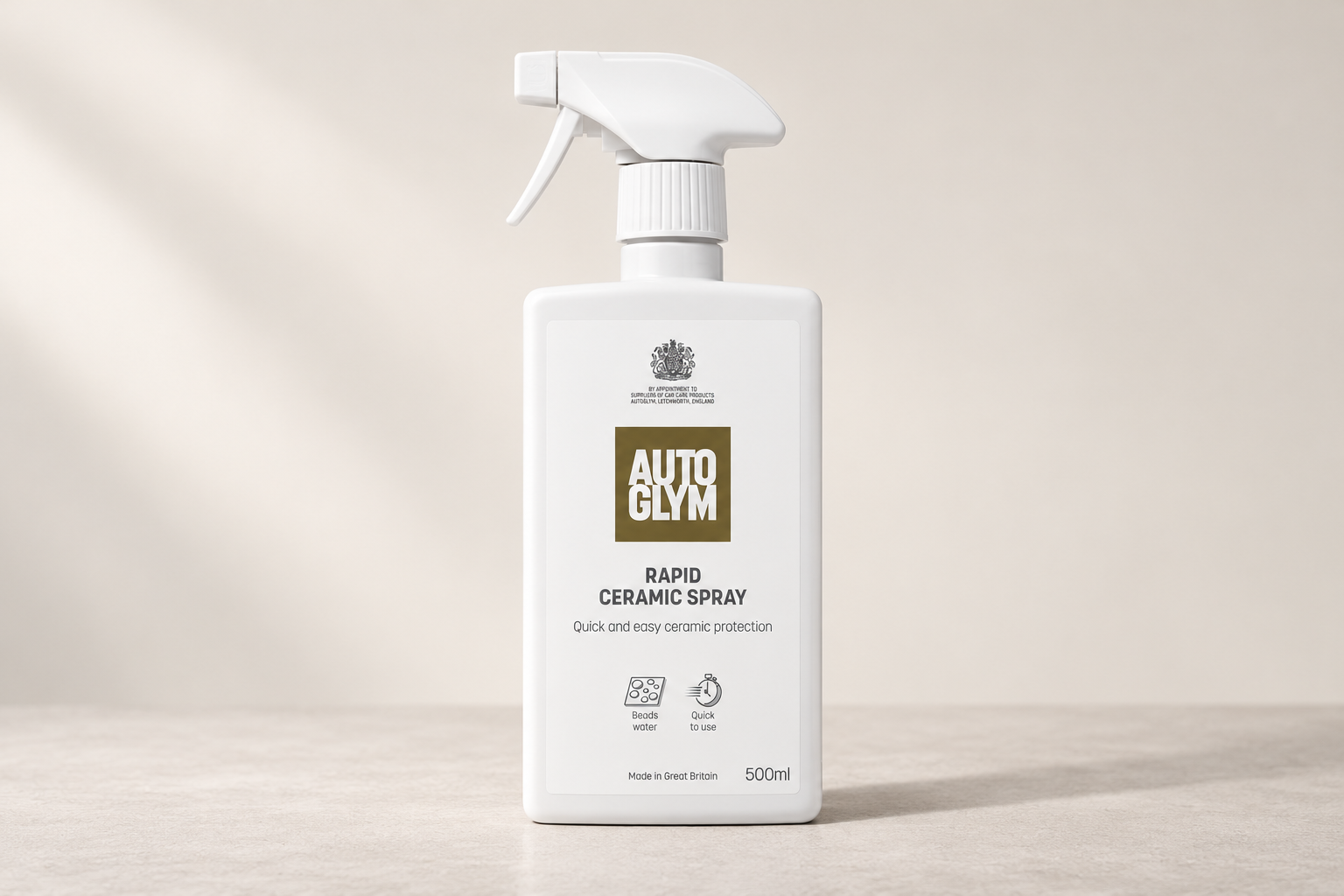
A thin application gives an even finish on prepared paint. Wipe carefully around the edges rather than piling on more for an instant wet look.
Autoglym’s UK directions say dry application gives maximum durability, although wet-paint application is also permitted. In both cases you spread and buff the product; this isn’t a spray-and-rinse substitute.
Use two or three sprays per normal panel, no more than two on smaller panels, and work areas about a shoulder width at a time. Spread with a clean cloth and buff with another. Keep changing cloth faces so you’re removing excess rather than carrying it onto the next panel.
Rapid Ceramic is designed for painted surfaces and colour-coordinated plastics. Keep it off glass and unpainted plastic in this routine. Autoglym approves it over its own compatible finishing products, including its ceramic coating, wax and resin polish. That makes it a useful finishing choice if you already work within that system.
Plan mild conditions and cool paint. The maker specifies avoiding direct sun and warm panels, with an optimum application temperature of 10–25°C. It also gives a 24-hour interval before the first wash. Apply it when you can leave the finish alone afterwards, rather than immediately before another wash or a rushed journey.
Best fit for maintaining a Gtechniq-coated car
I’d choose C2 when a compatible Gtechniq coating routine calls for a maintenance sealant. It can also be used as standalone protection, and the current maker directions offer both cloth application and use as a drying aid.
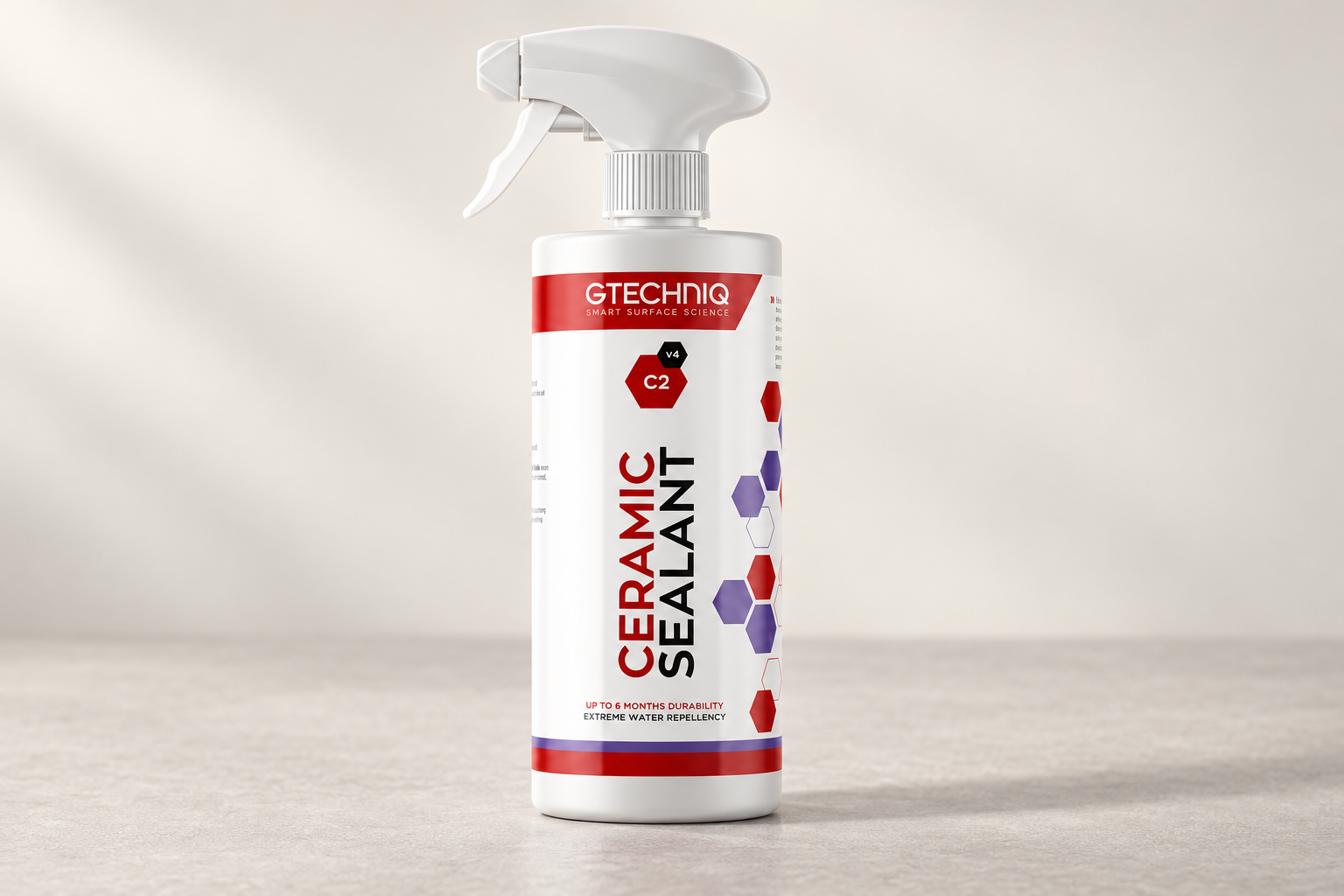
The exact version matters when you buy. Gtechniq’s current UK product page describes version 4. Check the bottle you’re ordering rather than assuming an older “Liquid Crystal” listing and the latest formulation have identical directions or performance.
For the current formulation, shake well, work out of direct sunlight and spray onto a clean cloth. Wipe one panel at a time and buff with a second clean cloth. Gtechniq also permits spraying onto a wet panel as a drying aid, followed by drying with a suitable towel.
C2 earns this recommendation through its explicit place in the coating-maintenance system. If you simply want a dry-paint finish on an ordinary daily driver, the previous spray-and-buff choice is straightforward. If you want the Gtechniq route, check the aftercare for the coating already on your car and the directions on the version you receive.
I wouldn’t add a topper to a freshly applied coating before its permitted maintenance interval. Our coating cure-time guide helps you separate application, water exposure and the first wash.
Choose around your wash routine
| Your routine | My choice | What you need ready |
|---|---|---|
| Finish while the car is wet | WetCoat | Strong rinse pressure immediately after each panel |
| Dry first, then spread and buff | Rapid Ceramic | Clean spreading and finishing cloths; suitable conditions |
| Follow compatible Gtechniq aftercare | C2 | Exact bottle-version directions and the coating’s maintenance requirements |
A hose-fed wet treatment can feel very quick when you already have the rinse equipment in your hand. A dry application gives you time to see and level what you’re putting down. Neither process is automatically better; choose the one you can carry out properly where you wash the car.
Preparation: clean first, protect second
Wash off road film before adding protection. A sealant can’t clean the dirt it covers, and buffing a dusty panel risks dragging contamination across the finish. If the surface feels rough or has visible bonded contamination, deal with the actual deposit using a compatible method before the finishing stage.
You don’t need to polish the car at every top-up. Polishing is a separate paint-improvement step and can affect existing protection. If the coating still looks good after an appropriate wash, maintain it rather than routinely abrading it and starting again.
The shampoo guide explains additive-free washes and finishing films. When a coated car stops shedding water, use the beading diagnosis before assuming it needs another layer. Road film, deposits and wash residue can change the behaviour you see.
The spots I’d inspect before calling it finished
Look around badges, handles, panel edges and the lower parts of doors. Excess can collect where cloths change direction or where you overlap sections. On a dark car, sideways light is especially useful for finding a streak that a straight-on view misses.
For the dry methods, use a fresh cloth face to level residue according to the product’s instructions. For the wet rinse-off method, inspect that you’ve rinsed the product away properly before drying. Don’t respond to a patchy finish by immediately applying another heavy layer over it.
Finish the upper paintwork before using cloths around dirtier lower areas. Keep the towels used for tyre dressing and glass cleaning separate from the ones you use on paint protection. The two-bucket washing method helps keep the earlier wash stage clean too.
Spray sealant or a full ceramic coating?
A spray sealant fits a regular wash routine with periodic maintenance. A dedicated coating involves a more deliberate preparation, application and cure, and its own aftercare. Buying the bottle with “ceramic” on it doesn’t make those processes equivalent.
If you want a convenient finishing step you can repeat as the clean surface needs it, one of these sprays is a sensible place to start. If you want to plan a dedicated coating job, the ceramic-coating guide explains the different products and working conditions.