The Two-Bucket Car Wash Method, Explained Properly
Some links in my articles are affiliate links. I may earn a commission when you buy through them.
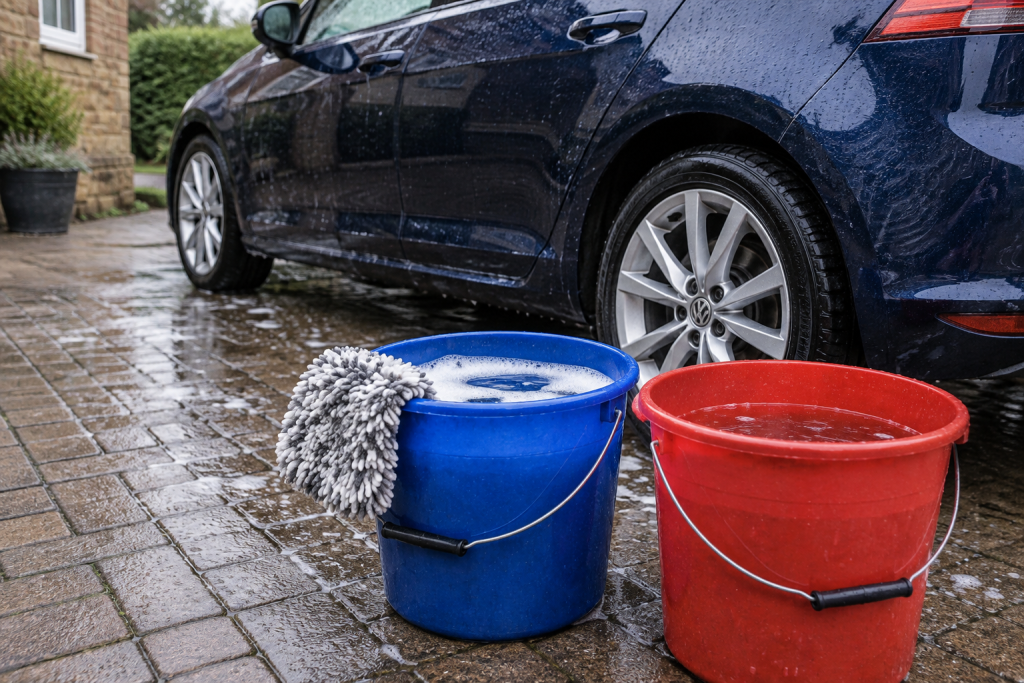
The two-bucket method gives the dirt from your mitt somewhere to go before that mitt returns to the shampoo. It’s a useful habit, and simple once the buckets have clear jobs. The important part is what happens between panels, especially when the car gets dirtier towards the bottom.
One bucket washes, the other rinses
Fill one clean bucket with shampoo mixed to its dose and the other with rinse water. Keep them easy to tell apart, using labels, colours or a consistent position. Put both within comfortable reach so rinsing the mitt becomes part of every section.
The two-bucket kit is a convenient starting option. Check the included mitt and barriers before buying separate duplicates. Barriers can help organise the bucket, but you still need to inspect the tool and change dirty water.
Follow this loop around the car
First rinse the bodywork to remove loose grit. Load a clean mitt with wash solution and wash a manageable upper section using light contact. Rinse the mitt in the rinse bucket, open out its working face and check for trapped material. Only return it to the shampoo when it is clean enough for the next area.
Work down from roof and upper panels. Keep heavily soiled sills, arches and wheels on separate tools. Rinse shampoo from the car before it dries, shortening your sections when the weather demands it.
If grit remains in the mitt, replace it with a clean spare. A mitt dropped on the ground goes out of service until it has been properly cleaned and inspected. A quick dunk isn’t a reliable way to remove everything it may have picked up.
Know when to change the water
Watch the rinse bucket as well as the paint. If the water is heavily soiled, empty and refill it rather than continuing because you haven’t finished the car. If the shampoo bucket becomes contaminated, replace that mixture too.
For a large or very dirty vehicle, plan the refill before starting. Keep clean tools covered while you deal with the water. The method is easier to follow when changing a bucket doesn’t mean abandoning the wet car for ten minutes.
What if you prefer several clean mitts?
Another workable arrangement is to use fresh wash media for each section and retire used pieces into a separate container. They don’t go back into the clean wash solution. It takes more clean tools and laundry, but makes the direction from clean to dirty very obvious.
Choose the system you can carry out consistently. Both depend on removing loose grit first, changing contaminated media and keeping wheel dirt away from the bodywork.
Finish the routine
After the contact wash, rinse recesses and dry with clean towels. Then wash and dry the mitts and empty the buckets so the next session starts properly. Dirty water left waiting in a bucket is an unhelpful surprise for next weekend.
For the full order, use the car-washing guide. If you’re choosing the mitt, the wash-mitt guide explains fit, cuffs and why a spare is useful.