Choosing a Car Wash Mitt That Is Easy to Control
Some links in my articles are affiliate links. I may earn a commission when you buy through them.
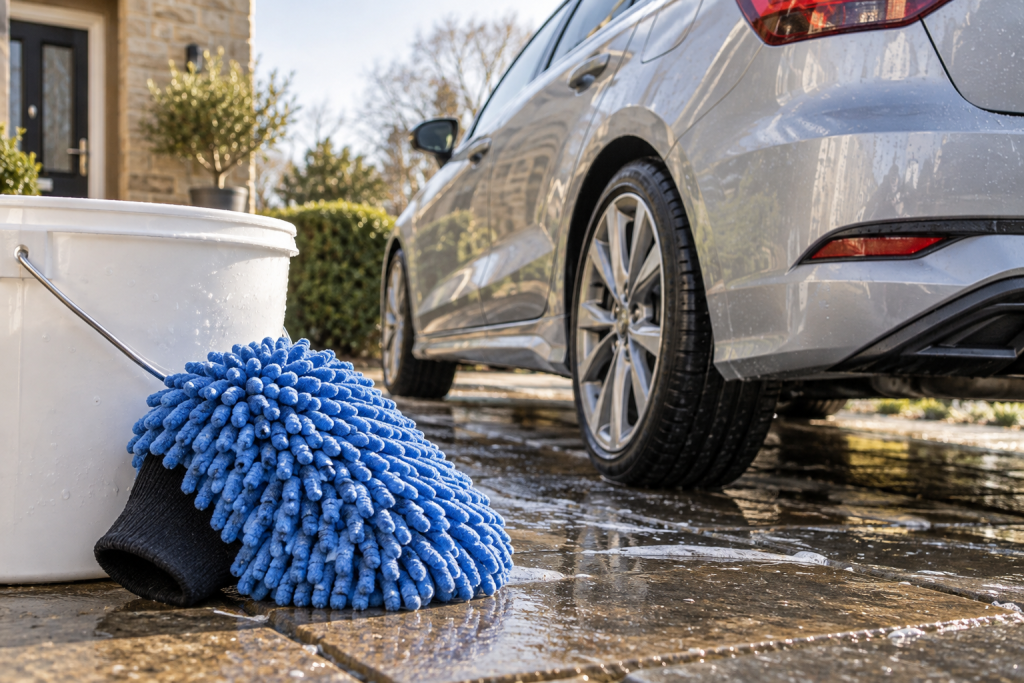
A wash mitt should feel manageable around a mirror as well as the middle of the bonnet. I’d start with the MR.SIGA mitt for easy control around awkward edges with light contact.
Think about how it feels when wet
A dry mitt in your hand is only the beginning. Water adds weight, and the cuff needs to stay secure without making you grip tightly throughout the wash. Check how the working face opens out so you can rinse and inspect it.
Look at the seams and cuff as you turn your hand around a mirror base. You want to guide the soft working surface onto the panel, keeping rougher edges or attachments out of the way. A mitt that is too large for your hand can be awkward even if its material feels lovely.
Choose for the car’s awkward parts
| Part of the car | What matters in a mitt |
|---|---|
| Roof and bonnet | Comfortable coverage with light, controlled contact |
| Mirror bases and handles | A shape you can guide without bunching the cuff against the panel |
| Lower doors | Manageable size and a separate tool when heavily soiled |
| Tight trim details | Willingness to use a more suitable small tool rather than forcing the mitt |
The MR.SIGA option is a practical starting choice for bodywork. A separate soft tool may make a particular recess easier, but a large collection of similar mitts won’t solve every access problem.
Buy a clean spare before an elaborate upgrade
If the working mitt lands on the ground, the spare lets you continue correctly. It is also useful while the first is being washed and dried. For frequent jobs, clean availability is a real part of tool performance.
Keep the spare covered and within reach. Give wheels, arches and heavily soiled areas their own kit rather than using the spare paint mitt as a convenient wheel tool halfway through.
Use a rinse-and-inspect routine
Rinse loose grit from the car first. Work small sections with suitable shampoo and light contact, then rinse the mitt and inspect its face before returning to clean solution. Open the fibres so trapped material is easier to see.
The two-bucket method provides a simple working loop. Alternatively, use a supply of fresh media and retire each used piece into a separate container. Whichever method you choose, replace contaminated media promptly.
Care for it before the next wash
Follow its washing instructions, dry it properly and store it away from grit. Inspect the seams and working face before reuse. A worn or contaminated tool should move away from paintwork even if some of the fibres still feel soft.
For a first purchase, the MR.SIGA mitt and a clean spare are where I’d begin. Pair them with the wash routine and microfibre-care method so the tool stays useful beyond its first outing.