Car Polish vs Wax: What Each Does and When to Use It
Some links in my articles are affiliate links. I may earn a commission when you buy through them.
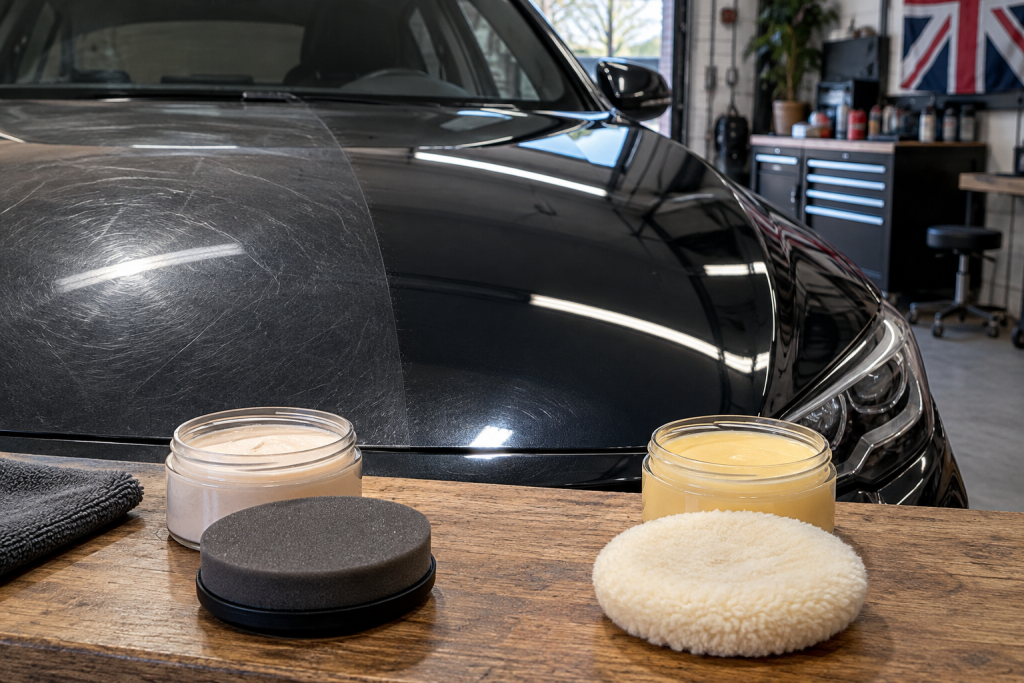
Polish improves the paint; wax protects the finish you’ve prepared. If your car looks good after a wash, you can wax it without polishing first. If it has swirls or dull patches, have a closer look before deciding how much work it needs.
Some polishes also contain fillers or wax. Check the label before adding another protective layer.
What polish and wax do to your paint
An abrasive polish removes a little paint to reduce shallow marks. On a clear-coated car, it works on the clear layer above the colour. A finishing polish refines light defects; a compound gives a stronger cut within a polishing system. The compound-versus-polish guide helps you choose where to start.
Wax leaves a protective layer on top. It can enrich the gloss and help with routine cleaning, but a non-abrasive wax won’t level away scratches. That protective film gradually wears through use and washing.
Fillers can hide some of the marks. A glaze or filling polish can make fine swirls much less obvious without removing them completely. They may reappear as the product washes away. That can be a useful way to tidy the finish without cutting out every defect.
Does the car actually need polishing?
Wash and dry it, then look in daylight and around the reflection of a small light. Move your head as you inspect: wet paint and a flattering angle can hide a surprising number of marks.
- It looks good and feels smooth: go straight to preparing for wax or your other protection.
- There are raised spots or a gritty feel: deal with contamination first. The rough-paint guide helps identify what needs removing.
- You can see fine swirls or light haze on sound glossy paint: try a mild polishing combination on a small section.
- There are chips, peeling lacquer or deep scratches: assess the damage for repair. Polishing won’t put missing paint back.
For water marks, check whether you’re looking at a mineral deposit on the surface or etching in the finish. Use the water-spot checks before reaching for compound.
Where an all-in-one polish fits
An all-in-one suits a car that needs a tidy-up without a full correction session. Depending on the product, it can clean, lightly polish, hide fine marks and leave protection. If it already leaves protection, adding a separate wax is optional.
Preparing for a ceramic coating is different. Wax and fillers left by an all-in-one may need removing before the coating goes on. Check the coating’s preparation requirements first; the ceramic preparation guide covers the polishing and wipe-down stages.
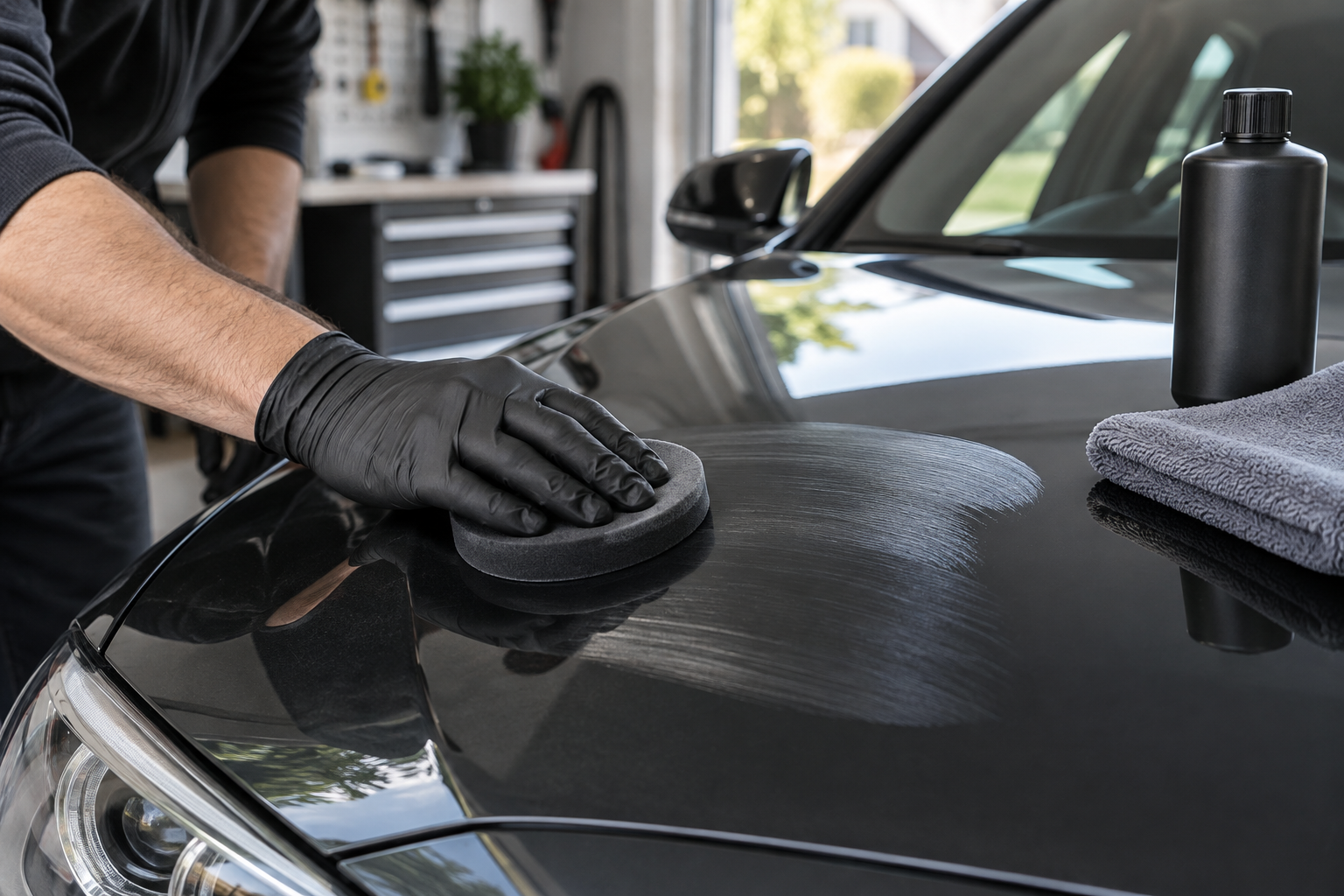
Polish first, wax afterwards
- Wash and dry the car. Get loose dirt off before putting a polishing pad against it.
- Remove bonded contamination where needed. Treat tar or fallout, then use clay only for deposits that remain. Claying can leave fine marks on sensitive paint.
- Polish the areas that need it. Start mild, wipe the residue away and inspect your test section before doing more.
- Prepare for your protection. Remove polishing residue and any oils the wax or coating instructions require you to remove.
- Apply the protection. The hand-waxing method shows how to spread a thin coat and buff it clear. Allow any required curing time before the car gets wet.
If you wax first, abrasive polishing will remove or disturb the layer you’ve just applied. When you polish one small area later, protect that area again afterwards.
How often should you do each?
Top up wax as its protection wears, following that product’s care instructions. Polish when the paint needs correction and can tolerate it. You don’t need to polish every time you renew the wax.
Previous polishing and repairs affect how much clear coat remains, so inspect the paint before planning another correction. If it looks good apart from a few deeper marks, I’d leave those alone. The paint-correction guide explains how to assess the finish and choose a stopping point.
Can you polish it by hand?
Yes. Hand polishing can improve light marks and is handy for small areas. A machine makes several panels more practical, but the pad, polish and technique still determine how much it cuts. Follow the hand-polishing method, or read the first-polisher guide if you’re planning a larger job.
Don’t concentrate all your effort on a scratch that catches a fingernail. That check doesn’t measure its depth, and it may go too far into the clear coat to remove safely. Work through the scratch-assessment guide first.
Matte paint, wraps and ceramic coatings
Keep ordinary gloss polish off matte and satin paint: it can leave a permanently shinier patch. Gloss-enhancing wax can change the appearance too. Follow the finish maker’s care instructions and the matte-paint washing routine. Wraps and paint-protection film also need products approved for that material.
Polishing a ceramic-coated car can remove coating as well as defects. If the complaint is weak beading, start with the coating-maintenance checks before polishing it or adding wax.