Some links in my articles are affiliate links. I may earn a commission when you buy through them.
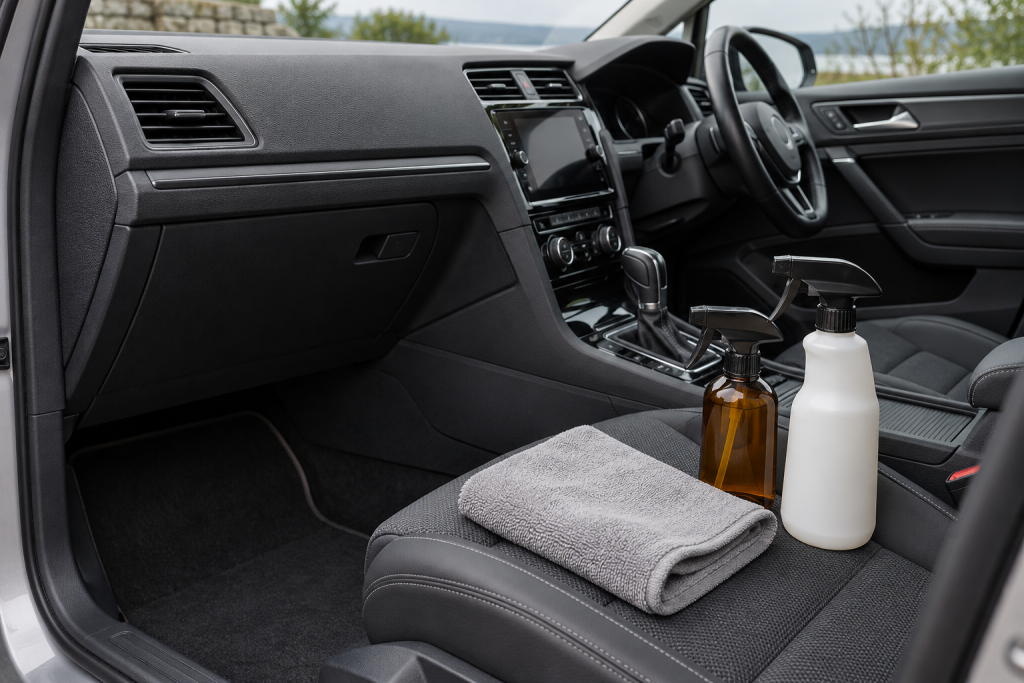
The dashboard looks dusty, the door handle feels grubby and there are fingerprints round the controls. You could buy three different bottles, but I’d start by separating a routine wipe-down from a proper clean. That makes choosing an interior cleaner much easier, and stops a finishing spray being asked to do the whole job.
For regular upkeep of compatible plastic and vinyl, my first choice here is Meguiar’s Quik Interior Detailer. Its natural-looking, non-greasy finish suits a cabin you want to look clean rather than freshly varnished. For a more thorough session involving marked trim and fabric, I’d choose Autoglym Interior Shampoo. It gives you a cleaning route across those materials, with a specific exclusion for display and infotainment systems.
Regular plastic and vinyl upkeep
A straightforward maintenance choice when dust and ordinary handling marks are the main problem.
Before buying: Check the car’s instructions for screens, instrument lenses and specialist coatings separately.
Marked trim and fabric in one session
Useful when you need to clean suitable hard surfaces as well as fabric, rather than add a dressing.
Before buying: Keep it off displays and infotainment systems; use the proper leather route for unfamiliar or delicate finishes.
Choose by what you need to lift off and the finish you want left behind. A quick tidy-up and a marked fabric armrest call for different routines.
Buy for the dirt you have, not the biggest list on the label
A little dust and a few fingerprints are a different job from the film on an armrest that has been handled every day. Before ordering, inspect a small area in daylight. Is there loose grit to collect, a greasy smear that moves with wiping, or a flat pale scuff that stays put? A stronger cleaner can help with dirt; it cannot promise to rebuild a worn coating.
Make a quick list of the actual surfaces: textured dashboard, door-card plastic, piano-black console, leather, fabric and screens. “Interior” is too broad to make them one material. A cabin can have all six within arm’s reach, and the same cloth should not carry dressing residue from one onto the others.
On leather seats, match the cleaner to the finish. The perforated-seat method helps control moisture around the holes; choose any conditioner or protection after the surface is clean and dry.
For the order of work, follow the whole-interior routine so dust and overspray do not undo the areas you have already finished.
Quik Interior Detailer for the regular wipe-down
Quik Interior Detailer makes sense when you already keep the car reasonably tidy and want to deal with dust, fingerprints and everyday handling film. Meguiar’s UK describes a natural appearance across its listed interior materials. I’d choose that sort of finish for ordinary dashboard plastic, especially where extra sheen would be obvious from the driving seat.
Use it on a cool surface with a clean cloth and work one section at a time. Spread the product, then turn to a dry face to finish; leaving a damp streak to evaporate makes the inspection harder. Near switches and openings, control the application through the cloth rather than misting the whole assembly.
I find the driving-seat view particularly useful with this cleaner. Residue beside a control can be much easier to see from there than while leaning in through the door. That is the check I’d make before adding more product to a patch that already looks slightly smeary.
The exact bottle here is the 473ml G13616EU spray. A similarly named leather cleaner or high-shine protectant has a different job. Keep the bottle name clear if you decant anything, and don’t assume every product from the same brand has the same surface permissions.
Interior Shampoo for a more thorough cabin clean
Despite its name, Interior Shampoo is intended for suitable hard interior surfaces as well as fabric. That is useful when the door trim needs cleaning and the fabric armrest or carpet also needs attention. It is the bottle I’d pick for that mixed cleaning session, with separate cloths for each material.
Autoglym’s current UK method starts with vacuuming. Its hard-surface treatment is an application followed by wiping away; fabric needs light application, agitation and collection of the loosened dirt. Plan fabric drying before starting, using the seat-cleaning method where appropriate.
The display restriction matters before buying: this product is not for display or infotainment systems. Around those areas, put it on the cloth to prevent stray spray. A screen that looks like the surrounding black trim can have a different surface coating; keep the touchscreen method separate.
My useful check with this shampoo is the smaller contact area after it has dried: a handle, the edge of the console or the seat material you actually touch. Those spots tell you whether the film has been collected or just spread more evenly.
The cloths can change the result before you change the cleaner
Set out a clean application cloth, another face or cloth for collecting residue, and a dry finishing cloth. Keep glass and gloss-trim cloths separate from anything used with a dressing. Check edges and labels before touching a delicate panel, and change the cloth if it has collected grit.
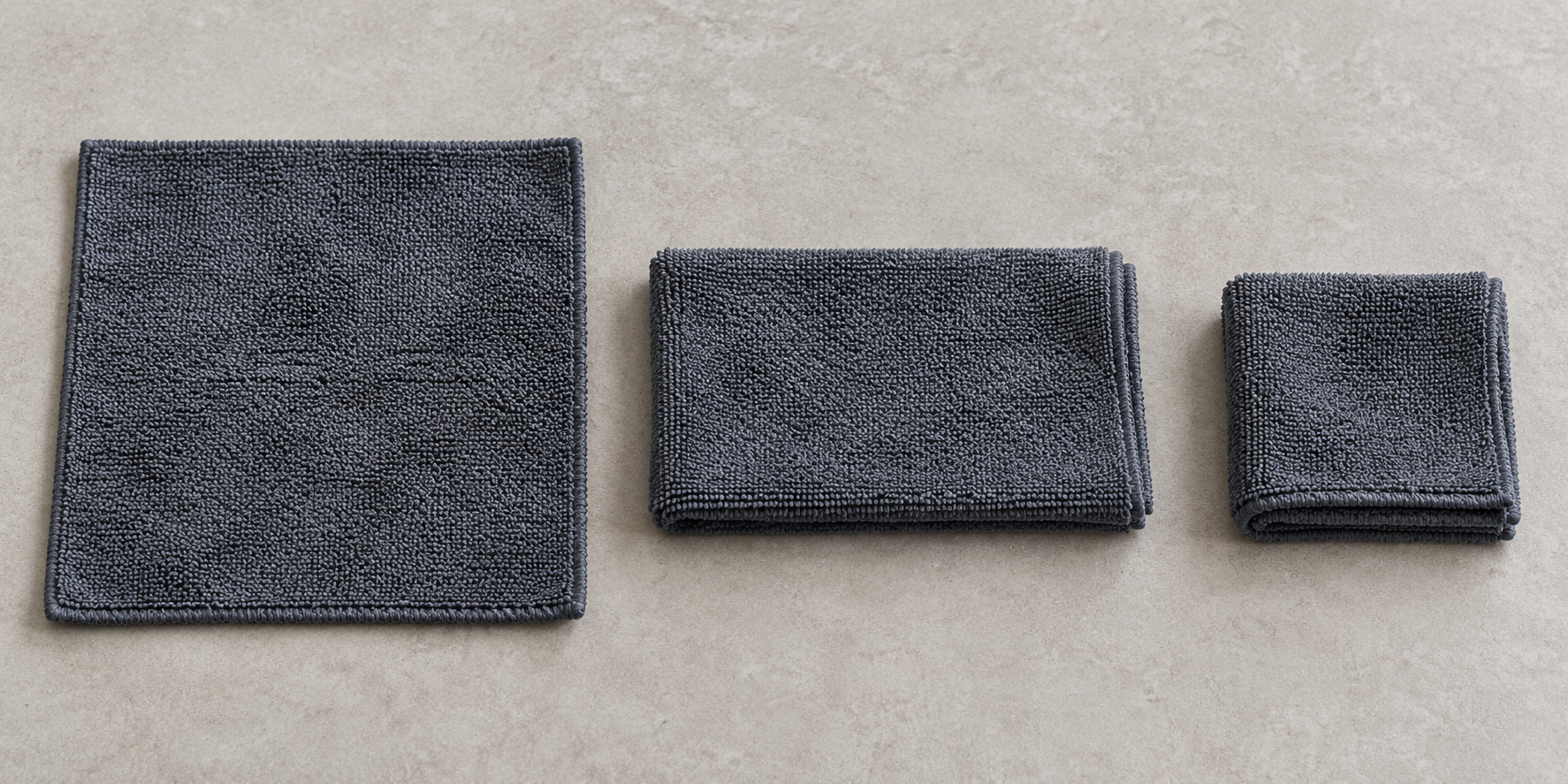
A soft brush helps with accessible textured recesses, but a brush that fits an air vent is not automatically appropriate for piano-black trim. The brush guide explains the tool choice; the air-vent method shows how to collect the dust you loosen.
If you prefer a dilutable cleaner, buy it with suitable measuring equipment and a labelled working bottle. The APC dilution guide explains the arithmetic. A dilution quoted for another formula is not a recipe for either ready-to-use spray above.
Leave the finish where the car needs it
Clean the dashboard before deciding whether it needs any dressing. Check the dry surface from your normal seating position and look for a reflection in the windscreen. On a steering-wheel rim, judge the clean, dry grip rather than adding a shiny finishing layer.
Use the steering-wheel method for material and control checks, and the piano-black method for glossy console panels. Neither benefits from a loaded dashboard cloth being dragged across it as a final flourish.
For an ordinary tidy-up, start with the maintenance cleaner and a few properly clean cloths. For a marked cabin with fabric work to do, choose the shampoo and leave time for removal and drying. Buy the second bottle when you have a separate job for it.