How to Clean a Car Interior in a Sensible Order
Some links in my articles are affiliate links. I may earn a commission when you buy through them.
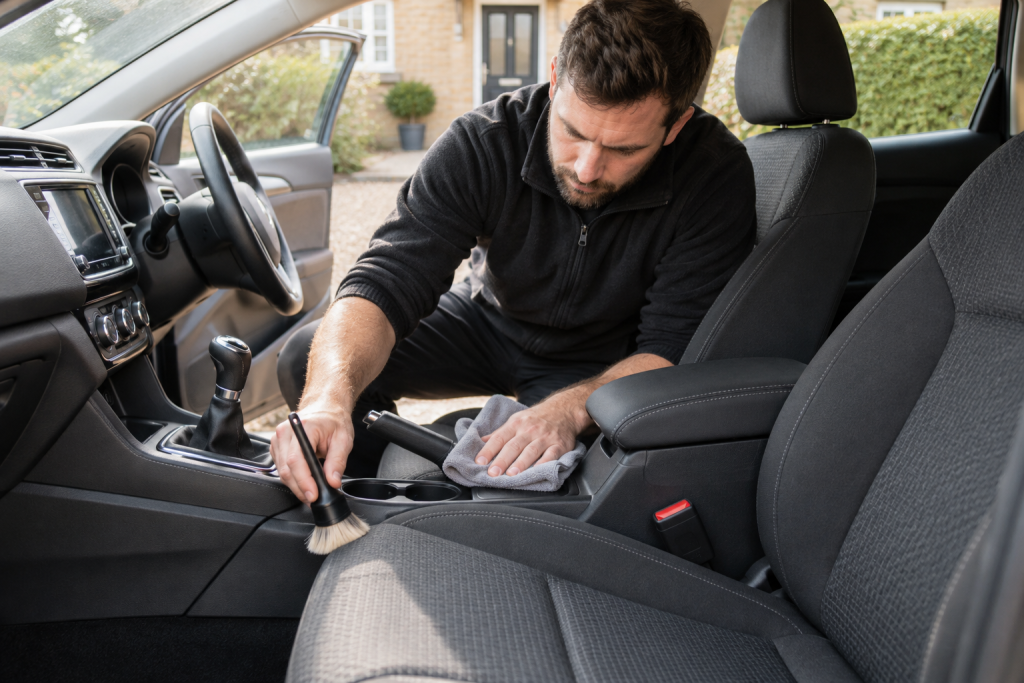
A dusty dashboard is easy to spot. Crumbs beside the seat, a sticky door handle and the smear at the top of the windscreen need a little more attention. Work through the cabin in the right order and you can catch those details without cleaning the same area twice.
Start anything that needs time to dry
Remove rubbish and personal belongings, then take out the mats. Check whether they are carpet or rinseable moulded liners before cleaning them; the car-mat cleaning guide separates the two methods. If they need moisture, start early and give both sides somewhere to dry while you work inside.
Seat stains also need a drying plan. If the car must carry passengers shortly, do the dry clean now and leave wet upholstery work for a suitable window. You’ll do a better job when you aren’t watching the clock and hoping the seat feels dry enough.
Vacuum the gaps before the broad surfaces
Move each seat through its normal adjustment to expose the floor edges. Our car vacuum guide helps match attachments to those gaps. Use a narrow attachment for seams, the gap beside the centre console and accessible areas underneath. Keep clear of wiring and mechanisms.
The Go Vac Pro has been handy for my regular dry cleans, especially where its crevice tool reaches beyond the broad head. Go slowly along seams, then cover the open cushions and footwells in overlapping passes. Check the collection chamber as you go.
A soft detailing brush can bring accessible dust towards the nozzle around vents and joins. Keep contact light and visible. Dust needs somewhere to go; pushing it farther inside the dashboard just postpones the job.
Clean the places your hands actually touch
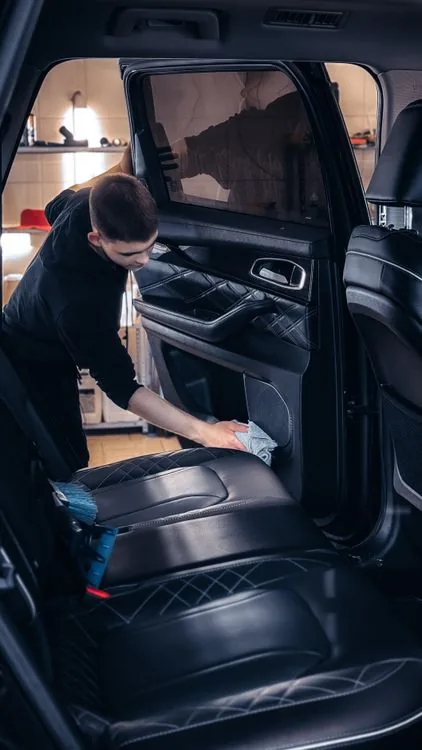
Work around the cabin in a consistent direction: door trim, dashboard, console, opposite door. Give handles, armrests, cupholders and the edges of storage pockets deliberate attention. These small areas often make the interior feel cleaner than a quick sweep across the biggest panel.
Interior Shampoo has been useful for lifting the built-up film on my cabin’s suitable trim and fabric. Around controls, put cleaner on the cloth where the product method allows it, then collect the residue with a fresh face. Leave the finish dry and even, including inside the lip of a cupholder.
Keep screens on their dedicated cloth-cleaning route. Glossy plastics and delicate coatings also deserve their own material instructions rather than the same brush and spray used everywhere else.
If you’re deciding which cabin surface to tackle next, choose the part in the Detailing Garage, confirm its material and save the relevant method to your plan.
Choose the seat method by the material
| Surface | Where to start | What changes the job |
|---|---|---|
| Woven fabric | Controlled fabric cleaning after vacuuming | Soil depth, residue removal and drying time |
| Finished leather | Leather cleaning in small sections | Coating condition, perforations and seams |
| Alcantara | Material-specific gentle care | Pile direction and the difference between dirt and wear |
Clean a complete natural section, such as one cushion panel, when the method calls for it. That can give a more even result than chasing a wet ring repeatedly across the seat. Keep moisture away from electrical fittings and allow the upholstery to dry before use.
If the roof lining needs attention, use the separate low-moisture headlining method rather than treating it like seat upholstery.
Finish the glass, then sit in the car
Clean the inside glass after the dusty and wet jobs. Keep glass cloths away from dressing applicators, and pay attention to the windscreen’s lower corners and the top edge of the side windows. The glass routine explains a useful way to track which side still has a smear.
Give the floor a last vacuum to collect anything loosened during cleaning. Refit dry mats securely, checking the driver’s retention points and pedal clearance.
Finally, sit in your normal driving position. Look across the dashboard, screen, glass and armrest. You see the cabin differently from here than when leaning through an open door, and it’s the view you’ll enjoy every day.