Car Detailing Brushes: Start With the Gaps You Need to Clean
Some links in my articles are affiliate links. I may earn a commission when you buy through them.
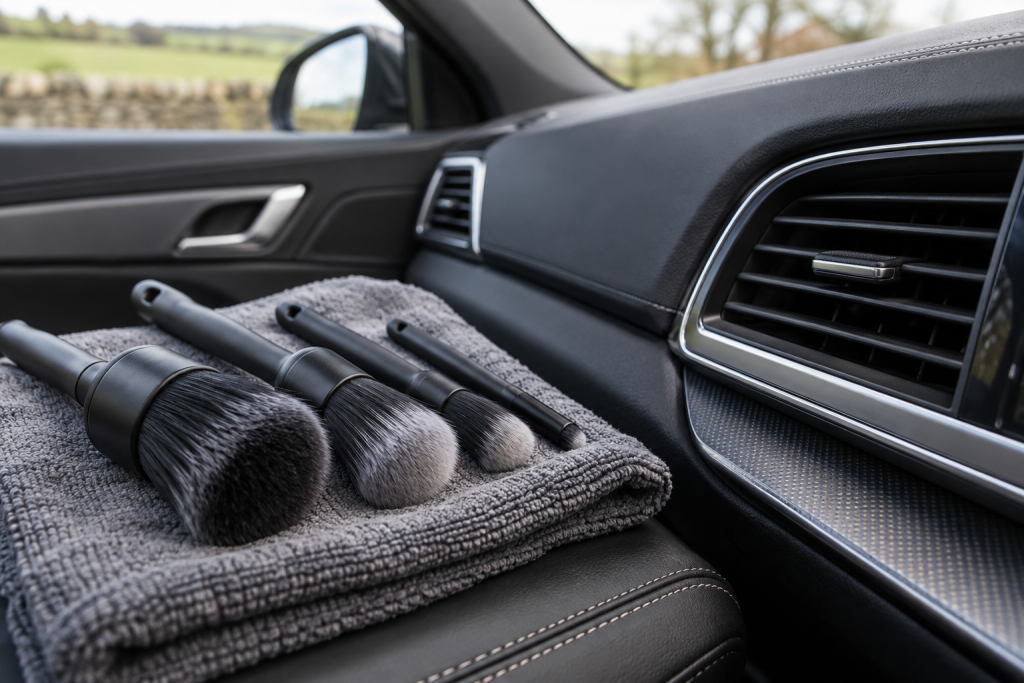
Dust around a vent or door handle can spoil an otherwise tidy cabin. A brush helps when it brings that dirt somewhere you can collect it. I’d start with a soft, controllable head, then add another shape only when a particular gap calls for it.
My first interior brush choice
The LuenHego interior brush is easy to control for light work on suitable cabin materials. You can see where the working surface touches and keep the pressure modest.
Check the surface before choosing a brush. Screens, delicate gloss coatings, suede-like textiles and worn trim may need a cloth or material-specific method instead.
Give the dust somewhere to go
For loose dust, start dry. Hold a suitable vacuum nozzle nearby or keep a clean cloth ready, then brush from the accessible inner edge towards you. Collect what comes out rather than pushing it deeper into the vent.
Work around switches and mechanisms without forcing the head inside. A shorter visible stroke is easier to control than scrubbing blindly into a narrow gap.
Choose the second brush for a different reach
| Shape | Useful job |
|---|---|
| Broad soft head | Accessible dust on suitable dashboard or console areas |
| Narrow round head | Small gaps and deeper recesses with a visible access path |
| Small precise head | A particular trim join that a broad brush cannot reach |
| Dedicated wheel brush | Exterior wheel soil, kept completely separate from the cabin kit |
Check the ferrule, handle and edges as well as the bristles. The softest fibres won’t help if a hard part of the tool knocks against the trim as you turn it.
When cleaner is part of the job
Use a product and agitation method suitable for the material. Control the moisture around switches and joins, and collect loosened residue with a fresh cloth. The brush’s role is to help reach the soil; it doesn’t remove the need for a clean wipe afterwards.
Keep wheel dirt and oily dressing away from interior brushes. If the head picks up grit or sticky residue, clean it before moving onto another surface.
Store the brush ready for the next small job
Remove debris, wash where the care instructions permit and allow it to dry. Keep the working face covered or stored in a clean compartment. Inspect it before use even if it has been sitting in its protective cover.
The LuenHego brush is a useful starting tool for suitable cabin work. Pair it with the interior routine, and use the touchscreen cloth method for the display. A few well-chosen shapes will serve you better than a drawer full of near-duplicates.