Some links in my articles are affiliate links. I may earn a commission when you buy through them.
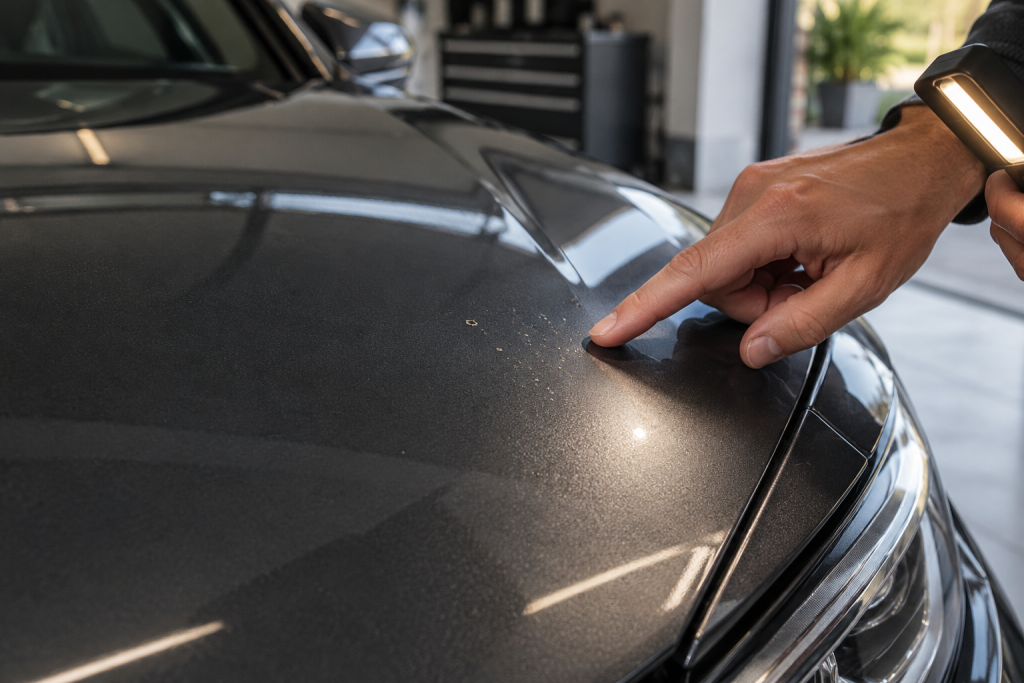
It’s frustrating when the car looks clean but the bonnet still feels like it needs another wash. Before reaching for polish, I’d find out what is sitting on the paint. Sticky sap, iron particles, mineral deposits and paint overspray need different treatment, and extra pressure with the wash mitt won’t tell you which one you have.
Start with a thorough wash and inspect the dry paint. Treat a recognisable deposit with a product approved for that surface, clean away the residue, then reassess. Clay is useful for suitable bonded contamination that remains; polishing comes later if the finish itself needs improving. You don’t need to buy every decontamination bottle to follow that order.
Sticky patches or amber droplets
Begin with softening and washing, then a controlled local treatment if necessary.
Before buying: Identify paint, film and trim separately before choosing a solvent cleaner.
Fine grit on otherwise clean gloss paint
A lubricated test patch can establish whether mechanical decontamination helps.
Before buying: The dry finish must still look satisfactory; a smoother feel alone is not the whole inspection.
First, make sure you are inspecting clean paint
Rinse loose grit away and use a proper contact wash before feeling the surface. Work out of direct sun on panels that are cool enough for the wash solution to stay wet. If you have a heavy winter film across the lower doors, deal with that wash stage before diagnosing a separate bonded deposit.
Dry a representative area and use a clean fingertip lightly. You are checking for texture, not trying to scrape something off with a fingernail. Look along the reflection as well as straight at the panel: tiny raised specks can be easier to see in oblique light.
Compare a few locations. The bonnet, roof, area behind the wheels and a sheltered door shut have had different exposure. A patch under a tree and black specks low down a door might be two different jobs. Take a clear photograph before treating anything if the marks appeared after building work or a paint repair; it gives you a useful record of the original distribution.
If the surface is already flaking, cracked or peeling, leave the cleaning experiments there. A loose edge of lacquer is a finish problem. Repeated claying or polishing cannot turn it back into sound paint.
Use the pattern as a clue, not a diagnosis on its own
Sticky film or small amber drops after parking near trees point towards sap or honeydew. Start with the sap-removal sequence rather than rubbing the sticky material across a bigger area.
Black, tar-like dots on the lower body suggest a different route. The tar-remover buying guide explains the product and material differences. A tiny local application is easier to control around a plastic arch edge than covering the whole panel.
Small rusty-looking dots, particularly noticeable on light paint, can be iron contamination. Iron-fallout removers are intended for that deposit. A colour reaction is a product cue, not a reason to leave the liquid working until the panel starts to dry.
Pale rings suggest dried water deposits. A ring that remains after appropriate cleaning may involve the finish underneath, so use the water-spot and etching checks before buying a more aggressive polish.
A fine, gritty mist after nearby spraying raises the possibility of overspray. The same texture can have other causes; check the history and distribution before treating it as paint. The overspray guide explains a small clay trial and when the job needs specialist assessment.
Match the cleaner to the panel and its edges
Before using a chemical, identify whether the panel is ordinary gloss paint, a repair, matte paint, vinyl or paint-protection film. A clear film edge near the bonnet or bumper matters even if the rest of the car looks identical. Check the surrounding trim, seals and badges too; runoff reaches more than the spot you aimed at.
For stubborn sticky deposits on compatible gloss paint, Simoniz Tar, Sap & Glue Remover is one option with a defined local application and wipe-off routine. For mineral water deposits, Gtechniq W9 Water Spot Remover is a different type of treatment. They are not interchangeable bottles for any mark that survives shampoo.
Set up enough clean cloths before opening the product. One face lifts residue, another checks the cleaned area, and a clean dry cloth finishes after the required cleanup. Keep a wheel cloth out of the paintwork pile, even if its colour happens to match the others.
Remove one deposit before starting the next treatment
Work on one identifiable problem at a time. Apply the correct product to a small area, watch its prescribed working stage and remove it completely. Do not put iron remover over a wet solvent treatment or use a clay bar to mix the remaining chemicals together.
Inspect again after cleaning and drying. With my targeted contamination treatments, checking the local patch after it dried was more useful than judging the wet panel. It showed what the extra stage had changed without confusing it with the wash itself.
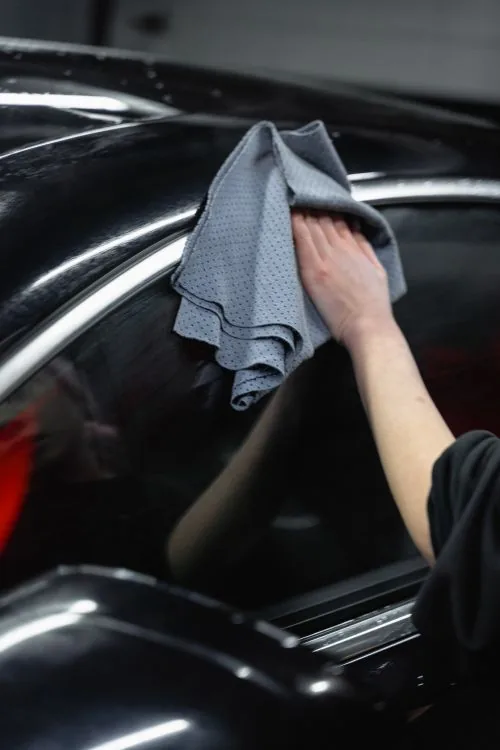
If the deposit softens or transfers onto the cloth, keep the work local and change to a clean face. If nothing changes, stop and check the diagnosis and directions. More rubbing with the same loaded cloth can create an additional finishing job without removing the original mark.
Decide whether clay adds anything
Once suitable targeted cleaning has been completed, feel the clean area again. If it is smooth, there may be nothing useful left for clay to do. If bonded roughness remains on sound gloss paint, try a lubricated patch before committing to every panel.
Choose the clay bar and lubrication as a system. A bar approved for water lubrication and one supplied with a particular detailing spray have different requirements. Keep the working face clean and retire a piece that has fallen on the ground.
After a few light passes, wipe and dry the area. Compare both its feel and its appearance with the untreated paint beside it. Stop if the clay drags, collects excessive dirt immediately or leaves visible marks. A test patch is useful precisely because you can change course before doing the whole car.
Finish with the condition you can actually see
Smooth paint may still have swirls or staining. Decide separately whether those marks warrant polishing. A decontamination stage removes a deposit; it does not promise a corrected finish beneath it.
For an existing ceramic coating, start with its maintenance instructions and the beading checks. For a new coating, use the complete preparation routine after any necessary correction. Gloss left by a detailing spray is not evidence that the panel is ready for the coating applicator.
Once the chosen cleanup and finish work are complete, apply compatible protection where needed. Keep a note of which panels needed which treatment. At the next wash you can inspect those areas first instead of automatically repeating an entire decontamination session.