Some links in my articles are affiliate links. I may earn a commission when you buy through them.
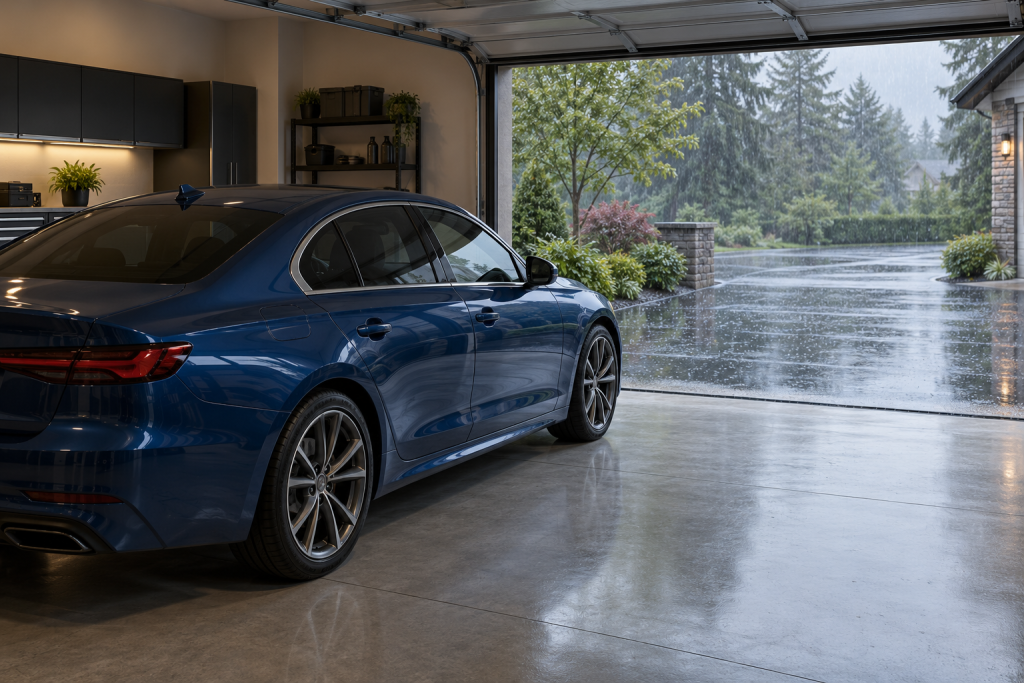
You’ve finished coating the car and now the forecast has changed. Or perhaps you’re trying to work out whether a Sunday afternoon application leaves enough time before Monday’s commute. Use the exact coating’s instructions to plan three separate stages: removing residue, exposing it to water and washing it.
Plan the protected period from the final coated section, using the instructions for your particular product. For example, Gtechniq Crystal Serum Light requires 12 hours indoors after application, while Gyeon CanCoat EVO allows outdoor application but still requires protection from water for the first 12 hours. Neither instruction means that every ceramic product has the same first-wash interval.
Three different timings to keep separate
During application, you need to know when to remove excess product. That may be immediate or after a product-specific interval. Leaving it longer because you want a stronger result can leave residue that becomes harder to remove. See dealing with coating high spots if the finish already looks patchy.
After levelling the coating, there is an initial period when the vehicle needs protection from water or other contamination. This is the practical constraint when choosing where to park and when to start. Once that interval has passed, continue following the manufacturer’s aftercare guidance; do not assume every chemical, top-up spray or wash process is immediately appropriate.
The first wash is a separate decision. Use the current instructions supplied with the exact coating, including any topper that changes the care plan. A generic online statement to wait a week may be too broad for your product, just as a short rain-free requirement may not tell you when to use shampoo.
Count from the last panel
Suppose a coating requires 12 hours protected from water and you finish the last section at 5pm. That takes you to 5am the following day. It does not mean a 5am wash is automatically approved; it only calculates that particular protected interval.
Now consider when you started. If you began washing at lunchtime but spent several hours correcting and preparing paint, the clock didn’t start at lunchtime. Writing the finishing time on a note prevents an easy mistake when you’re tired at the end of the job.
If you’re working on separate sections over two days, record the later finish too. The newly coated panels still need their own full period. The car’s next journey has to suit the most recently treated section, not the first panel you completed yesterday.
1. Apply and remove residueUse the timing on your exact coating.
2. Protect from waterCount from the last finished section.
3. Begin routine washingFollow the separate aftercare interval.
Outdoor application needs a plan for dew
An outdoor-capable product is useful, but it doesn’t remove the need to manage water. A dry forecast can still be followed by dew on an exposed bonnet. Check the overnight conditions as well as the afternoon rain symbol, and use a suitable sheltered location where the product permits it.
CanCoat EVO is worth considering when you have an appropriate outdoor working area and a realistic way to keep the car dry afterwards. The manufacturer permits outdoor application away from direct sun; that does not turn a damp evening into a suitable curing environment.
A temporary shelter needs to keep water off the actual car, including rain driven from the side. Check clearance and stability without placing anything on freshly treated paint. A cover touching the panels can introduce rubbing or contamination, so I wouldn’t improvise with a loose sheet as soon as the applicator goes away.
Where indoor application is specified, as it is for Crystal Serum Light, choose that environment from the outset. Follow the label’s ventilation and temperature directions too. An enclosed space is useful for weather control only if it is also suitable for using the products.
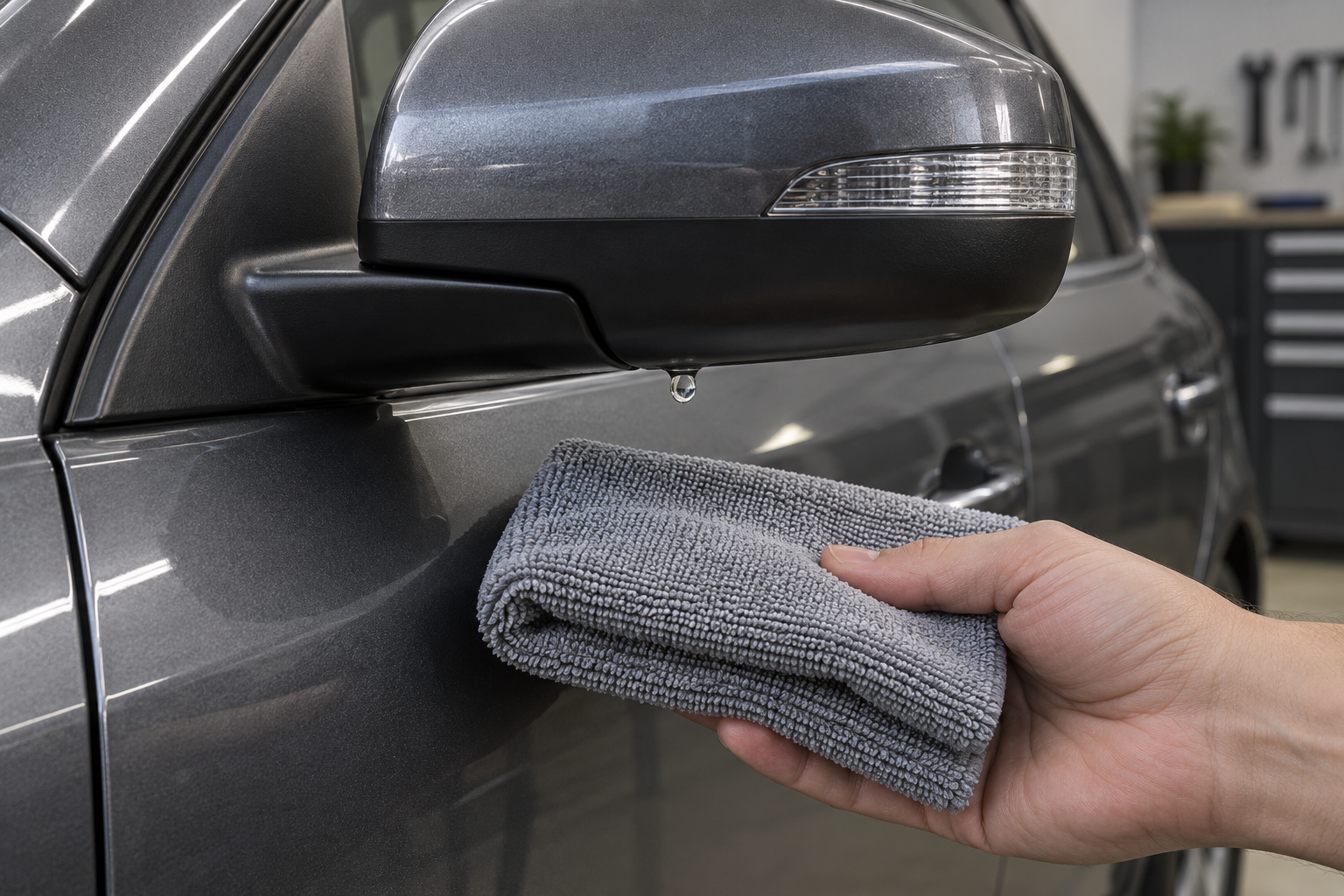
Before application, also check for water trapped beneath mirrors and around handles. A sheltered parking space cannot prevent a last wash-water drip from crossing the finish.
If the car gets wet too soon
Move it into appropriate dry shelter if you can do so safely. Record the product, when application ended, when water arrived and what the paint now looks like. Those details let the manufacturer advise on that particular coating instead of offering a guess about ceramics in general.
Don’t start rubbing a road-dirty wet panel with a dry cloth. If water removal is appropriate under the maker’s advice, use a clean suitable towel with minimal contact. New droplets alone are not proof that the coating has failed, and a water ring is not proof that the mark is permanent.
Avoid escalating through panel wipe, water-spot remover and polish while the coating is still fresh. Each can change the surface you’re trying to assess. Ask for the relevant recovery method before applying a chemical intended for an established finish.
Once the prescribed cure and care conditions allow a wash, inspect the clean dry surface. If marks remain, separate visible residue, mineral deposits and defects in the paint before treating them. My coating-performance checks cover that later assessment; they are not a reason to perform a diagnostic wash during a no-wash period.
Can you make it cure faster?
Don’t borrow an infrared-lamp or heating routine from a professional installation unless the coating manufacturer supplies the relevant method and you have suitable equipment. Increasing panel heat without control can also change application behaviour and make a patchy finish harder to manage.
More layers do not shorten the waiting period either. If you add an approved second product, follow its application window and care instructions. You may be adding time to the job rather than creating a shortcut to the next journey.
I would rather choose a protection method that fits the available time than try to hurry a coating whose directions don’t. The spray-sealant guide gives you a less involved route when the car needs to be back on the road promptly. Verify that product’s own drying and weather requirements too.
Arrange the first wash before the car gets filthy
Once washing is permitted, use a gentle routine suited to the coating. You don’t need to celebrate the new finish by applying every finishing product in the cupboard. Begin with a compatible shampoo and clean wash media, then dry carefully.
If bird droppings or another contamination lands during the early care period, consult the maker’s advice promptly. Leaving contamination indefinitely because the first routine wash is later isn’t a useful plan either. Explain what has landed and how recently the coating was applied so the response can be specific.
Keep the product name, application date and aftercare directions together. If someone else washes the car, give them that information before handing over the keys. Continue with washing a ceramic-coated car, or use the complete home-coating guide if you’re still planning the job.