Some links in my articles are affiliate links. I may earn a commission when you buy through them.
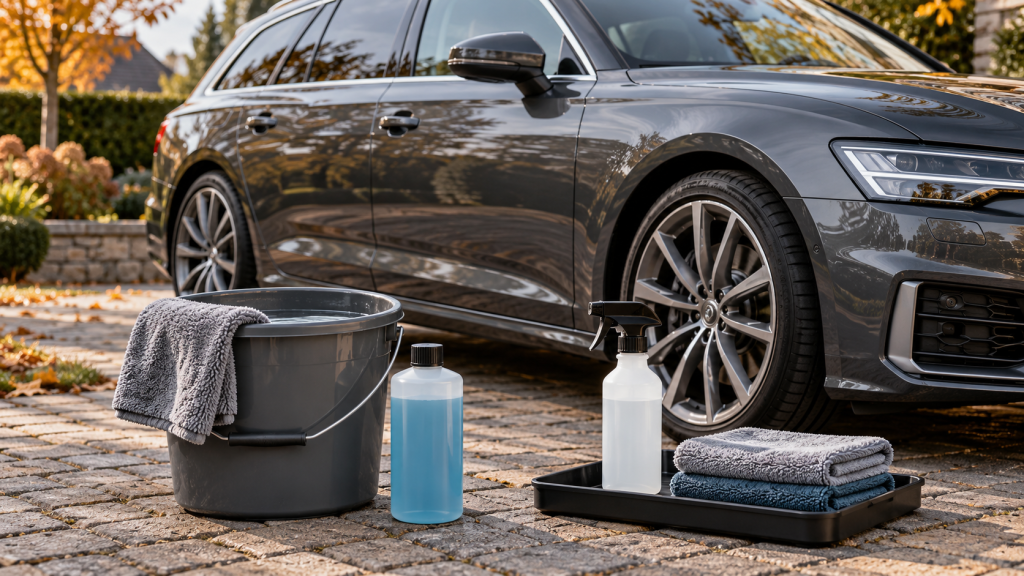
No outside tap doesn’t automatically mean you need a waterless spray. If you can carry a bucket of water to the car, I’d usually choose a dedicated rinseless wash for a broader maintenance clean. A ready-to-use waterless spray is the simpler setup for a few lightly dusty panels. Check the lower doors first: coarse grit, mud and heavy salt deposits need removing before either contact method.
For compatible gloss paint where a wash-and-wax finish is welcome, Optimum No Rinse Wash & Wax is my rinseless starting point. If you want the spray-and-cloth route, the waterless buying guide compares two options for different upkeep habits.
What you actually do with each method
With a rinseless wash, you mix a dedicated concentrate with water, saturate the wash media, clean a section and dry it without a final hose rinse. There is still water involved. A bucket of ordinary shampoo does not become rinseless because you decide to skip its rinse stage.
A ready-to-use waterless wash puts the cleaning liquid on the panel from the spray bottle. You lift the light soil with clean cloth faces and finish as that product requires. You save the bucket setup, but still need enough fresh cloth to take the dirt off the car.
The distinction is easy to lose when a shopping listing calls every no-hose product “waterless”. Before ordering, check whether the bottle is a concentrate to dilute or a ready-to-use spray. Also check its full name: a wash-and-wax and a preparation wash can leave very different things behind.
Choose rinseless when you can bring a measured bucket
For a planned maintenance clean covering several lightly soiled panels, I prefer the rinseless setup. You can prepare saturated wash towels together and work steadily round the car, keeping a separate drying towel and a container for used media beside you.
Wash & Wax is a concentrate with a carnauba finish. The maker’s sequence is to dilute, saturate the wash media, wash one section with light pressure, then dry it with a clean microfibre towel. Use the dilution on the exact bottle; a bucket recipe and a stronger spray recipe are different jobs. The full rinseless routine explains measuring and US-versus-imperial units without guessing from a capful.
If you use multiple towels, once one has touched dirty paint, put it in the used container rather than back with the clean soaked towels. Check lower sections as you go. The water and fresh media give you a workable routine; they do not remove the need to inspect what you are about to wipe.
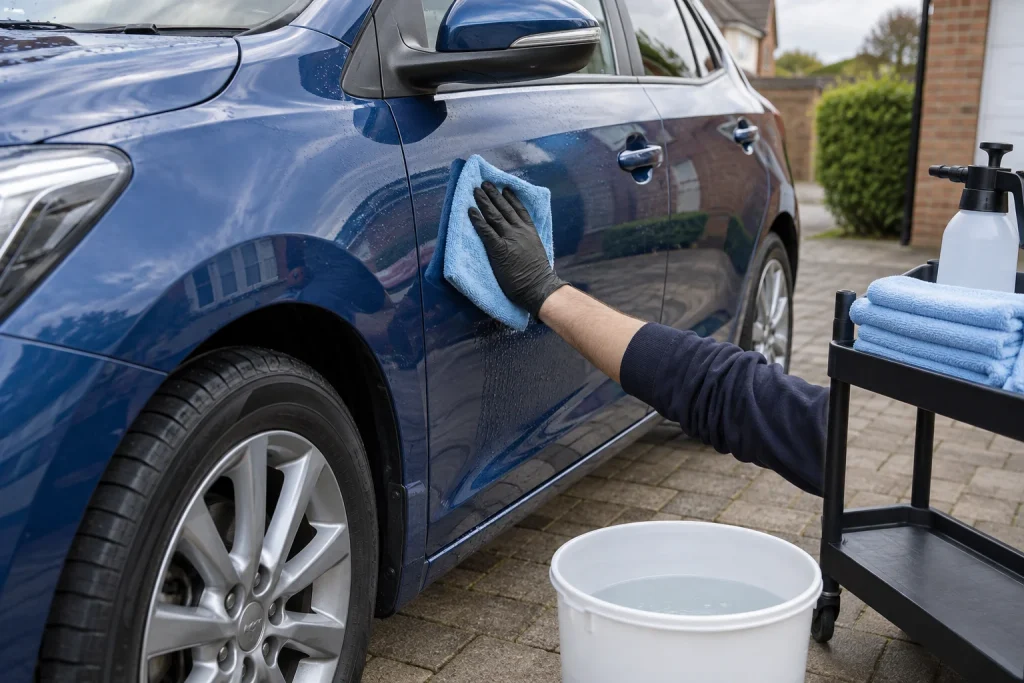
Choose waterless for the small light-soil tidy-up
A spray and a handful of clean cloths are handy when the car is generally clean but a few panels have picked up a light film of dust. You can treat the affected areas without carrying a bucket or mixing solution for a larger wash.
Turtle Wax Hybrid Solutions Ceramic 3-in-1 Detailer is the 500ml option I’d consider when you want that light clean to leave a ceramic-wax finish. Its UK directions limit the job to clean or lightly dusted cars and use roughly a 60cm-square section before wiping and turning to clean material for the buff. Check that the particular finish accepts the product before applying it.
Greased Lightning Showroom Shine suits someone who already uses waterless wash-and-wax regularly and wants two 1L bottles of the carnauba formula. Keep a clean finishing cloth separate from the one lifting dirt.
For the product differences and cloth setup, use the waterless choices. There is no need to buy both types of wash for the same small job.
When I’d arrange a pre-rinse instead
Look at the back of the car and the paint immediately behind the wheels, not just the easy upper panels. A layer of coarse dirt there changes the whole plan. More liquid on the cloth will not remove loose grit before the cloth makes contact.
With thick mud or heavy gritty deposits, get the loose contamination rinsed away first, using an appropriate wash location if needed. Afterwards, reassess the remaining soil and choose a method that suits it. If you cannot do that preparation where the car is parked, postpone the contact wash rather than force the available bottle to do the job.
In winter, check the working conditions too. You need enough light to inspect the paint and footing where water will not create an icy hazard. The winter washing guide covers planning the larger clean.
Compare the complete setup, not just bottle size
For rinseless, allow for carrying water, measuring concentrate, saturating media, drying and packing away the used towels. For a ready-to-use spray, the mixing stage disappears, while cloth supply and a clean finishing pass remain. In either case, decide where the dirty towels will go before you begin.
A litre of concentrate and a litre of ready-to-use spray are not equal amounts of wash solution. You would need the actual dilution, amount used and current purchase price to compare a cost per job. For a first purchase, I’d choose the routine I can complete properly rather than a large pack that is awkward to use where the car lives.
Protection is part of the choice too. The named options here add wax or ceramic-wax protection. For a coating with specific aftercare, matte paint, film or imminent coating preparation, establish the supported formula first. The coated-car washing advice explains the maintenance decision.
For a measured bucket clean, continue with the rinseless method. For occasional spray upkeep, choose from the waterless recommendations and set out the fresh cloths before starting.