Rinseless Car Washing: A Practical No-Hose Routine
Some links in my articles are affiliate links. I may earn a commission when you buy through them.
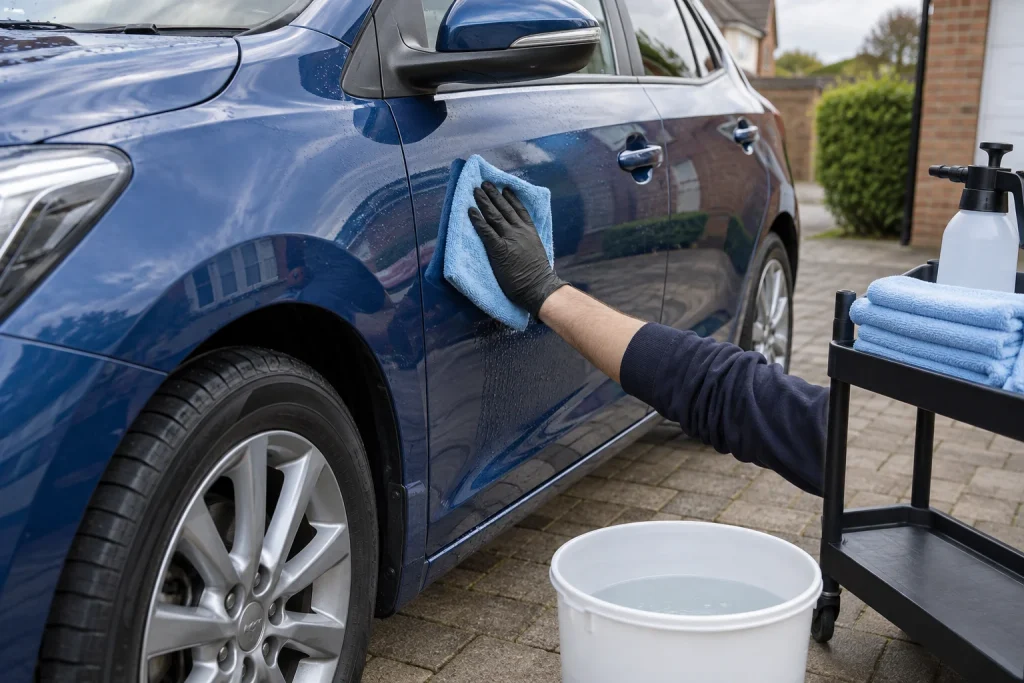
No outside tap makes car washing awkward, but a lightly soiled car can still have a proper maintenance clean. Use a dedicated rinseless product, measured water and plenty of clean wash media. I’d check the dirt first, particularly on the lower doors, before deciding whether the car needs a pre-rinse elsewhere.
My starting choice for light gloss-paint upkeep
Optimum No Rinse Wash & Wax is a useful choice for light upkeep without a hose when you want a wash-and-wax finish on compatible surfaces. Work small sections and change cloth faces to keep the routine manageable.
For a car with specialist aftercare, check that this wash-and-wax formula fits the system. A similar-looking rinseless bottle can have a different finishing purpose, so match the full product name when you reorder.
Rinseless still uses water
The method uses a diluted wash solution, then you dry the section without a final hose rinse. It is different from taking a dry cloth to a dusty car. Ready-to-use waterless sprays and rinseless concentrates also need their own instructions.
| What is on the car? | The useful route |
|---|---|
| Light dust or manageable maintenance soil | A compatible rinseless method with fresh media |
| Coarse grit, thick mud or heavy salt deposits | Remove the loose heavy contamination with an appropriate pre-rinse first |
| Specialist matte finish, film or coating | Use a formula and method supported for that surface |
If you cannot remove coarse contamination before contact, arrange a different wash opportunity. More concentrate doesn’t solve the access-to-water problem.
Measure the exact formula
Use the dilution on your Wash & Wax bottle and a vessel that reads the small amount accurately. Keep the bucket recipe separate from any spray-bottle recipe: a pre-spray may have its own concentration.
If the label uses US units, convert them before filling a British bucket:
| Unit on the label | Metric equivalent |
|---|---|
| 1 US fluid ounce | About 29.6ml |
| 1 US gallon | About 3.785L |
| 1 imperial gallon | About 4.546L |
For example, if a recipe specified one US fluid ounce per two US gallons of water, that would be roughly 29.6ml in 7.57L, or 19.5ml in 5L. This is a worked conversion example; take the actual dose from the exact bottle you are using.
Notice whether a recipe describes the amount of water or the finished mixture. Mark the water level on your clean bucket once you have measured it. That makes the next wash repeatable without estimating from the depth by eye.
Set up a clean-to-used direction
Prepare clean wash towels, a separate drying towel and a container for used media. For a multiple-towel routine, soak the clean towels in the correctly mixed solution. Once a towel has touched dirty paint, retire it from the clean solution.
Keep more fresh towels ready than you expect to need on a first attempt. A low sill may use a clean face quickly, while an upper panel stays relatively easy. Note actual consumption after the wash so you can prepare properly next time.
Wash and dry one section before moving on
Work cool panels in shade where possible. Use saturated wash media and light, controlled passes over a manageable area, turning to fresh faces as they collect soil. Follow any pre-spray stage specified for your chosen formula.
Dry that section with a separate clean towel using the product’s method. Inspect in angled light before starting the next. If you have merely moved a mark, reassess the soil and media rather than pressing harder with a loaded cloth.
Progress from cleaner upper areas towards dirtier lower ones, using separate tools for wheels and other heavily contaminated areas. Keep drying towels out of the used-wash pile.
Leave the next wash ready
Put used towels into the laundry container and deal with remaining solution according to the product’s storage instructions. Keep the bottle and measuring equipment together so you can repeat the mixture.
For compatible gloss paint and light upkeep, Wash & Wax is the route I’d consider first. The microfibre guide and drying routine help make the cloth side of rinseless washing work properly.