How to Clean Fabric Car Seats and Get Them Dry Again
Some links in my articles are affiliate links. I may earn a commission when you buy through them.
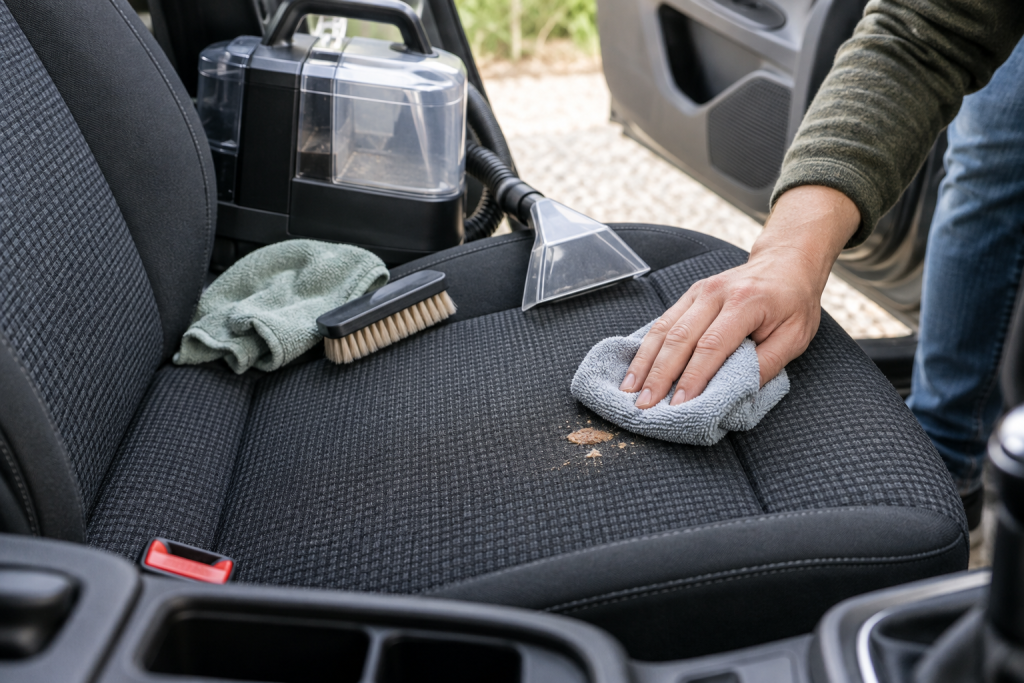
A marked seat needs more thought than a quick spray and scrub. You want to lift the soil, remove the cleaner and have the seat properly dry before anyone sits on it. Start with the kind of dirt you can see, then choose a hand clean or extraction method that fits the job.
Vacuum before introducing moisture
Remove loose belongings and vacuum the cushion, backrest, seams and accessible edges. Move the seat through its normal range to reach the surrounding floor. Keep attachments away from wiring and mechanisms.
The Go Vac Pro is useful for regular seam and footwell cleaning. That dry stage is worth doing thoroughly: wetting crumbs and loose grit makes the later work less pleasant.
Choose the method by how deep the problem goes
| Condition | Sensible route |
|---|---|
| Light surface soil or a small compatible mark | Controlled cleaner application and cloth removal |
| More widespread washable soil | A planned upholstery clean, with suitable extraction if needed |
| A spill that has soaked deeply | Identify the spill and what has reached the filling before choosing treatment |
| Delicate or unfamiliar fabric | Material-specific instructions before wet cleaning |
For supported fabric, Interior Shampoo is a useful hand-cleaning option. Keep the fabric lightly damp and inspect after drying for a clearer view of the result.
Hand-clean a manageable section
Test the chosen method on an inconspicuous area and let it dry. Apply the cleaner as instructed, work gently and collect loosened soil with clean cloth faces. Keep the amount of moisture under control, especially around seams, switches and seat fittings.
When a wider panel needs cleaning, work evenly across its natural boundaries rather than repeatedly wetting a shrinking spot. Change cloths as they load up. Finish the product’s residue-removal stage so you don’t leave cleaner in the fabric to attract more attention later.
When an extractor is the useful next tool
An extractor applies cleaning solution and recovers it from suitable upholstery. It can help with a deeper clean, but it introduces a drying job as well. Use the compatible detergent, correct attachment and machine method, including recovery passes where specified.
A wet-and-dry vacuum can collect liquid in its correct configuration, but doesn’t necessarily spray or meter solution. The machine comparison explains the difference before you buy or hire.
Plan drying before starting
Allow ventilation and enough time for the seat to dry through, not just feel better at the surface. Cool, damp weather and heavily wetted filling extend the job. Keep the vehicle secure while it airs and avoid trapping moisture under covers.
If the car needs passengers shortly, clean the dry areas now and schedule the wet work properly. For customer jobs, agree the realistic return-to-use time before starting.
Inspect the dry result
Look for remaining soil, residue and tide marks in consistent light. Identify what remains before repeating the process. A deeper spill or recurring smell may need attention beyond another surface pass.
Once clean and dry, you can consider a compatible fabric protector as a separate stage. Finish the surrounding cabin using the interior routine so the seat goes back into a clean environment.