Fabric Seat Protector: Is It Worth the Drying Time?
Some links in my articles are affiliate links. I may earn a commission when you buy through them.
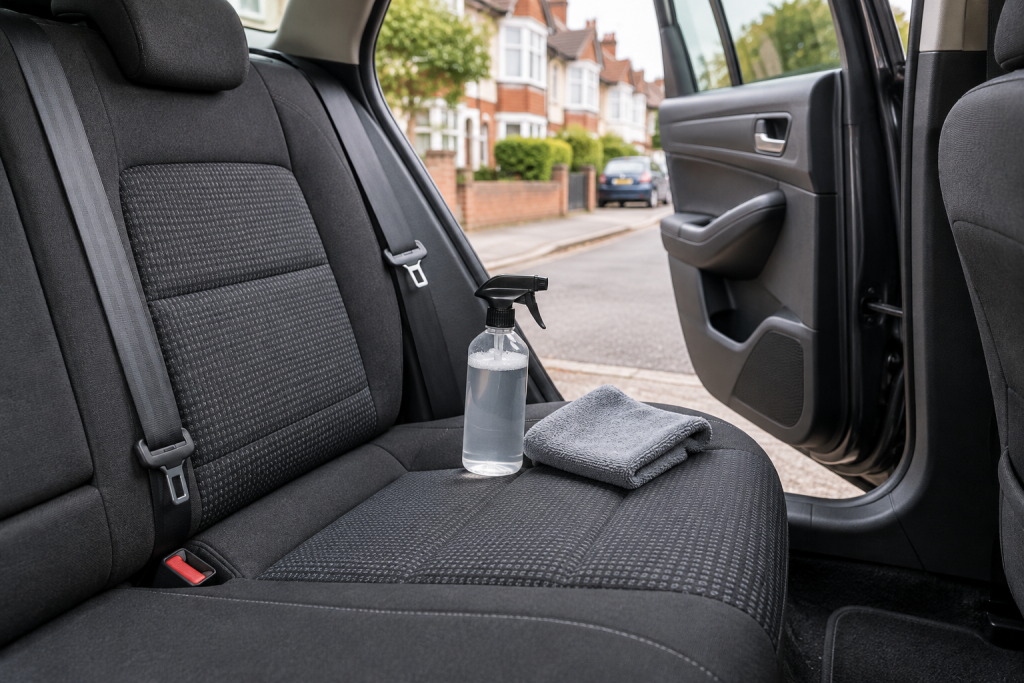
A fabric protector is worth considering when seats regularly face drinks, muddy clothing or pet journeys. I’d settle the timing first: can the car stay unused long enough for cleaning, drying and the treatment itself? Get that right and the product has a much better opportunity to do the job you bought it for.
Choose for the fabric and the preparation
Gtechniq I1 Smart Fabric AB is a material-specific option for compatible fabric. Its published process is useful because it sets out the preparation and drying needed before and after application.
Identify the seat material and check the vehicle’s care instructions, especially with specialist textiles, perforated surfaces and mixed-material seats. Keep leather, screens and hard trim on their own care routes.
Put both drying stages in the plan
The UK maker’s method calls for the cleaned fabric to be thoroughly dry before treatment, with 48 hours in good drying conditions suggested for best results. It then specifies 24 hours drying after application. Those are planning requirements for this product, not a promise that any soaked seat will be ready on the same timetable.
Work backwards from when passengers need the car. A Saturday afternoon seat wash followed by immediate protection is a different plan from cleaning first and giving the upholstery a proper drying window.
If the full sequence doesn’t fit, complete the cleaning at a suitable time and schedule protection separately. For customer work, agree the return-to-use time before starting.
Clean and remove residue first
Vacuum thoroughly and follow the treatment system’s specified preparation. Soil and leftover cleaner affect the surface you are trying to treat. The fabric-seat cleaning guide explains hand cleaning and when extraction is the more useful route.
Allow drying through the material, not just at the visible surface. Check seams and thicker areas of the cushion. Keep the car safely ventilated and avoid enclosing damp upholstery under covers.
Apply an even treatment, within its instructions
For I1 Smart Fabric AB, follow the bottle’s working conditions, protective equipment, coverage and application distance. Shield neighbouring materials as required and remove accidental overspray promptly.
Work systematically so you can track which parts have been covered. Finish the specified excess-removal stage, then leave the upholstery for the full drying period. The current instructions call for thorough initial coverage because a dried first application can repel another coat.
What the protection adds to everyday care
Think of it as helping you deal with a spill promptly. Keep a clean cloth available and blot a spill rather than leaving it because the seat has been treated. Normal cleaning and the material’s care routine still form part of looking after the cabin.
For frequent family or customer-car use, the useful comparison is the complete job: preparation, drying space, application and return to use. That is more informative than comparing only bottle sizes.
If you can provide those conditions, I1 Smart Fabric AB is a relevant option to consider. If the immediate problem is dirty fabric, start with the cleaning method and make the protection decision once the seat is properly clean and dry.