How to Wash a Car Properly, Without Missing the Awkward Bits
Some links in my articles are affiliate links. I may earn a commission when you buy through them.
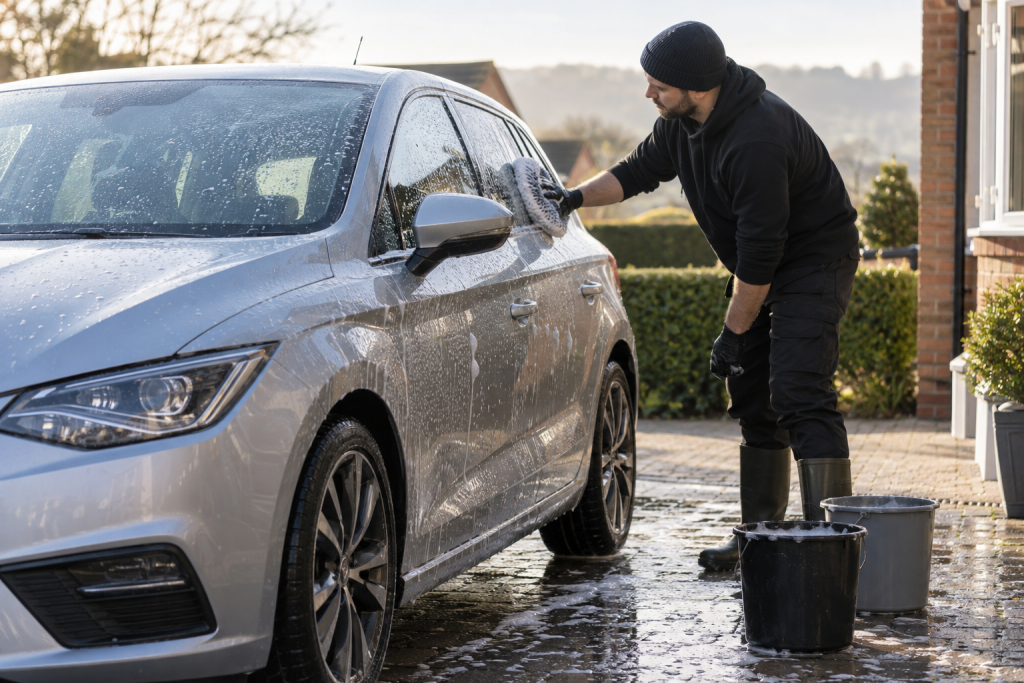
You can spend an hour washing the car and still find dirty sills, grey wheels and a trail of drips under the mirrors. Usually, the answer is a better order of work. Here’s the routine I’d follow for a properly clean car, with enough time left to dry it and enjoy the result.
Get the finishing kit ready first
If you are still assembling your tools, the starting-kit guide covers the jobs each item needs to do. Before filling a bucket, put out your drying towel and a couple of smaller cloths. It sounds backwards, but you want them ready when the car is wet. Park with enough room to walk around it, let the panels cool and work in shade where possible.
For ordinary gloss paint, I’d start with Bodywork Shampoo Conditioner, a MR.SIGA mitt and the CarMax drying towel. The mitt has been easy to control around awkward edges, which matters just as much as how it feels across the bonnet. Give the wheels their own tools and water.
If your car has matte paint, use the matte wash routine. For a wrap or an existing coating, build the wash around that surface’s care instructions.
Clean the wheels while the bodywork is still dry
Work on one cool wheel at a time. Rinse loose dirt, apply a cleaner that suits the finish, agitate the reachable areas and rinse thoroughly. Custom Wheel Cleaner has worked well for the brake dust and road grime around my spokes; the bolt recesses still deserve their own look after rinsing.
A brush that reaches the barrel is useful, but it needs room to pass the caliper without being forced. If yours doesn’t fit, a slimmer tool is the answer. The wheel brush guide explains what to measure.
Rinse before the mitt touches the car
Remove loose grit and mud with water, paying attention to the lower doors and rear of the car. Use the pressure washer’s car-appropriate fan setting and its prescribed working distance. Give loose trim, damaged paint and film edges extra space.
Snow foam can be a useful pre-wash when there is road film to loosen. I’ve had an even covering from Polar Blast through a lance. Let the product work within its instructions, rinse it away and then do the contact wash. Foam on the driveway is quite satisfying; foam left drying on the car is rather less helpful.
For local contamination, follow the separate methods for dried bugs or bird droppings before scrubbing at the mark with your wash mitt.
Wash small areas, from cleaner to dirtier
Mix your shampoo to its own dose. Keep one bucket for wash solution and another for rinsing the mitt, or use a supply of clean wash media that never return dirty to the wash solution.
Start with the roof and upper panels. Load the mitt, use light passes over a manageable section, then rinse and inspect it before collecting more shampoo. Work progressively downwards. Save the grubbiest lower areas for a separate tool, and replace dirty rinse water during the job.
Watch the panel while you work. If the solution begins to dry, shorten the section and rinse sooner. On a large car, you may need to wash, rinse and dry one area before completing the next. A dropped mitt goes into the used-tool container; a clean spare earns its keep here.
Rinse the places that hold shampoo
Check around mirror bases, badges, number plates and panel joins. Let the water drain and look again at the sills. Wet paint can look beautifully glossy while still hiding a missed strip of dirt.
If there are stubborn black specks or tiny bonded particles after washing, identify them before adding more stages. Tar removal and iron fallout removal are targeted jobs. They don’t need to become compulsory extras at every wash.
In cold weather, plan the wash around a safe drying window; our winter car-washing routine covers that change of pace.
Dry, then take one more walk around
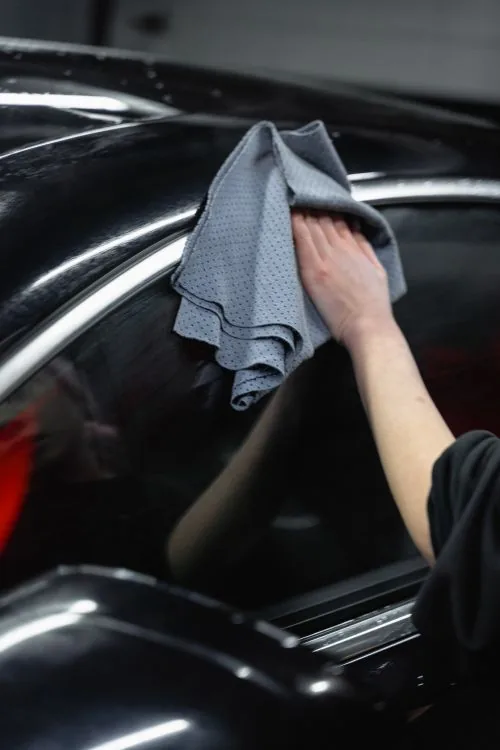
Lay or guide a clean drying towel over the washed surface with light contact. Keep it off the ground and fold the hanging edges in around low panels. Turn to a fresh area as it takes up water, and change towels when it stops collecting water effectively.
Use a smaller cloth for mirror edges and other drips. Open doors carefully and dry the clean accessible edges with a separate cloth, keeping dirty shuts away from paintwork towels. Finish by looking along both sides of the car rather than only straight at each panel.
Once the car is clean and dry, you can stop there or add a suitable wax or sealant. A complete wash and dry is a proper job in its own right.