Choosing a Pressure Washer for Washing Your Car
Some links in my articles are affiliate links. I may earn a commission when you buy through them.
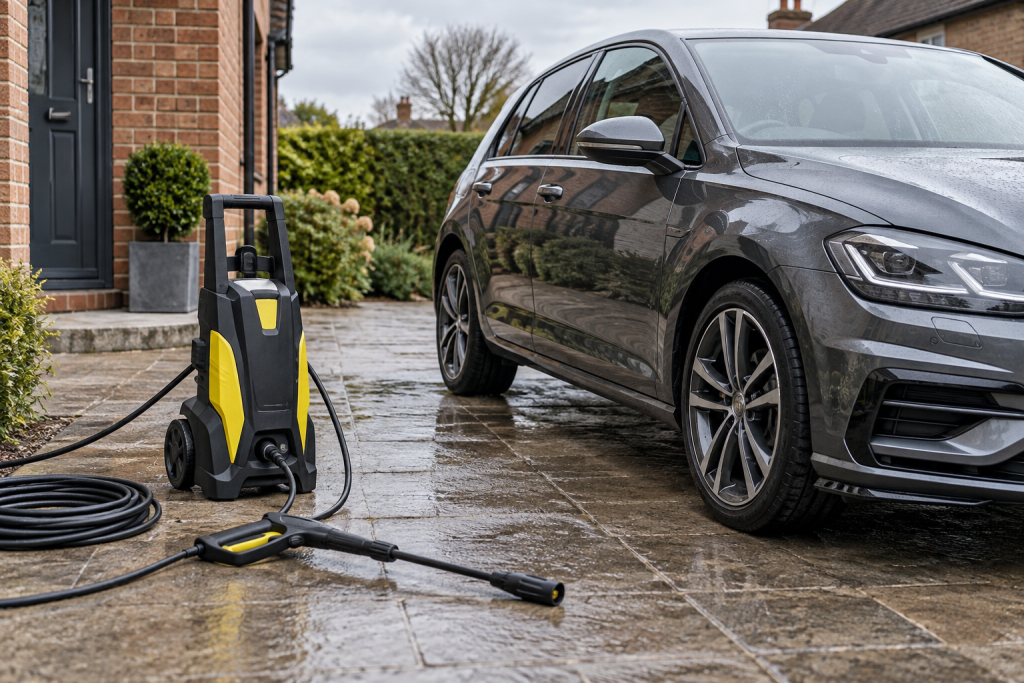
A pressure washer should make it easy to rinse the whole car without constantly moving the machine or fighting the hose. I’d start with that practical picture, then compare the specifications. The biggest pressure number on the box is only one part of a comfortable car-washing setup.
Walk the route before comparing machines
Measure from the tap and power supply to where the washer can stand, then around the car to the far corner. Allow for the hose taking a sensible route rather than stretching in a straight line through the vehicle.
Look at where the hose will pass tyres and bodywork. A short, stiff hose can turn every move around the car into an interruption. Storage matters too: somewhere to wind the hose, drain the equipment and keep attachments together makes a compact machine much easier to live with.
The specifications I’d compare
| Detail | The useful buying question |
|---|---|
| Rated pressure and flow | Does the maker support this machine and nozzle for car cleaning? |
| Hose length and flexibility | Can you reach both sides without pulling the unit around? |
| Nozzle options | Is an appropriate adjustable or fan nozzle included? |
| Connections | Will the hose, gun and any foam lance actually fit? |
| Inlet requirements | Can your water supply meet the machine’s needs? |
| Spare parts and servicing | Can you replace the hose or seals when needed? |
Compare complete packages. A machine with a patio cleaner may still need the particular car-washing accessory you want. Buying the correct hose or lance in the first place can be more useful than collecting attachments that stay in the box.
How much machine does your routine need?
For one regular car, I’d prioritise manageable size, hose reach and a useful car nozzle. For repeated jobs, look more closely at duty, setup time, hose handling and the maker’s intended workload. A domestic machine’s peak specification does not establish that it suits continuous commercial use.
If storage or tap access is the real obstacle, compare the whole arrangement before buying. A rinseless routine can suit light upkeep; heavily gritty cars still need an appropriate pre-rinse opportunity.
Use the jet as a rinsing tool
Work on cool surfaces. Follow the washer’s car-cleaning settings and distances, keep the fan moving and give paint damage, loose trim, seals and film edges appropriate clearance. Avoid using a concentrated dirt-blasting nozzle as the default on bodywork.
Start where you can see the surface clearly, then rinse loose contamination from the lower areas before contact washing. Pressure does not replace the judgement needed around delicate or damaged parts.
If you want snow foam, check the whole connection
A lance needs to match the gun connection and the washer’s working requirements. The fitting’s brand label alone may be too broad: ranges and generations can use different connections.
Polar Blast is a useful choice for a lance-applied pre-wash. Choose the machine itself by its fit with your water supply, working space and workload. The foam-lance buying guide covers the remaining checks.
Once the equipment fits, follow the complete wash sequence. Comfortable hose handling, a controlled rinse and clean wash media are what you’ll appreciate on every wash day.