Some links in my articles are affiliate links. I may earn a commission when you buy through them.
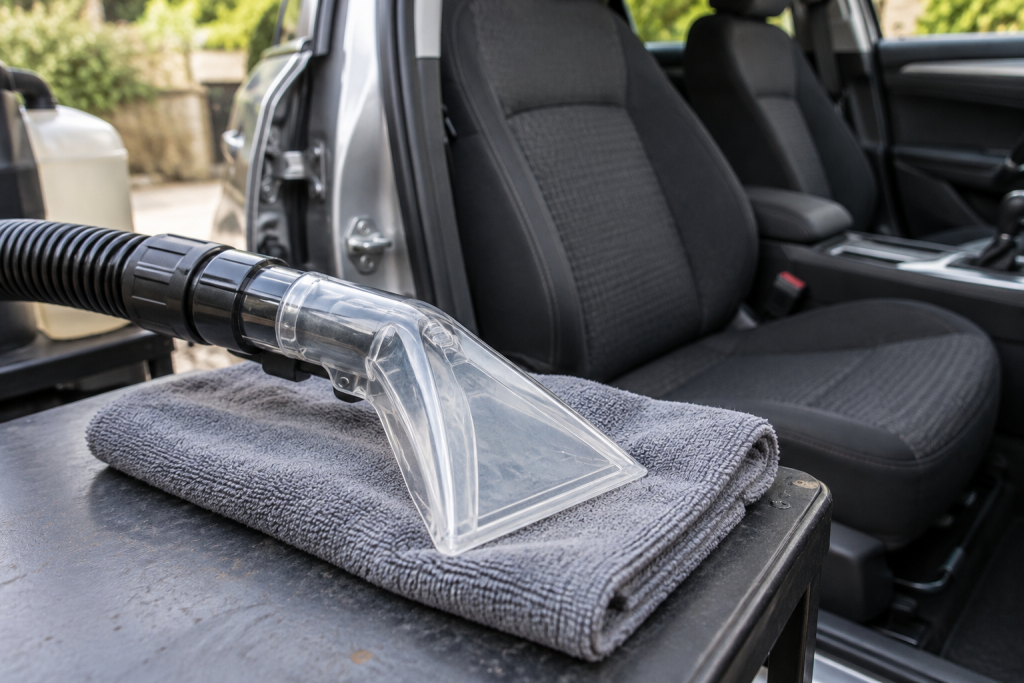
It’s easy to look at a grubby car seat and think a blast of steam must be the answer. The videos make it look wonderfully satisfying. Before buying a machine, though, I want to know two things: can that seat tolerate the treatment, and where will the loosened dirt go?
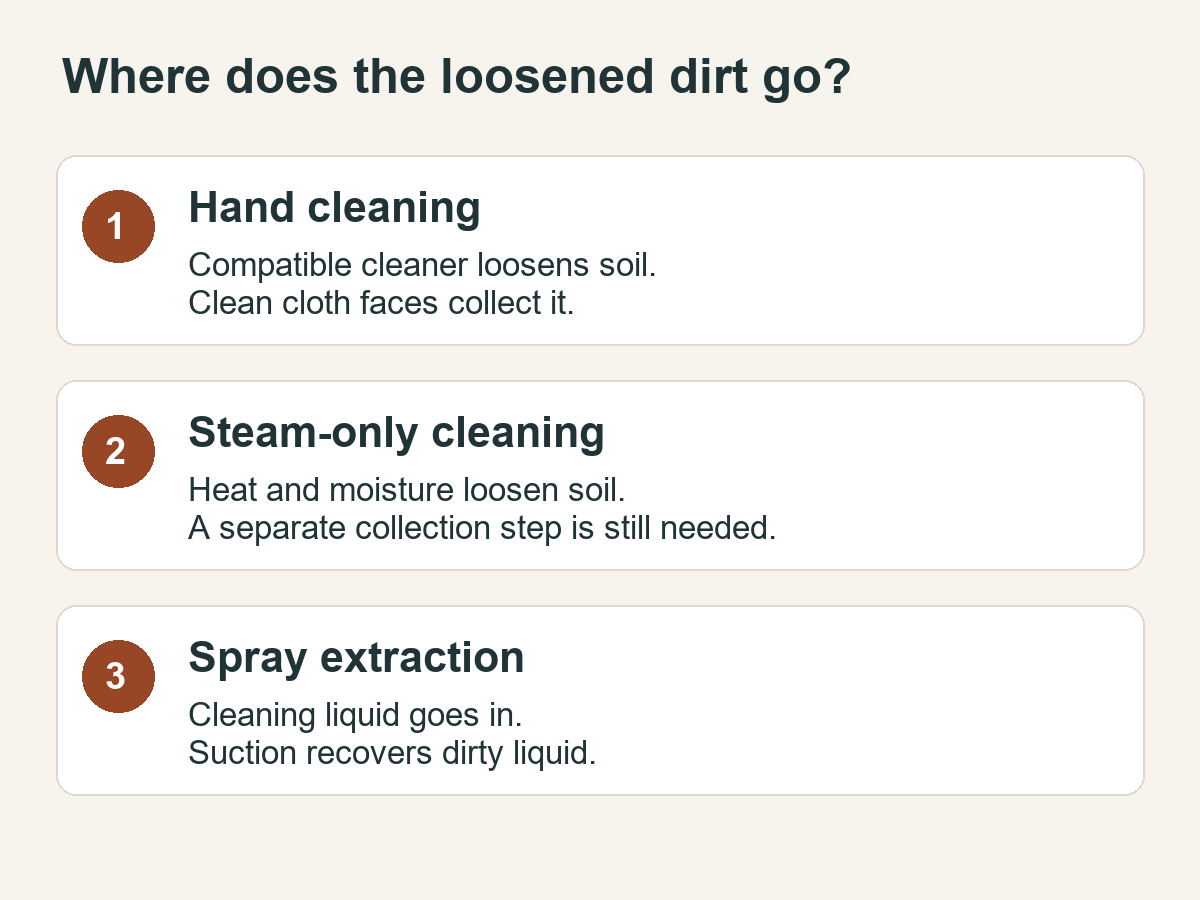
For washable fabric seats with widespread ingrained dirt, a spray extractor is usually the more useful method to consider because it recovers dirty liquid. A steam-only cleaner loosens dirt that you still need to collect. Light everyday marks may need only a compatible cleaner and clean cloths. Steam belongs in the plan only when both the exact upholstery and the machine’s instructions permit it.
I’ll explain the differences, including the awkward case of machines that combine steam and extraction, so you can choose a method that suits your seats without buying more equipment than the job needs.
Steam, extraction and wet vacuuming do different jobs
| Method | What it does | Where it fits |
|---|---|---|
| Cleaner and cloth | Loosens surface dirt for removal with clean cloth faces | Light marks on compatible upholstery |
| Steam-only cleaner | Applies heat and moisture; loosened soil needs collecting separately | A permitted heat-tolerant task, with a clear removal method |
| Spray extractor | Applies cleaning liquid and recovers dirty liquid through a suction tool | Washable upholstery with suitable material and machine permission |
| Wet-and-dry vacuum | Picks up appropriate wet or dry material in the correct configuration | Liquid recovery where permitted; it doesn’t automatically spray cleaning solution |
The distinction is easy to miss when every listing seems to promise a deep clean. Look for an actual recovery tank and an upholstery extraction tool if collecting dirty liquid is what you need. A steam nozzle and a cloth attachment do not, by themselves, turn a machine into an extractor.
When I’d choose hand cleaning
If the seat has a light grubby patch or a few everyday marks, start by vacuuming thoroughly. Then use a compatible upholstery cleaner with controlled moisture and enough clean cloth faces to lift the loosened dirt away. You may already have all the equipment the job needs.
For ordinary washable cloth, Autoglym Interior Shampoo 500ml is my first hand-cleaning choice. Apply lightly, work as directed and keep the finishing cloth clean. There’s no benefit in making the cushion wet simply because you’ve set aside an afternoon for detailing.
The upholstery-cleaner buying guide explains the alternative for confirmed Alcantara and why machine formulas are a separate purchase. Pick the chemical for the material, then follow the method that suits the amount of dirt.
Hand cleaning also lets you work on one connected panel and assess the dry finish before taking on the whole interior. That’s particularly useful when the visible mark is small and the rest of the seat is in good condition.
When extraction earns its place
An extractor becomes worth considering when compatible fabric is grubby across a wider area, or when a cloth would need repeated changes to collect all the loosened soil. The useful feature is liquid recovery: cleaning solution and dirt are drawn back through the tool into a separate tank.
It still needs a sensible technique. Vacuum loose debris first, use the approved formula and dose, and follow the machine’s instructions for the upholstery tool. Keep the suction face in contact with the fabric and use controlled passes. If the equipment supports suction-only passes, use them as directed to recover moisture rather than repeatedly adding more solution.
Watch the fabric as well as the recovery tank. Dirty water is encouraging, but it doesn’t tell you whether you’ve left too much liquid in the cushion. Keep checking how wet the area is becoming and allow proper drying time. A seat that looks cleaner but stays damp creates another problem for tomorrow’s drive.
Before buying, think about the tool you can manoeuvre between the backrest and cushion, the hose reach from outside the door, and how easily you can empty and rinse the recovery tank. Those details affect whether the machine is pleasant to use in a car. The existing extractor and wet-vac buying guide covers the equipment choices in more detail.
Can you use a steam cleaner on car seats?
Sometimes, but “cloth seat” is too broad an answer. You need permission for the exact material and construction, as well as a machine intended for that application. A concealed test is useful after those checks; it doesn’t override a prohibition in either set of instructions.
One detail worth catching before purchase is that some steam-assisted upholstery-machine instructions explicitly exclude synthetic fabrics. That can matter in a car even when the product is advertised for interiors. A general photograph of a car seat on the box doesn’t resolve the fabric restriction in the manual.
Heat can also affect surrounding finishes and bonded parts. Steam-cleaner instructions can exclude or restrict coated surfaces, sensitive textiles and edges where heat and moisture can disturb the finish or adhesive. Avoid treating an entire seat as one uniform surface simply because the centre panel appears robust.
If the car maker or machine maker doesn’t clearly permit the proposed treatment, choose an approved non-steam method. For most readers comparing machines for fabric seats, I would establish whether extraction is suitable before paying extra for a steam function.
A steam extractor still needs its modes checking
Some portable upholstery machines combine steam, cleaning solution and suction, with different modes for different jobs. That makes the name on the box a poor guide to what happens when you pull the trigger. One mode may use water and formula, another steam, and another a combination.
Read the manual for the exact UK model before buying. Check its excluded materials, approved formulas, tool requirements and mode instructions. A mode without steam may exist, but don’t assume it cancels a machine-wide material exclusion; establish how the manufacturer applies that restriction.
For example, the UK HydroSteam operating instructions list synthetic fabrics among the excluded materials. Its manufacturer’s getting-started guide describes separate steam, wash and combined modes. Those are reasons to check suitability carefully, rather than treating the extra feature as an automatic upgrade for your seats.
The seat construction matters as much as the fabric
Keep liquid and steam away from electrical components, switches and connections. Heated, ventilated or electrically adjusted seats need the car maker’s cleaning instructions; don’t force moisture through perforations or into seams to chase a mark. Side-airbag seams also aren’t places for aggressive brushing or concentrated treatment.
Leather, imitation leather and Alcantara need their own care routines. Use the leather guide or Alcantara guide when those materials change the job. A cleaning method that suits the woven insert doesn’t automatically suit the bolster beside it.
The headlining is a separate construction again. Don’t extend an upholstery-machine demonstration to the roof lining; follow the headlining cleaning method instead. Working within a material’s limits is part of getting a smart finish, especially where damage would be much more conspicuous than the original mark.
If cigarette smell is the main problem, seat cleaning is only one part of the job. Follow the whole-cabin smoke-removal routine for headlining, hard surfaces, glass and ventilation checks, then reassess once the interior is dry.
Choose the method before planning the drying
Whichever wet method you use, arrange the drying conditions before starting. Work when you can leave the car safely ventilated and give the fabric time to dry. Cool, damp air and an already damp cabin make that harder, so a whole-interior wet clean may be a poor choice just before you need the car again.
Don’t use a steam nozzle or concentrated heat as a makeshift drying tool. Recover moisture using the permitted method, improve airflow and check the seat when it has dried. For a clean-water spill that has also reached the footwell, drying the carpet and its backing is a separate job from cleaning the seat face.
My decision would be simple: light marks, compatible cleaner and cloths; wider ingrained soiling, a suitable extractor; steam only for a clearly permitted task. Once you’ve chosen, follow the fabric-seat cleaning sequence so the job ends with a clean, dry seat that’s ready to use.