Some links in my articles are affiliate links. I may earn a commission when you buy through them.
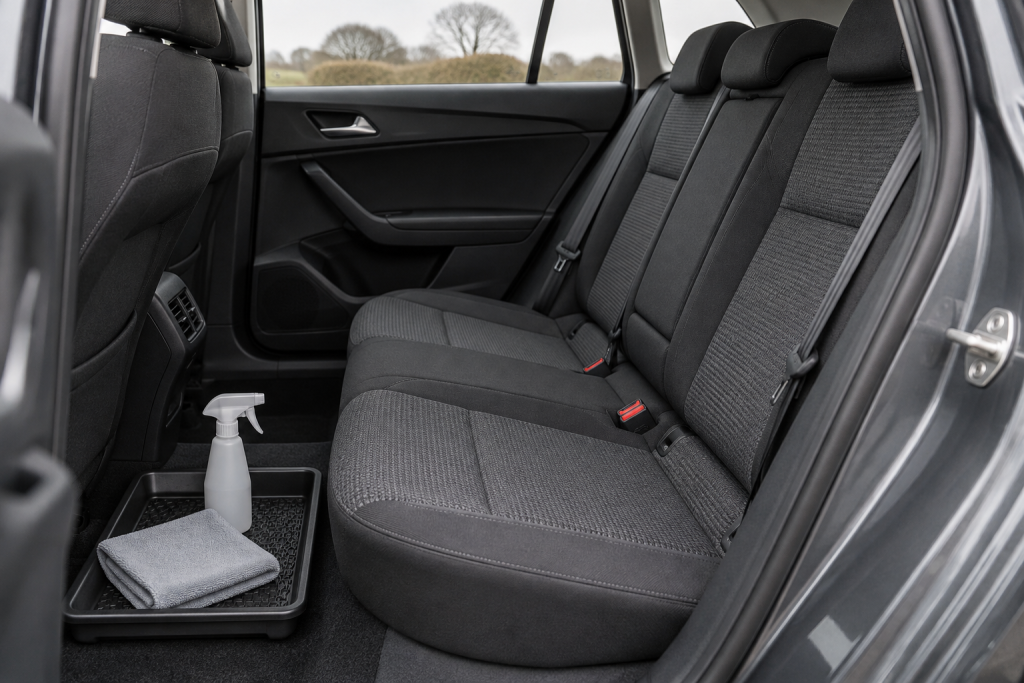
Car seats can look perfectly respectable until the light catches that grey patch on the bolster or the outline of last week’s spill. Buying a more powerful cleaner is tempting, but the useful question is what your seat is made from and how you’ll remove the dirt once you’ve loosened it.
For ordinary washable cloth seats that need hand cleaning, my first choice is Autoglym Interior Shampoo 500ml. It’s a straightforward ready-to-use option for light, controlled cleaning. For confirmed Alcantara, SONAX XTREME Upholstery + Alcantara Cleaner 400ml earns its place because the manufacturer specifically supports that material. If you’re using an extractor, choose the formula approved for that machine instead of pouring either hand-cleaning product into its tank.
You don’t need a shelf full of bottles. Below, I’ll help you choose between those routes, spot the details that affect the result and avoid buying a stronger treatment when a better removal technique would do more good.
The best upholstery cleaner for your situation
| Your job | My choice | Why it fits |
|---|---|---|
| Ordinary washable fabric, light marks and everyday grime | Interior Shampoo | Ready to use; suited to a light application followed by cloth cleaning |
| Confirmed Alcantara or mixed textile trim needing a material-specific cleaner | SONAX foam | Explicit manufacturer support for Alcantara; foam applied across a connected area |
| Widespread ingrained dirt in extraction-compatible seats | Your extractor’s approved upholstery formula | The machine, fabric and chemical must all permit the same method |
| Leather, coated leather or imitation leather | Follow the car maker’s material-specific method | A cloth-seat shampoo isn’t automatically the right choice for the finish |
The first two choices are hand-cleaning products. The machine route changes how you recover the dirt as well as which chemical you buy, so it deserves a separate decision.
My first choice for ordinary cloth seats
Interior Shampoo is the sensible starting point when your seats are broadly clean but have the familiar marks of daily use. The 500ml bottle is ready to use, so there’s no dilution calculation before a small tidy-up. Its appeal is that you can work deliberately on the fabric instead of immediately committing to a full wet clean.
On compatible fabric, apply it lightly and work with a clean cloth or suitable sponge, rinsing the cloth frequently. The UK directions finish with an absorbent finishing wipe. The important part is collecting the loosened dirt as you go: a grubby cloth face soon starts redistributing what you’ve just removed.
I keep the application light and judge the finish once the fabric is dry. A wet patch can hide an uneven result, so adding another generous spray before you’ve checked it is an easy way to make the job longer. Fold your cloth into several clean faces, turn it often and have a second cloth ready for the finishing wipe.
This is the bottle I’d choose for occasional hand cleaning of ordinary washable cloth, rather than buying a concentrate that will spend most of its life in the cupboard. If the whole seat is heavily soiled, the bigger question is whether you need liquid recovery. My fabric-seat cleaning guide covers that change of method.
The material-specific choice for Alcantara
SONAX foam is my pick when the trim is confirmed as Alcantara and you want a cleaner whose own instructions expressly cover it. That matters more than whether another bottle describes itself as an all-round interior cleaner. A soft, suede-like panel isn’t necessarily Alcantara, so identify the material in the car’s handbook or trim specification first.
The version linked here is the 400ml aerosol, product number 02063000. Check the exact pack when ordering and follow its label: a similar name on another version doesn’t establish that its application directions are identical.
For the 400ml foam, the manufacturer calls for vacuuming first, checking colourfastness and dampening the area with a cloth before application. Work across a connected area, such as one seat panel, rather than leaving a sharply defined clean circle around a mark. Its directions give a five-to-ten-minute working period before further gentle working and removal with a rinsed, damp cloth.
The foam makes the area you’ve treated easy to see. Give the removal stage equal attention, using fresh cloth faces as you work. Keep the action gentle enough to preserve the texture and use the car maker’s instructions alongside the cleaner’s. The Alcantara guide explains the care this kind of trim needs.
Choose SONAX foam for that explicit material fit, rather than because an aerosol must be stronger than a trigger spray. The two formats don’t provide a useful strength ranking on their own.
Using an extractor? Buy the formula for the machine
A spray extractor sends cleaning liquid into compatible fabric and recovers dirty liquid through its upholstery tool. That is a different job from working a hand-cleaning spray with a cloth, and the tank needs an appropriate formula at the prescribed dose.
Start with the machine’s instructions. Some manufacturers specify their own portable-machine formulas, and a chemical labelled suitable for extraction doesn’t automatically meet every machine’s requirements. Check both sets of directions before buying a large bottle. More detergent can mean more residue and extra work recovering it; it isn’t a shortcut to a cleaner seat.
Ready-to-use products make sense for occasional hand cleaning. A concentrate becomes more appealing when you clean regularly, can measure accurately and have confirmed the exact application. Compare the amount of usable solution for your permitted dilution, rather than simply the bottle volume. Keep the measuring equipment and labelled dilution bottle with the cleaner so the next job doesn’t begin with guesswork.
If you’re still choosing equipment, the wet-and-dry vacuum versus extractor guide explains the practical buying differences. Already considering heat? Read steam cleaning versus extraction for car seats before adding a steam machine to the basket.
What matters more than the strongest cleaner
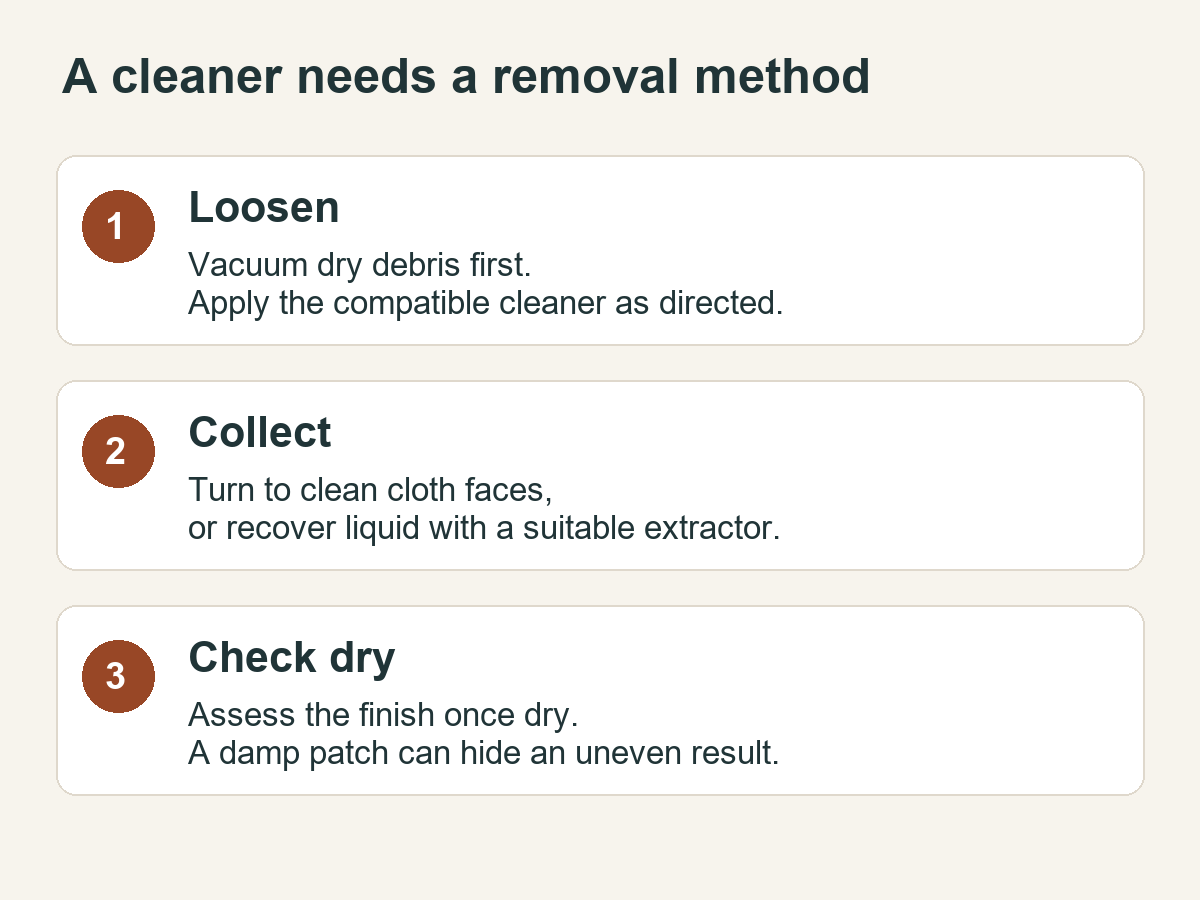
Before you spray anything, vacuum the seams, the join between the backrest and cushion, and the outer bolster. Those areas can hold enough dry debris to make the first damp wipe unnecessarily muddy. Keep the vacuum tool moving gently over the fabric and avoid catching loose stitching.
Then look at the shape of the job. A fresh, small spill and a whole seat that’s gradually become grubby call for different amounts of treatment. Blot an accessible fresh spill rather than rubbing it into a wider patch. For general uneven soiling, plan the work around natural panel boundaries so you can assess an entire connected area under the same light.
The cloth deserves as much thought as the bottle. Once the working face is dirty, turn it. Once all the faces are dirty, rinse or replace it. If you’re repeatedly wiping with the same wet, discoloured cloth, another dose of cleaner won’t fix the part of the process that’s holding you back.
Match the cleaner to the actual seat material
A single seat can combine woven cloth, imitation-leather bolsters, suede-like inserts and plastic trim. Keep the treatment on the material it’s intended for instead of spraying broadly across the lot. A cleaner’s permission for fabric doesn’t automatically extend to adjacent coated trim, and a leather product may be wrong for the insert beside it.
If you are cleaning the dashboard and door cards as well, the interior-cleaner guide separates a regular wipe-down from a deeper trim clean. Keep the seat cloths separate, then use the dashboard method to collect residue and check the dry finish from the driving seat.
Check a concealed area, then let it dry before judging colour and texture. Use a white or pale cloth so unexpected colour transfer is easier to see. If the material is unidentified, badly worn or already shedding colour, establish the appropriate method before treating the visible centre of the seat.
For leather or coated leather, start with the leather-seat cleaning advice. The roof lining is another separate job: its construction and backing mean the seat-cleaning routine shouldn’t simply be carried upwards. Use the headlining guide for that.
If a mark comes back after cleaning
Let the seat dry fully before deciding the cleaner has failed. A returning outline can have several causes, including an unevenly treated area, remaining residue or contamination deeper in the upholstery. The useful next step is to inspect what changed, rather than immediately escalating to a hotter machine or a stronger mixture.
If the cloth still picks up loosened dirt, improve controlled removal. If the fabric feels different from the untreated area, review the dose and finishing steps. If a spill went well into the cushion or an odour keeps returning, surface cleaning may not reach the source. An extractor can help with suitable washable upholstery, but it doesn’t make every liquid incident a straightforward home clean.
Plan drying before you start, particularly in cool, damp weather. Leave time for airflow and don’t put covers or mats over damp fabric. For the full sequence from vacuuming to the final dry check, follow how to clean fabric car seats.
For an ordinary cloth-seat tidy-up, Interior Shampoo remains my first purchase. Choose SONAX foam when confirmed Alcantara changes the brief, or an approved machine formula when the job needs extraction. That gives you a useful cleaner for the work in front of you, with a clear way to remove the dirt afterwards.