Some links in my articles are affiliate links. I may earn a commission when you buy through them.
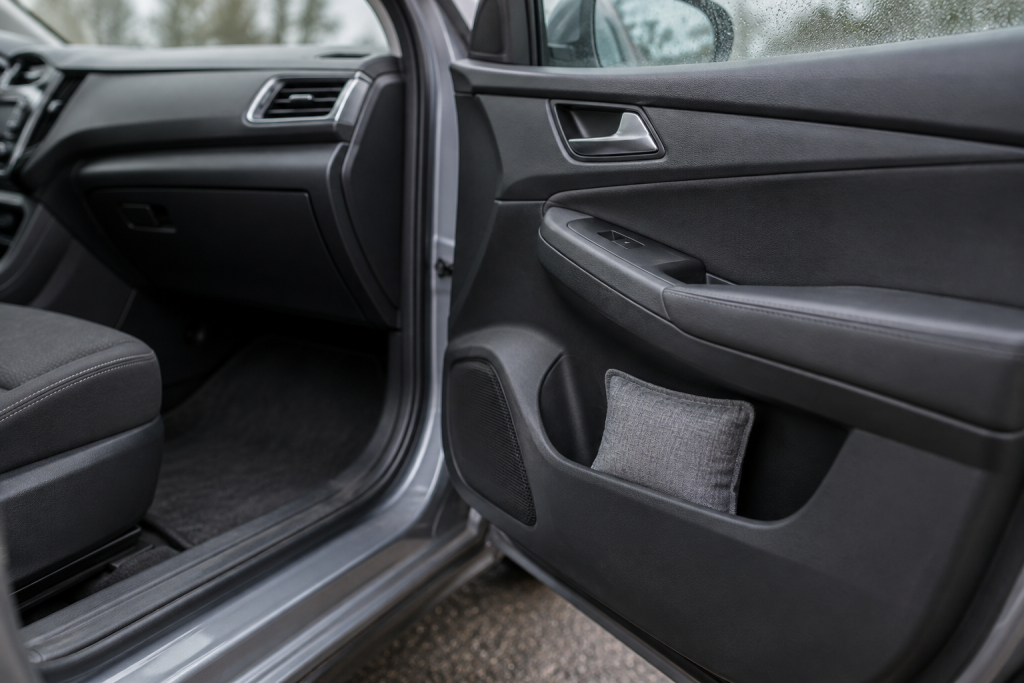
If the inside of your windscreen is wet again every morning, a reusable moisture bag looks like a pleasingly simple fix. The useful question is which one you’ll be able to keep dry and working through winter, rather than which packet makes the biggest promise.
My first choice for a compact bag with a clear “time to recharge” cue is the Pingi LV-A300 300g. Choose the ThoMar airdry Classic 1kg if you’d rather use radiator drying and have room for a larger bag. Both need a place in your routine: neither replaces finding a leak or drying wet carpet.
I’d choose on regeneration method first. A bag you can maintain conveniently is a better buy than one that spends half the winter saturated because drying it is a nuisance.
The two choices at a glance
| Your priority | The bag I’d choose | What decides it |
|---|---|---|
| Compact bag and a visible saturation cue | Pingi bag | Colour indicator and microwave regeneration for this exact model |
| Radiator drying without a microwave routine | airdry Classic | Gentle radiator regeneration; allow time for it to dry |
| Carpet is wet enough to soak a towel | Deal with the water first | A passive bag isn’t a substitute for removing liquid and checking the backing |
The weights on the packets describe the products, not how much water each will collect in your car per day. Cabin conditions, how wet the car is and the state of the bag all affect what happens. I wouldn’t use those weights to declare a fastest-drying winner.
If you’re still looking for the source, start with the condensation checks. They help separate everyday wet-weather moisture from a footwell that needs drying or a leak that needs fixing.
Best for a straightforward recharge cue
The Pingi bag is the one I’d pick if you want a compact, reusable bag whose indicator shows when it needs attention. The manufacturer identifies the model as LV-A300; the indicator changes from blue to completely pink as it fills.
That visible cue is useful if you don’t want to guess when a bag has stopped being ready for use. Check it when you clear rubbish from the car or clean the glass, then take it indoors for regeneration when its instructions say it’s ready.
This model is designed for microwave regeneration. Use the instructions supplied with the exact bag, including the specified power, timing, suitable dish and cooling period. The manufacturer’s shared model manual covers several sizes, so check the model code rather than borrowing another bag’s timing. Only regenerate it when indicated; heating an already dry bag can overheat it. Stay with it while heating and let it cool fully before handling or returning it to the car.
The practical appeal is the combination of manageable size and an obvious maintenance cue. I’d choose it for someone who has a suitable microwave and wants to keep the drying routine relatively convenient. If you won’t use a microwave for this job, choose a bag designed for another method.
Best if you prefer radiator drying
The airdry Classic makes more sense if you’d rather dry a bag gently on a radiator and can leave it there for a while. Check that you’re buying this exact 1kg version: other products in the same family use different materials and instructions.
According to ThoMar’s regeneration guidance, this bag is placed on a medium-warm radiator with its foil side down. Drying can take days or weeks, depending on conditions. It isn’t suitable for microwave regeneration; the microwave directions for the maker’s different silica-gel version don’t apply to it.
That slower cycle is manageable if the bag is used seasonally or you have somewhere suitable to leave it drying. If you need continuous use, consider whether rotating two bags fits your home better than repeatedly waiting for one. Buy a second only if you’ll use the rotation; one properly maintained bag is a sensible starting point.
I’d pick this option for the reader who likes a simple radiator routine and doesn’t mind the space it takes up indoors. There’s no reason to pay for a regeneration method you won’t use.
Check these three things before ordering
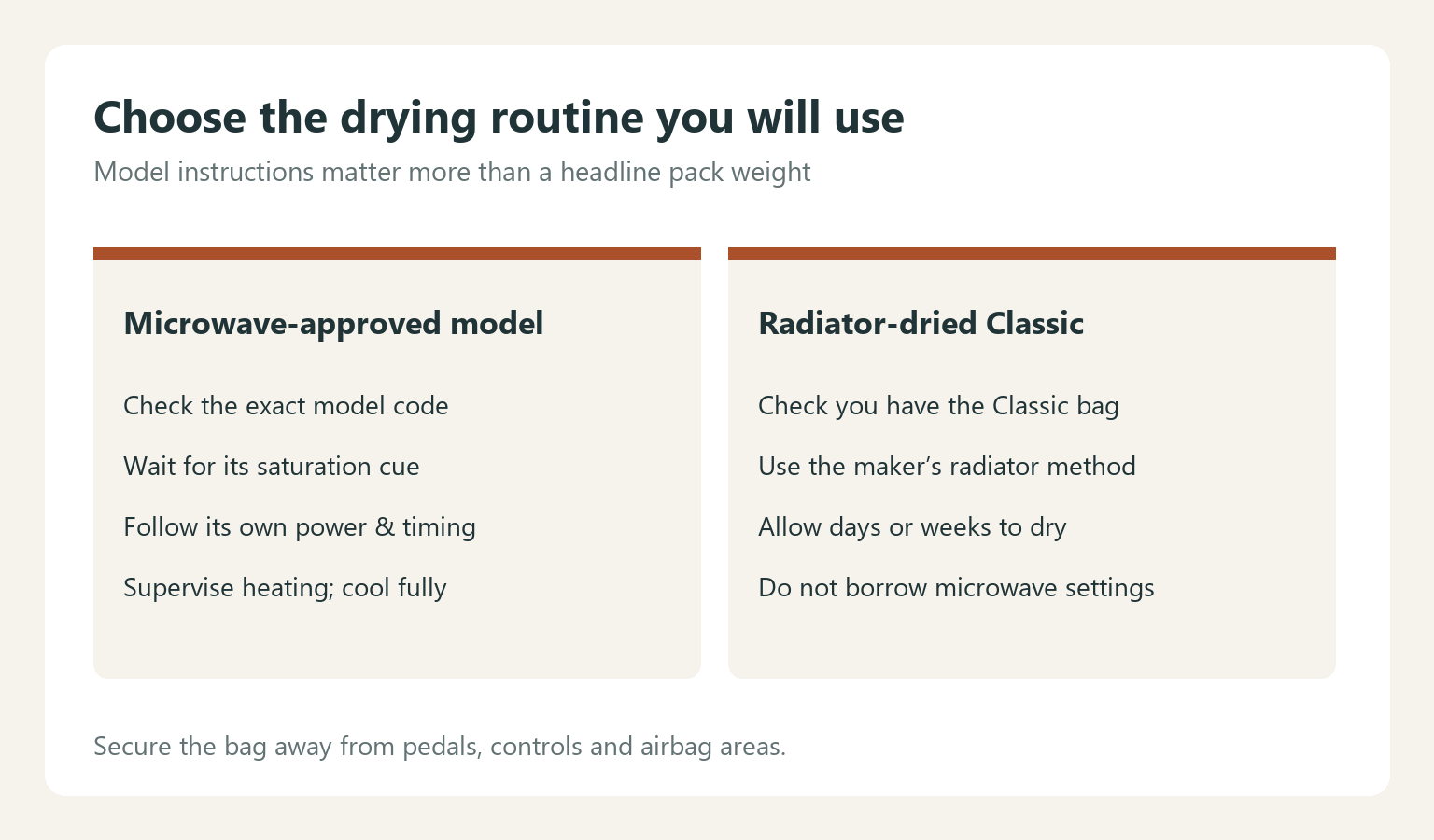
Check the exact model and pack size. Similar listing photographs can cover single bags, pairs and different sizes, while a review may refer to another variation. Match the model on the listing to the maker’s instructions and check what’s actually included.
Next, decide where it will sit. Measure the intended space if you’re buying a larger bag. Keep it clear of pedals, moving seat mechanisms, controls and airbag deployment areas, and secure it so it can’t slide into the driver’s footwell. Follow both the bag instructions and the car handbook where they affect placement.
Finally, think through drying day. Where will the bag cool? Where will a radiator-dried one sit without being forgotten? Will somebody else in the house mistake it for something washable? Keep the original instructions with your car-cleaning supplies so the next person doesn’t improvise a heating cycle.
Skip an open household liquid-collecting moisture trap for a moving car. A contained bag designed for vehicle use is easier to place securely without a reservoir of liquid to spill. Homemade rice or cat-litter pouches also give you less certainty about containment and regeneration than a product with proper instructions.
How to tell whether the bag is helping
Start with dry mats and remove wet coats, cloths and umbrellas. Otherwise you’re asking the bag to work against a supply of moisture you could simply take indoors. If the fitted carpet is damp, dry it and check beneath the surface first.
Notice what happens over several comparable mornings rather than judging it after one mild night. Weather and how you’ve used the car change the amount of condensation. A clearer screen on a warmer morning doesn’t prove a product has solved a leak.
Check the bag’s condition and regeneration cue as instructed. If it reaches that point quickly again after drying, look again for wet belongings or trapped water. Repeated saturation is a useful reason to investigate, rather than keep buying extra bags.
There isn’t a reliable one-size-fits-all replacement interval. Look after the fabric, follow the manufacturer’s end-of-life guidance and replace a damaged bag rather than continuing to heat it. Don’t wash one unless its own maker explicitly allows it.
What to buy alongside it, if anything
For a cabin that’s otherwise dry, you may need nothing beyond the bag and the glass cloths you already own. If the screen is smeary as well as misted, choose a suitable cleaner from my car-glass guide and keep a second cloth dry for finishing.
A wet-and-dry vacuum belongs to a different job: removing liquid from wet carpet. If that’s the problem, the vacuum-versus-extractor guide explains the equipment differences before you buy or hire anything. Adding cleaning solution to an already soaked interior can give you more drying to do.
For most readers choosing a bag today, I’d make the decision simple: Pingi bag for the indicator and microwave routine, or airdry Classic for patient radiator drying. Match it to your home, put it somewhere secure, and make checking it part of your winter car routine.