Some links in my articles are affiliate links. I may earn a commission when you buy through them.
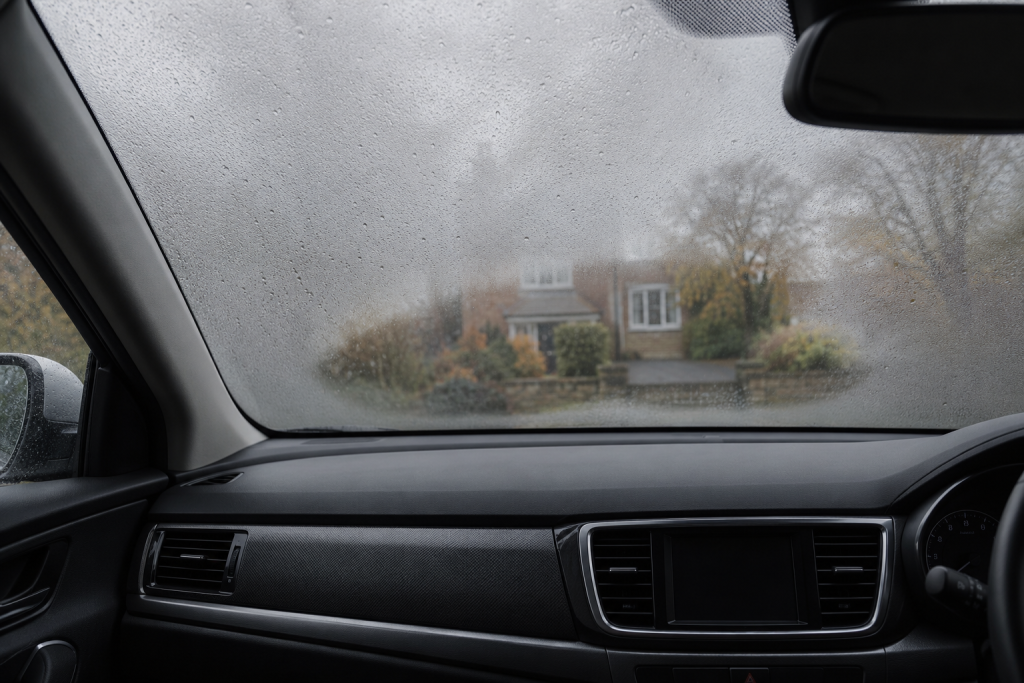
You get into the car, shut the door and the windscreen clouds over before you’ve even put your seat belt on. On a wet morning that’s irritating enough; finding the inside dripping after the car’s been parked makes you wonder where all that water is coming from.
Clear the windows with the car’s demist setting, then look for the moisture that’s feeding the problem: wet mats, damp carpet, things left in the boot or water getting in. Clean glass helps you see properly. A reusable moisture absorber can help between journeys once you’ve dealt with those sources.
I’d work through it in that order. It’s much easier to choose something useful when you know whether you’re dealing with everyday wet-weather moisture or a footwell that keeps filling up.
Clear the glass before setting off
Use your car’s front demist function and heated rear screen, following its handbook. Where you’re setting the controls yourself, direct warm airflow at the windscreen and use the air conditioning if fitted and available. Bring in fresh air rather than leaving recirculation on. The RAC’s demisting guidance explains how the heater and air conditioning work together here.
Give the side windows and mirrors attention too, and wait until you can see clearly all round. A small clear patch straight ahead isn’t enough. If the screen keeps clouding while you’re driving, stop somewhere safe to clear it.
A clean, dry glass cloth is useful for removing heavy droplets while you’re parked. Fold it to a fresh face as it gets wet and take the damp cloth out afterwards. Leaving it in the door pocket simply puts some of that moisture back in the cabin.
If the blower barely moves any air, or the system can’t keep the windows clear despite sensible settings, have the ventilation and air conditioning checked. Turning the fan up won’t solve a blocked or faulty system.
Work out which side of the window is wet
Outside condensation can appear when the exterior glass is colder than the surrounding air. A sweep of the wipers tells you quickly whether the moisture is outside the windscreen. Interior condensation stays put when the wipers move.
Inside, moisture in the cabin air settles on cold glass. Wet coats and shoes can contribute, as can damp upholstery and leaks. The important clue is what happens after the obvious wet things have gone: does the car improve, or is it just as wet again the next morning?
I’d note three things before buying anything: whether it happens only with people in the car, whether it’s there after an empty night, and whether it gets worse after rain or washing. None identifies a leak on its own, but those observations give you a much more useful starting point than “the windows mist up”.
Check the places that hold water
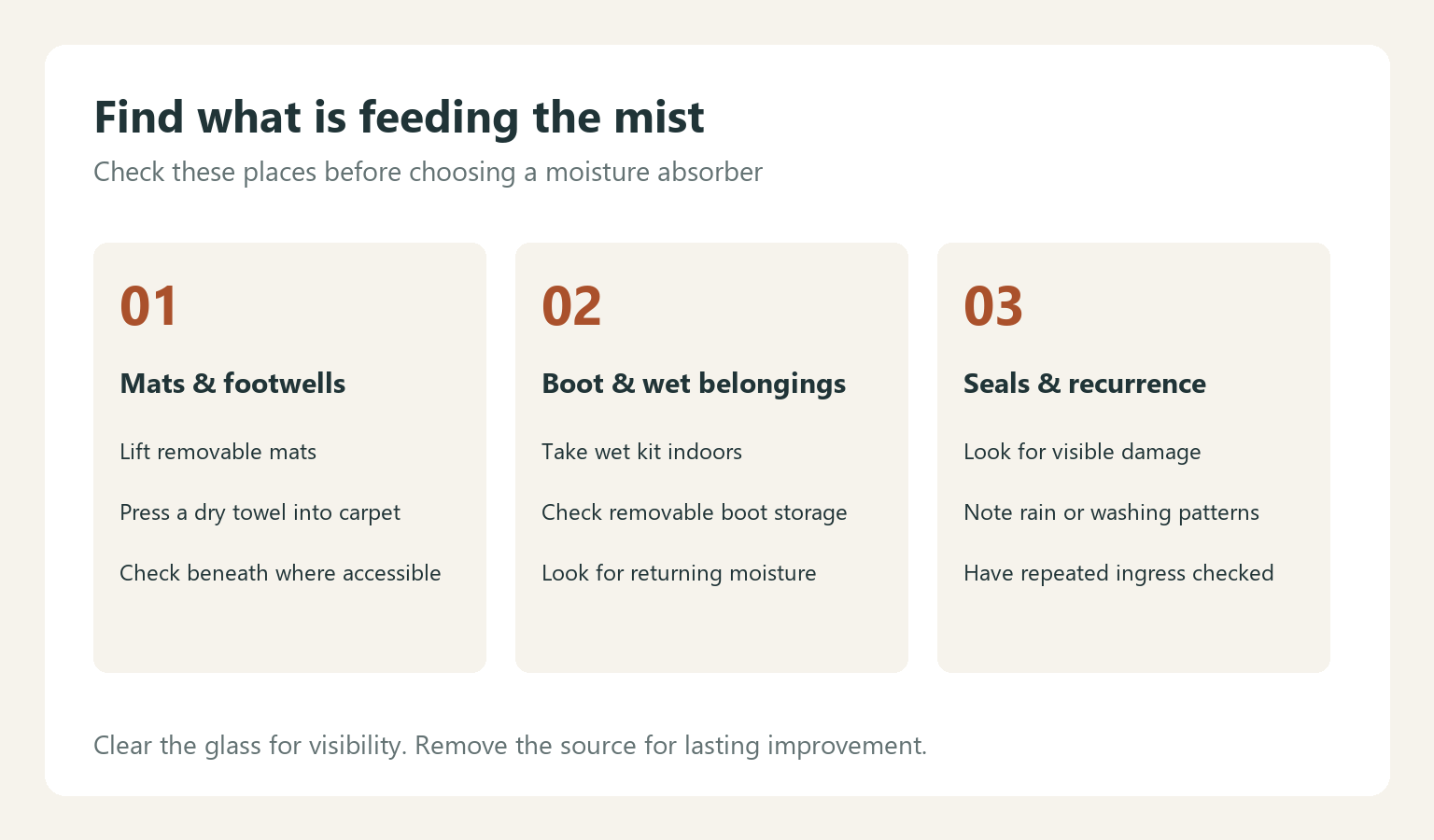
Start by lifting out the removable mats. Feel their undersides and press a dry towel firmly onto the fitted carpet beneath, especially at the edges of each footwell. A rubber mat can look tidy on top while water sits underneath it. Dry the mat outside the car before refitting it; my car-mat cleaning guide covers carpet and rubber separately.
Then check the boot. Remove wet coats, umbrellas, dog towels and sports kit. Lift only the removable boot floor that your handbook allows you to lift, and look for dampness in the storage area beneath. Don’t disturb wiring, battery covers or sealed compartments to investigate.
Look at accessible door seals for trapped dirt, damage or a section sitting out of place. Note any water marks and which side of the car is damp. Don’t poke wire into unfamiliar drainage holes or blast seals with a pressure washer to “test” them; a garage can investigate the route without creating another problem.
If a towel picks up water from the fitted carpet, move on to drying the carpet and checking its backing. A surface that feels fairly dry can conceal moisture underneath. That deserves attention before you add another product to the dashboard.
Clean the film off the inside of the glass
Moisture and greasy smears can make an already poor view much worse. Clean a cool pane with a suitable automotive glass cleaner and use a separate dry cloth for the final wipe. Work in manageable areas so you can actually reach the corners rather than repeatedly polishing the middle.
Autoglym Fast Glass is useful for glass smears; give the edges a final dry wipe. Check the area beside the pillars and the lower edge of the windscreen while you’re there; those are easy places to leave a line behind.
Put cleaner on the cloth where spraying the pane would wet the dashboard or nearby controls. If you have an aftermarket window film, use a cleaner its maker approves. My glass-cleaner buying guide explains the choices for routine film and more stubborn glass contamination.
Cleaning helps you get a clear finish, but it won’t remove water held in carpet or repair a leak. If the same clean pane mists again in a parked car, return to the moisture checks.
When a car dehumidifier bag is a sensible buy
A reusable bag earns its place as background moisture control in a parked car. It’s a reasonable next step when the mats and carpet are dry, wet belongings are out, and you still want some help with the moisture brought in during ordinary winter use.
For a compact bag with a visible saturation indicator and microwave regeneration, I’d start with the Pingi LV-A300 300g. If you prefer a larger bag that dries on a radiator, the ThoMar airdry Classic 1kg suits that routine. Those are different maintenance commitments, so pick the one you’ll actually remember to dry.
The dehumidifier-bag comparison explains the exact variants and regeneration differences. Keep any bag secured away from pedals, controls and airbag areas, and follow its placement instructions. Put it somewhere you can retrieve it easily; a forgotten saturated bag is another item in the car waiting to be dried.
Don’t expect a passive bag to clear an occupied car instantly or dry a soaked underlay. Your demist system handles visibility; removing water and repairing its source handles persistent damp.
Stop tomorrow’s moisture arriving tonight
Shake rain off coats before loading them, take wet kit indoors and dry removable mats separately when they need it. If you’ve just cleaned the fabric seats, allow proper drying before shutting the car up; the fabric-seat routine explains how to avoid leaving them unnecessarily wet.
Planning a seat clean as well? Choose a cleaner that suits the seat material and decide between hand cleaning, extraction and steam before starting. The method determines how you introduce moisture and collect it again.
On a dry day, ventilating a safely parked car while you’re with it can help moisture escape. Don’t leave windows open unattended or in incoming rain. Normal journeys with working ventilation can help too, but there’s no reason to idle an engine in a garage to dry the interior.
After dealing with a wet patch, check it again after the next spell of rain and after the next wash. A phone note of the location and conditions can save a lot of vague fault-finding if it returns.
When the damp needs investigating
Repeatedly wet carpet, water collecting in the boot, persistent musty smells or windows dripping despite removing ordinary wet items justify a proper inspection. Ask the garage to investigate water ingress and ventilation rather than just masking the smell.
Floodwater, contaminated water and water around electrical components need professional assessment. If the car has flooded, don’t start it until it has been checked; the AA’s floodwater advice explains the risks to the vehicle.
For ordinary winter misting, begin with the free checks. Once you know the car is dry and the ventilation works, a clean screen and a well-chosen moisture bag make much more sense.