Some links in my articles are affiliate links. I may earn a commission when you buy through them.
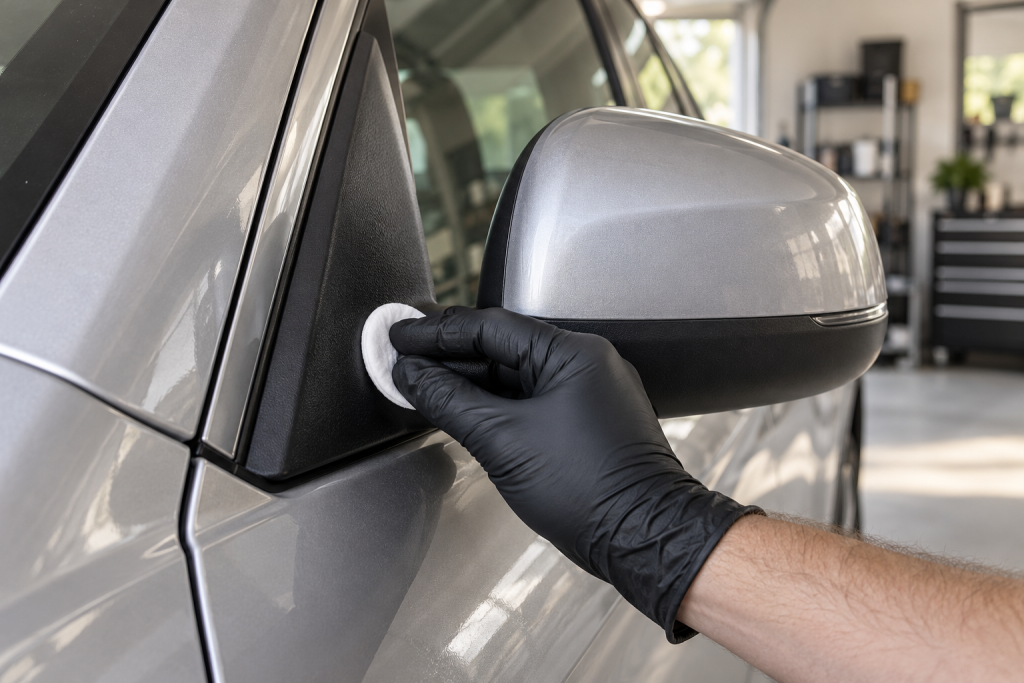
The awkward part of applying Gtechniq C4 is often arranging a clean, dry car and somewhere it can stay afterwards. Gtechniq specifies twelve hours sheltered from the elements after coating. Sort that out first, then clean the unpainted plastic thoroughly, dry it completely, spread the coating and wipe fresh residue away immediately.
This is a method for exterior unpainted plastic. Keep C4 off rubber, glass and paint, even if a broader retailer description groups them together. If you want to dress compatible exterior rubber during a normal wash, the trim-restorer buying guide explains the alternative.
Check the trim and your working conditions
Find the boundary between plastic, paint and rubber before opening the bottle. A mirror base can contain all three within a few centimetres. Work only on sound unpainted plastic you can identify; investigate peeling, cracking or an unknown coating before treating its appearance.
Gtechniq’s current UK directions require a well-ventilated area, a temperature above 5°C and application out of direct sunlight. The plastic itself must be cool and completely dry. Use the supplied gloves and arrange lighting so you can inspect the texture and the edges without leaning against adjacent work.
Make a route around the car that you can remember. List the mirror bases, arch trims, bumper inserts and other eligible pieces you intend to coat. At the end you can check the list instead of guessing whether you treated the smaller strip beside a door.
Clean away the old treatment
Wash off loose dirt before the final preparation. If the plastic has been dressed, the previous finish needs cleaning away. Gtechniq says C4 performs best on bare plastic and specifically calls for removal of existing silicone dressing or coating before application.
Its recommended preparation is neat Gtechniq W5, followed by rinsing and drying. The cleaner’s own directions specify gloves, three to five minutes of contact time and rinsing with water. Keep the job controlled so it does not dry on the surface. Work one accessible area at a time and use a soft brush or cloth where the cleaner’s instructions call for agitation.
Neat here means undiluted; it is the product-specific C4 preparation instruction. Don’t transfer it to every all-purpose cleaner or every part of the car. Our APC dilution guide covers mixing for other tasks.
Pay attention to recesses and the trim’s paint boundary. A broad wipe can leave old product in the grain or tucked along an edge. If a previous coating or persistent residue cannot be removed with the approved preparation, establish the right removal method before putting C4 over it.
Wait for the hidden water to stop appearing
Dry the plastic, then check the joins again. Mirror bases and trim edges can hold water after the visible surface looks ready. Dab remaining moisture with a clean cloth and allow more drying time if another drop emerges.
If you move the car into shelter after washing, inspect it again there before coating. Water can appear from a join during the move. Don’t spread coating around a damp patch and plan to fill it in later.
Set out separate clean lint-free applicators and microfibres for residue removal. Keep spares within reach, and keep the bottle on a stable surface away from an open door or a place where you could knock it over.
Spread and remove residue one piece at a time
- Use the supplied lint-free applicator. Gtechniq says to soak the pad with several drops, then spread the coating over the intended plastic surface.
- Follow the shape of one trim piece, including its accessible edges and textured recesses. Spread the liquid already in the pad rather than leaving a heavy wet pool at a corner.
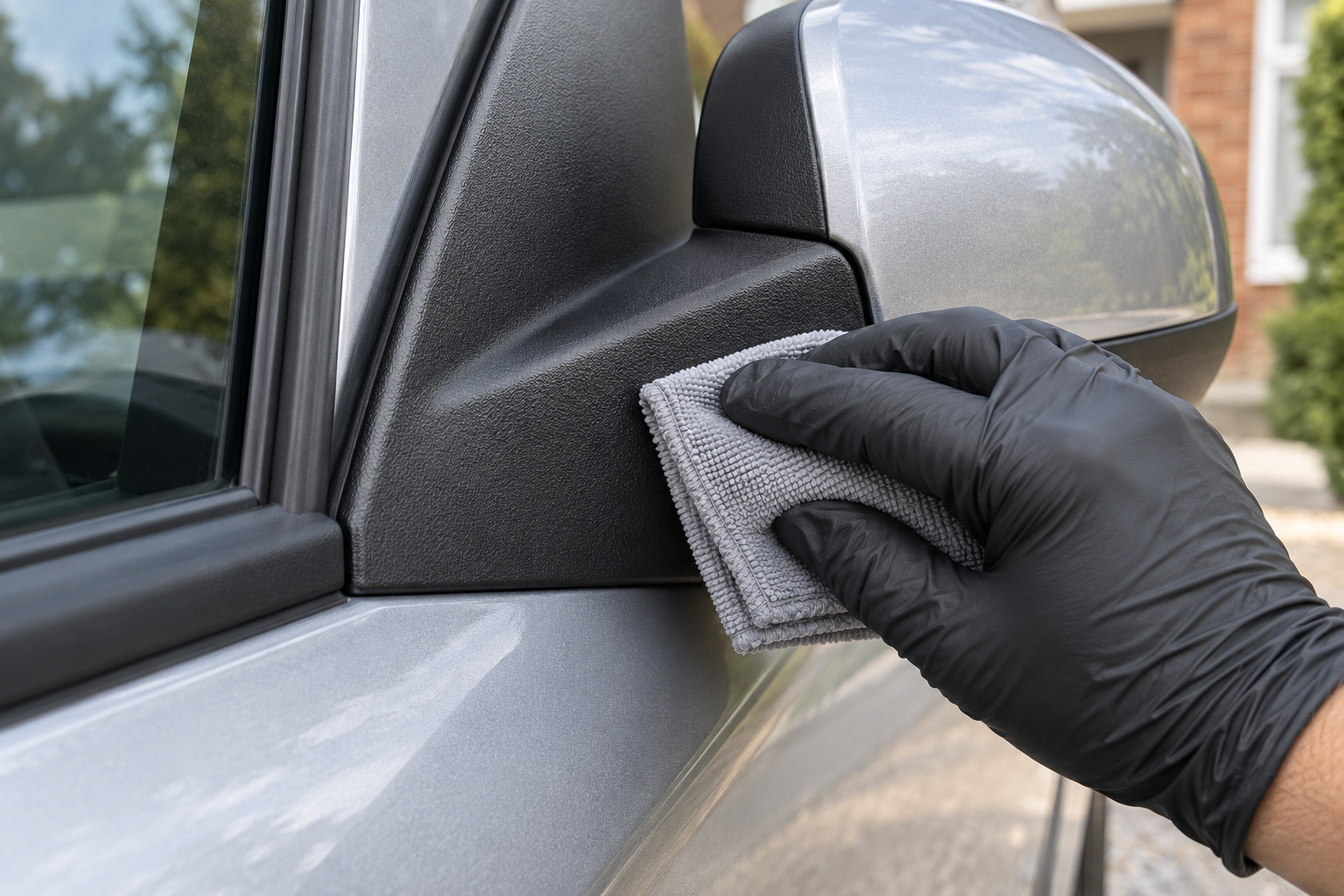
- As soon as that piece is covered, gently wipe away residue with a clean microfibre. The current instruction is immediate removal; don’t leave it to haze like a wax.
- Move your light or viewing angle and inspect the grain. Check for missed coverage and little collections of residue at the ends of strokes or where two areas meet.
- Continue to the next piece with clean working faces. Wipe any accidental contact with paint or rubber away immediately with a clean microfibre, and keep the coating off glass.
The boundary between faded and less-exposed plastic makes coverage easier to judge than staring at the wet centre of the panel. If a corner looks heavy while the residue is still fresh, deal with it during the immediate wipe rather than coating the next piece first.
Inspect before leaving the coating to cure
Walk back around the pieces on your list. Look across the surface from more than one direction, especially around the mirror base, arch joins and bumper corners. Check that the surface looks even and there is no visible residue sitting in the texture.
Gtechniq says one coat is sufficient and a second coat brings no additional benefit. Don’t automatically add another layer to chase a darker appearance. If something looks wrong after the residue has set, identify the product-specific recovery method before experimenting with abrasives or solvents.
Remove used applicators and cloths from the clean pile. Deal with them using the product and textile care instructions; don’t save a residue-loaded cloth for a paint or glass job.
Give it twelve hours sheltered from the elements
Start the protected period from the last completed piece. If you finish one side, take a break and later finish the other, the earlier side doesn’t determine when the whole car is ready for exposure.
Gtechniq specifies twelve hours before exposing the coating to the elements. Include rain and overnight dew in that plan. Keep the car in the dry shelter you arranged; a clear-looking afternoon alone doesn’t tell you what the plastic will meet overnight.
You do not need to spray water on it to check the result immediately after application. Inspect visually, keep the instructions and note when you finished. Keep its aftercare requirements with that note for the next wash.
Keep the remaining bottle useful
The current UK storage guidance is to use C4 within three months of opening, or within twelve months unopened, stored somewhere cool and dry. Mark the opening date on your own storage note. Choose the bottle size around the amount of trim, rather than assuming a bigger car always needs more.
For a white deposit left by polishing, clean and identify it first using the polish-residue guide, then complete the C4 preparation above. Coating over a pale deposit makes the job harder to assess.
The product-specific directions are from Gtechniq’s current UK C4 page and W5 application information.