Some links in my articles are affiliate links. I may earn a commission when you buy through them.
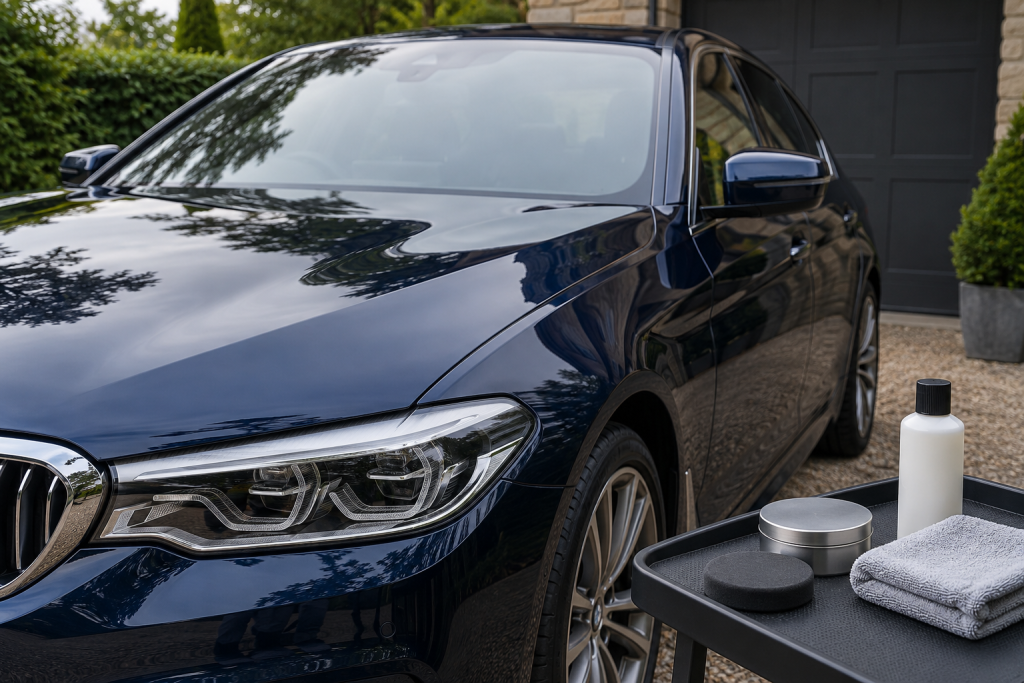
You want the clean car to look properly finished, without spending the rest of the afternoon wrestling wax off the bonnet. For hand application on gloss paint, my first choice is Meguiar’s Ultimate Liquid Wax. It gives you a manageable panel-by-panel routine and an even sheen when the film is kept thin. I’d choose Autoglym Ultra High Definition Wax if you enjoy a traditional paste wax and want a soft, carnauba-containing wax to apply with its damp pad.
A synthetic liquid with a published 5–10-minute removal stage for the G210516 formula. A useful fit when you want to apply, remove and inspect one panel before moving on.
Before buying: Choose the 473ml G210516EU kit. Cool or humid weather can extend the drying stage.
A soft paste with a damp-applicator routine and a 10–15-minute drying stage. Suits a leisurely hand finish when you like loading a pad from a pot.
Before buying: Choose the 120g UHD kit. Keep it off unpainted rubber/plastic, matte or satin paint, wraps and satin vinyl decals.
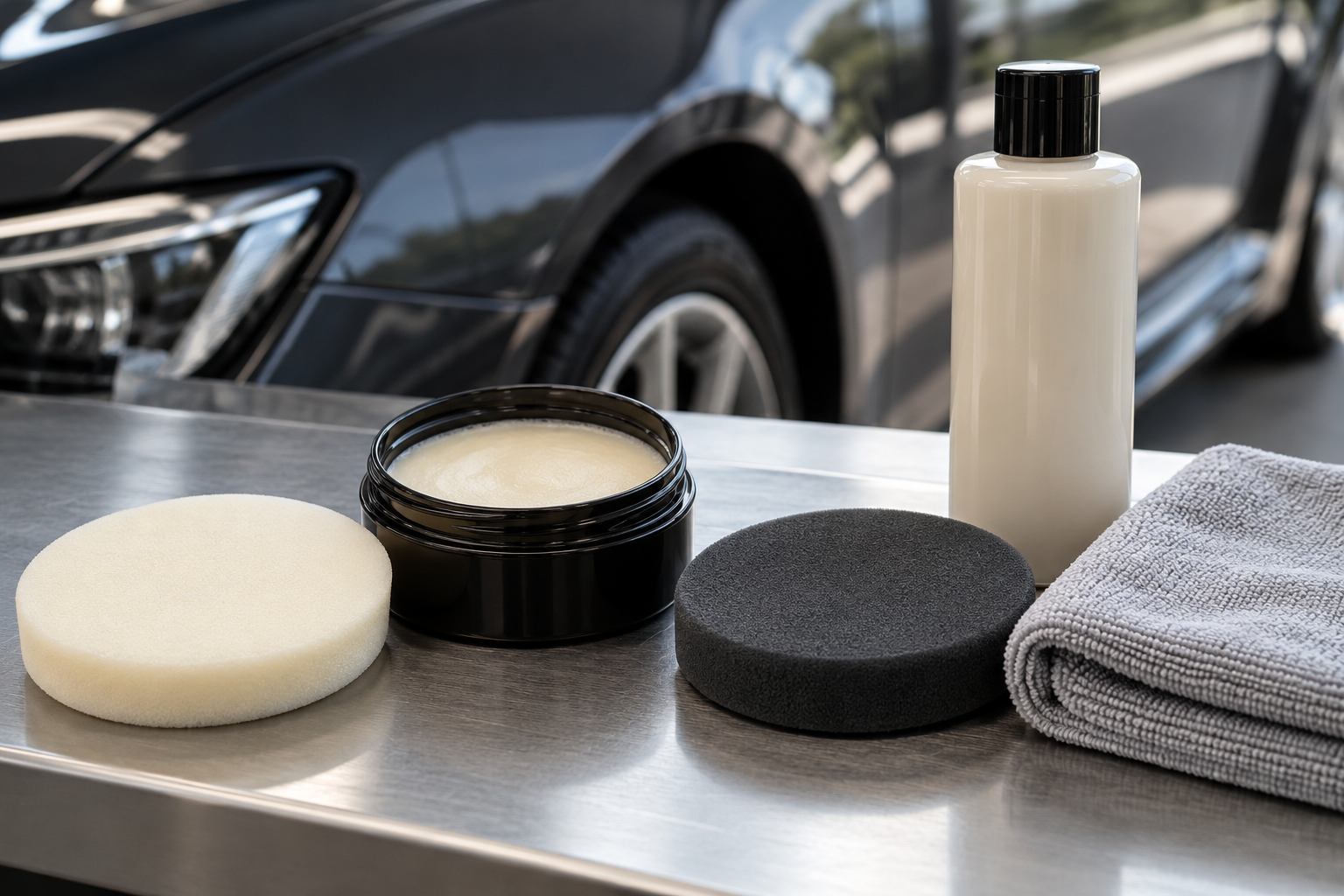
Both kits include an applicator and finishing cloth. These are my two picks for a deliberate apply-and-buff finish; if you want a quicker finishing step during a wash, compare the spray sealants before buying a wax kit.
Ultimate Liquid Wax fits the way I like to work round a car: finish a panel, check the result, then move on. The synthetic formula is intended for glossy paint and clear coats, and the supplied pad and cloth let you start without buying a polisher. The useful result is an even, glossy finish with water repellency; a heavy coat simply leaves more residue to remove.
Meguiar’s application guide for G210516 sets out one panel at a time, followed by a 5–10-minute drying stage and removal with a clean cloth. That gives you a clear sequence to learn on the first panel, rather than covering the entire car before finding out how removal feels. Low temperatures and high humidity can lengthen that stage, so use the directions on your UK bottle if they differ.
On a large bonnet I’d divide the work into areas I can reach comfortably. A little liquid is easy to add to the pad as coverage starts to run out. Look along the paint after buffing, particularly beside badges: the remaining trace at an edge can spoil an otherwise tidy finish. Once that is cleared, leave the panel alone and carry on.
When I’d choose Autoglym’s paste wax
UHD Wax suits the owner who enjoys taking their time over the finishing stage. Its soft paste and shaped applicator give you a gentle dab-and-spread routine, rather than pouring liquid onto a pad.
Autoglym’s directions call for a damp white applicator face and a thin film, left for 10–15 minutes before buffing. Lightly loading the pad helps you cover the paint without leaving a heavy band at the end of each pass. Where passes overlap, I favour a careful final wipe over putting another coat on top of an uneven patch.
Choose this for a relaxed wax session with access around the car and time to check the finish. Around black textured trim or decorative vinyl, keep the pad well inside the permitted paintwork: those materials are excluded from this wax’s directions. If your car is wrapped or matte, choose protection approved for that finish instead.
The differences that matter when you buy
Application routine: the liquid suits a panel-by-panel approach; the paste uses a damp pad and its own drying stage. The stated minutes describe removal, not the total time to finish a car. Washing, drying and the final inspection can take up much of your session.
What’s already in the box: both have the basic pad and cloth. Check your existing clean microfibres before adding accessories to the basket. I’d have a spare finishing cloth ready so a face loaded with residue doesn’t keep travelling over freshly buffed paint.
Bottle versus pot: paste and liquid describe the form you apply. Carnauba is an ingredient, while synthetic describes the formulation. A pot doesn’t automatically promise a deeper finish, and a liquid doesn’t establish a shorter protection life. Judge the particular wax and the routine you’ll maintain.
A bottle lets you add liquid to the pad; a paste is picked up from the pot. Either way, keep the application light enough to remove cleanly.
How much you’re getting: 120g of paste and 473ml of liquid cannot be compared as though they were the same units. Neither tells you a reliable number of applications without knowing the formulation, car size and how heavily you load the pad. Buying the larger-looking pack is a poor shortcut to value.
Match the wax to the paint you have
Inspect the car after washing and drying. If you like the appearance and the surface is clean and ready for protection, you can wax it. There’s no need to clay or polish the whole car as a ritual every time.
Rough bonded contamination, tar spots and scratches need their own assessment. Wax over a visible mark and you may still be looking at it after buffing. The car-polish guide helps if improving the paint is the job you need to do first.
For an existing ceramic coating, check its maintenance instructions before adding another finish. You may be better served by its approved maintenance product. Use the wax, sealant and ceramic comparison if you’re deciding which protection route to start with.
Make room for the job, then keep the finish
On a driveway, choose cool paint in shade and leave time to remove the wax before the light goes. Check any later water-exposure requirements separately from the removal time. A forecast shower or overnight dew matters if it cuts across that period; a garage helps only when you can also see and reach the lower panels.
Afterwards, use a compatible car shampoo and dry the car carefully. You don’t need to reach for the wax after every ordinary wash. Inspect the clean finish first; road film and cleaning residue can confuse a quick water-beading check.
Ready to start? My hand-waxing method shows how to load the pad, judge removal and sort out the remaining smears without turning the last panel into hard work.