How to Clean Alloy Wheels, Including Behind the Spokes
Some links in my articles are affiliate links. I may earn a commission when you buy through them.
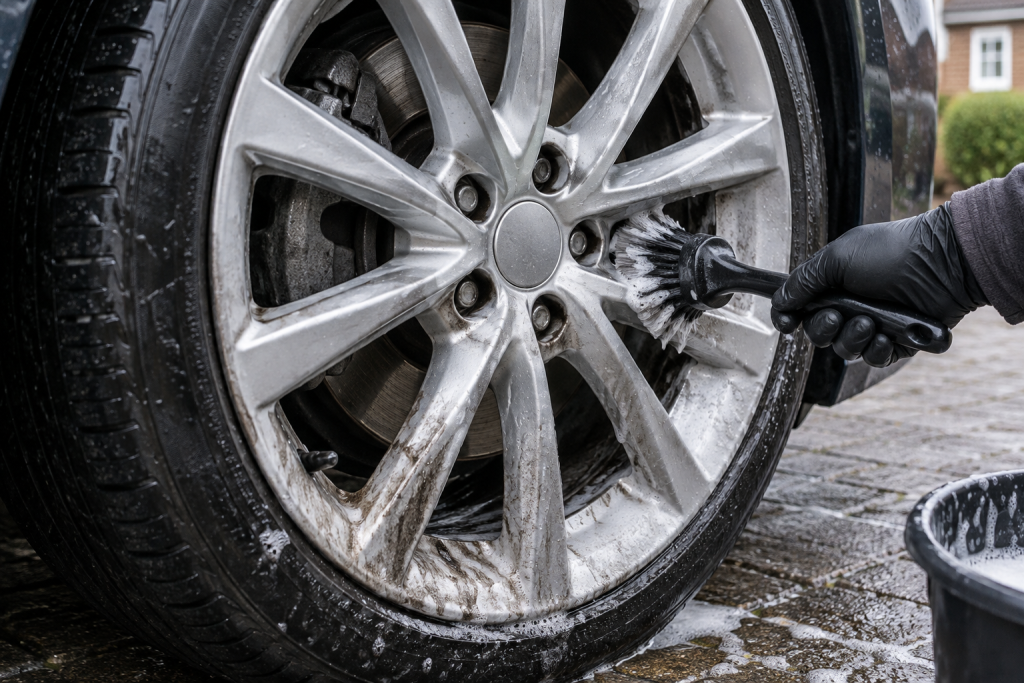
The wheel face can look clean while the barrel behind it is still dark with dirt. A better result comes from giving each area the right access, then checking the corners once the water drains away. Work one cool wheel at a time and the job is much easier to manage.
Choose the cleaner for the actual finish
For suitable wheels, Custom Wheel Cleaner is my starting choice for road grime and brake dust around the spokes. Inspect after rinsing, when the bolt recesses and tight corners are easier to judge.
Identify the wheel finish before starting. Painted, polished, plated, split-rim and damaged wheels can need different care. Autoglym’s specific split-rim advice favours a shampoo wash because cleaner can become trapped in the joins. The wheel-cleaner guide explains the choice.
Set out three jobs for the tools
| Area | Useful tool shape | Detail to check |
|---|---|---|
| Wheel face and broad spokes | Soft wheel-only mitt or face brush | Contact around edges and badges |
| Barrel behind the spokes | Slim or medium barrel brush | Clearance beside the brake caliper |
| Bolt recesses and tight joins | Small wheel-only detailing brush | Rinse loosened dirt fully out of the recess |
The Supreme wheel brush is controllable around awkward wheel edges. Check its size against your own wheel before buying; the narrowest opening matters more than the broad gap you first notice.
Rinse, clean and rinse again
Let the wheel and brakes cool. Rinse loose dirt, then apply your compatible cleaner using its stated method. Keep the working time short enough to stay in control and prevent drying.
Agitate the face and reachable barrel with light contact, rinsing tools as they collect dirt. Pull a barrel brush out slowly and deliberately to reduce splashing. Give bolt recesses their own pass, keeping the tool visible rather than forcing it into a gap.
Rinse thoroughly before moving to another wheel. Use enough water to clear the recesses and joins, not just the visible face. Keep wheel tools and water away from the bodywork kit throughout.
Inspect after the water has drained
Look between the spokes and around the valve and bolts. Wet dark residue can blend into the wheel until the water runs off. A missed patch may need another controlled clean; black specks or bonded particles may call for a different treatment.
Use iron fallout remover only where the material and product instructions support it. If the wheel is already clean, there is no need to repeat a chemical stage simply to produce a colour reaction.
Finish the tyre separately
Dry the wheel with dedicated cloths, then finish the clean tyre sidewall if you want a dressed appearance. Keep dressing off tread and braking components. The tyre-dressing guide shows how to get an even result without a heavy wet edge.
For the next wash, clean and store the brushes so they start free of grit. Better access, controlled agitation and a thorough rinse make a bigger difference than trying to force one oversized brush into every part of the wheel.