Some links in my articles are affiliate links. I may earn a commission when you buy through them.
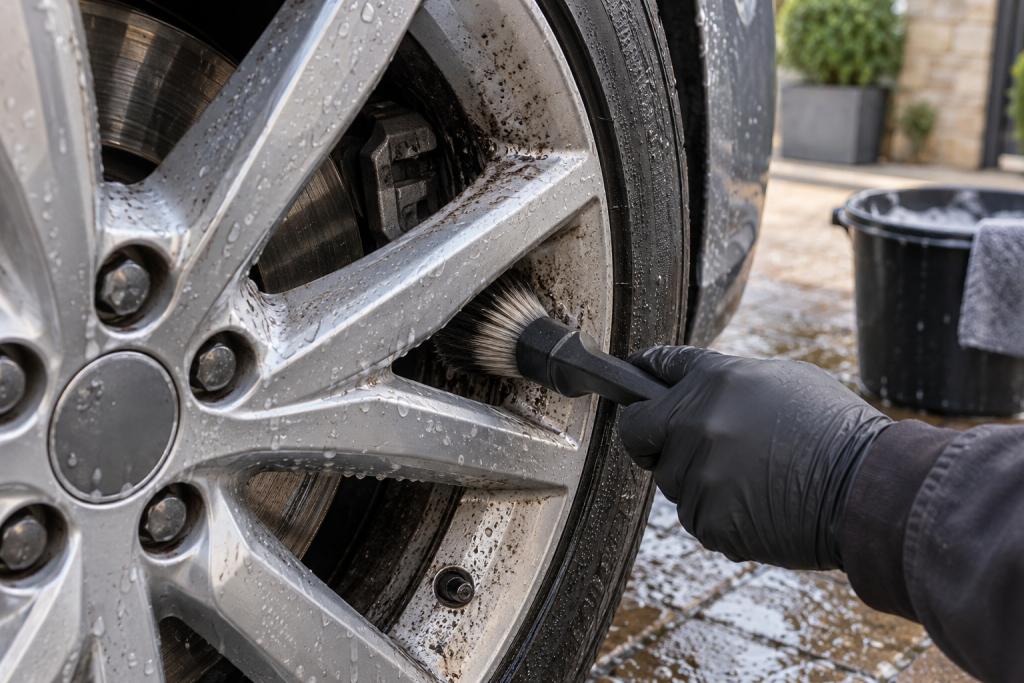
The bodywork can be spotless while the wheels still look as though they’ve done another week on the motorway. Brake dust collects around spokes and bolt holes, and a quick rinse often leaves the most visible bits behind. I’d choose the cleaner around both the dirt and the wheel finish.
For brake-dust-heavy wheels with a suitable intact finish, my first pick is Bilt Hamber Auto-Wheel. I’d choose Autoglym Custom Wheel Cleaner for its stated specialist-finish coverage, or Gtechniq W6 if you want an iron remover approved for both suitable wheels and paint. Routinely maintained wheels may only need a compatible shampoo wash.
Best first choice for a brake-dust clean
Auto-Wheel is the bottle I’d reach for when ordinary washing leaves brake dust clinging to suitable wheels. Its reactive chemistry targets iron contamination, with a colour change as that reaction happens.
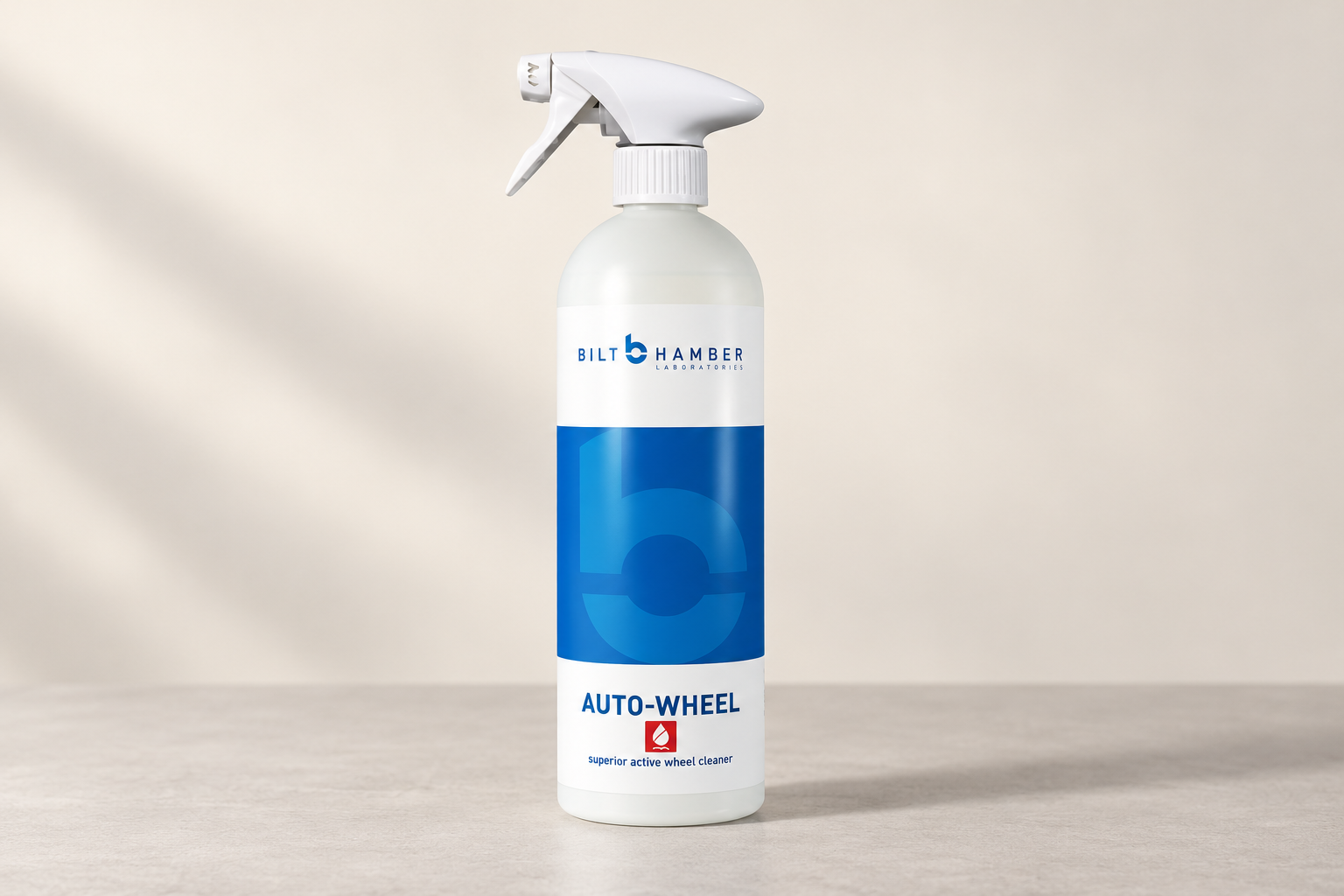
After rinsing, inspect behind the spokes and around bolt recesses as well as the clean wheel face. Awkward corners can retain dirt after the open surfaces look finished.
The reaction is useful feedback, but I’d judge the wheel after rinsing, with the water drained away. More purple or red doesn’t automatically mean a cleaner is better than another product; different amounts and types of contamination affect what you see.
Bilt Hamber’s directions specify spraying the wheels while avoiding direct spraying of the centre caps, normally waiting three to five minutes for the reaction, then rinsing. Follow the bottle, work on cool wheels and don’t let the cleaner dry. For a stubborn area, a suitable soft brush can help rather than simply extending the dwell indefinitely.
I’d choose Auto-Wheel for a proper brake-dust reset, then make future washes easier by keeping on top of the dirt. You don’t have to perform an iron-removal treatment every time the car gets washed.
Best for choosing around specialist wheel finishes
Custom Wheel Cleaner is my choice when the finish is the first thing I need to account for. Autoglym lists compatibility including chrome, painted and anodised wheels; its acid-free formula is intended for specialist finishes.
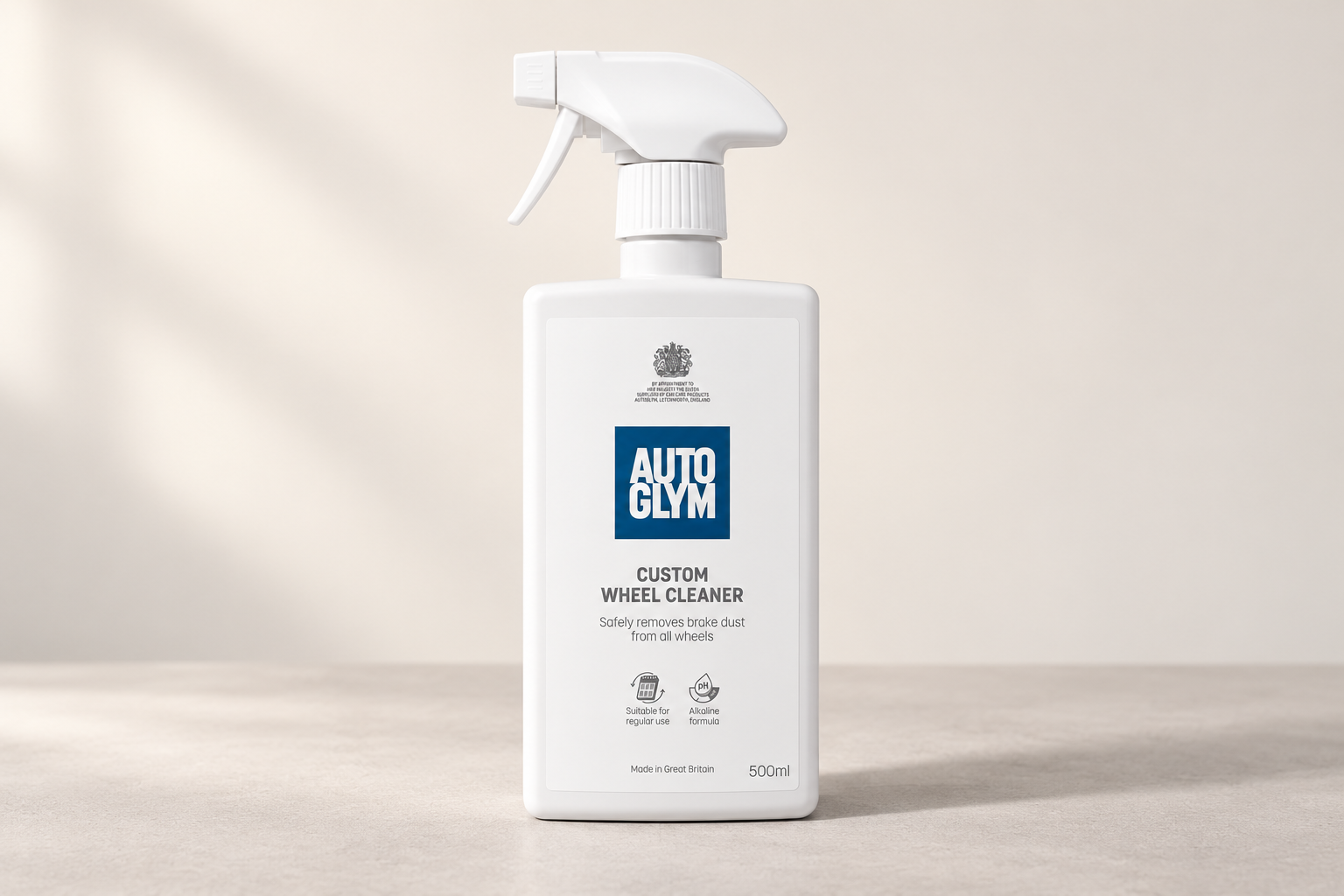
Custom Wheel Cleaner lifts road grime and brake dust with a brush-and-rinse approach that gives careful control around detailed spokes. Inspect after rinsing, once water no longer masks the surface.
Acid-free doesn’t mean pH neutral. Autoglym describes this formula as alkaline, so those labels shouldn’t be treated as interchangeable buying criteria. The meaningful question is whether the maker approves it for the actual finish you have, and whether that finish is intact.
Use Custom Wheel Cleaner on cool wheels, apply from the bottom upwards, agitate with a suitable wheel brush and rinse it all away before moving on. The current UK FAQ advises shampoo instead for split rims because cleaner can remain trapped between the bonded surfaces. I’d follow that more specific advice rather than the broad “all wheel types” headline.
If the wheels have failing lacquer, exposed metal, a specialist refurbishment or a finish you’re unsure about, check the wheel supplier’s care requirements first. Another bottle won’t restore damaged lacquer, and an unnoticed exposed edge can matter more than the product’s name.
Best for one iron remover covering wheels and paint
W6 suits you if you want one product for iron contamination on suitable wheel finishes and paintwork. Its thick, gel-like formula helps it cling to vertical surfaces, and the maker supplies directions for both uses.
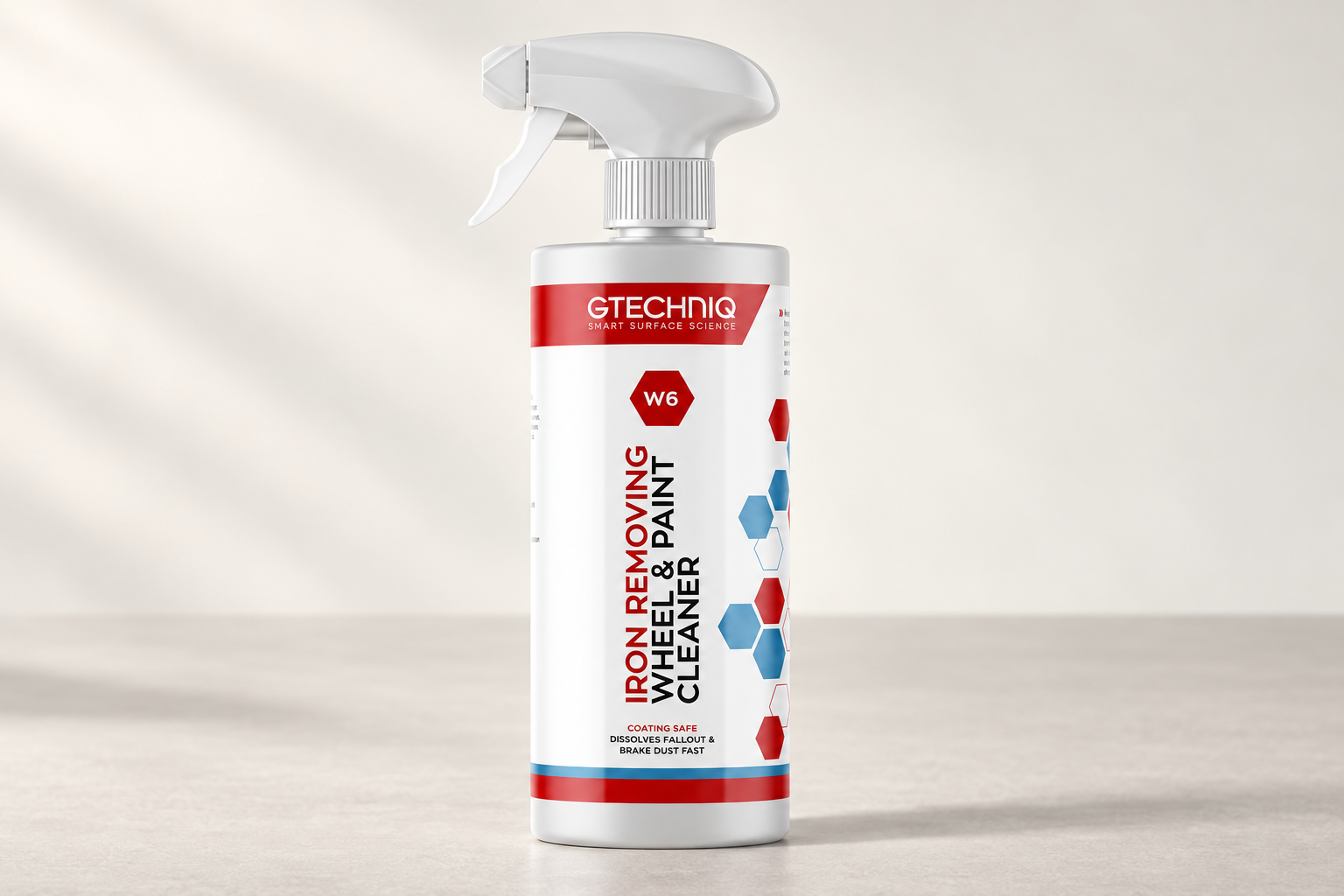
W6 tackles film left by a water rinse. Give the tight corners their own inspection after rinsing.
Gtechniq’s current UK application instructions say to remove loose dirt first, apply out of direct sunlight, allow three to five minutes and rinse before it dries. They explicitly exclude bare or anodised aluminium. That makes Custom Wheel Cleaner the more relevant product to investigate for an approved anodised finish.
The dual-purpose bottle can be convenient for a fuller detail. Keep separate application tools for wheels and bodywork even when the chemical is the same: a wheel brush full of brake dust has no place on your bonnet.
If you clean the wheels every week, start gentler
For suitable, well-maintained wheels, a compatible shampoo and soft wheel tools may lift the ordinary dirt without a dedicated reactive cleaner. Bilt Hamber’s maintenance advice also makes clear that iron removal isn’t automatically needed at every wash.
If the shampoo cleans the wheel thoroughly, keep the stronger step for when contamination actually needs it. If baked-on dots or grey film remain, inspect the surface and choose the appropriate specialist clean. Increasing concentration or dwell without instructions is less useful than identifying what is left.
You can compare the finishing additives in the shampoo guide. For split rims in particular, use the wheel maker’s approved wash routine and the specific cleaner advice above.
The wheel finish matters more than the badge
Painted and lacquered wheels
Inspect the finish around kerb damage and spoke edges. Most recommendations assume a sound, compatible surface. A wheel that looks painted from a few feet away may have exposed areas where the lacquer is failing. Clean carefully around those areas and get finish-specific advice if the coating is damaged.
Diamond-cut wheels
The bright machined face usually has a clear coating, which can deteriorate around chips or edges. Check its condition rather than treating the shiny face as bare polished metal. Use a cleaner explicitly approved for the wheel finish and rinse carefully around the boundaries.
Chrome, anodised or bare metal
Don’t assume every non-acid cleaner covers these finishes. There is a clear difference within this shortlist: the UK directions for W6 exclude bare and anodised aluminium, while Autoglym specifically lists anodised and chrome compatibility for Custom Wheel Cleaner. Follow the finish maker where its instructions are more restrictive.
Small technique changes that save repeat cleaning
Start with cool wheels and clean one at a time. It is much easier to manage dwell and rinsing properly on one wheel than to spray all four and discover the first has dried while you’re working on the last.
Clean the barrel and the backs of spokes with tools that can actually reach them without a metal end scraping the finish. The brush that feels convenient on the face may not reach the inner barrel; choose access rather than stiffness. Rinse the tools so loosened contamination isn’t carried straight back onto the surface.
After rinsing, check the bolt holes, valve area, inner edges and tyre-to-rim boundary. Standing back reveals the overall finish; getting close finds the one dirty corner that makes the wheel look unfinished. Our alloy-wheel cleaning method gives the complete sequence.
Finish by cleaning the tyre sidewalls and using a suitable dressing if you want that fresh, even black appearance. The tyre-dressing method explains application without coating the tread or leaving a heavy rim of product beside the wheel.