Some links in my articles are affiliate links. I may earn a commission when you buy through them.
If you’re choosing between a microfibre drying towel and a chamois, I’d start with microfibre for a regular car-washing setup. You can fold it into clean faces, use a broad area on the bonnet and switch to a small cloth around mirrors. A natural chamois still makes sense if you like a damp cloth that you rinse and wring as you work, and you’re happy with its separate hand-care routine.
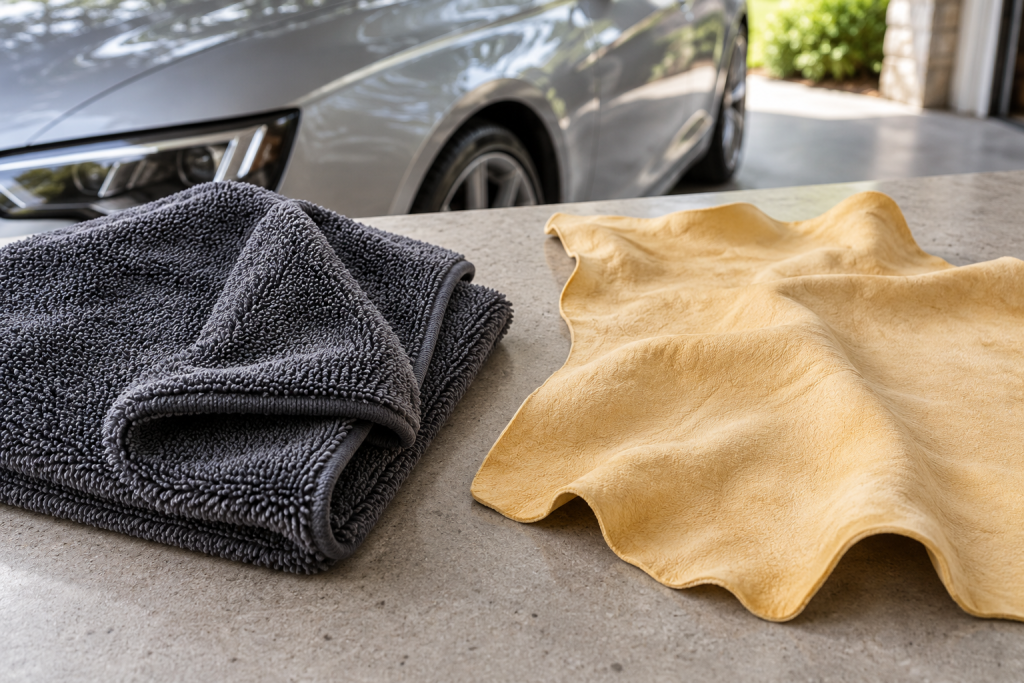
The CarMax XXL drying towel is my broad-panel microfibre choice. The Airlab natural chamois is the natural-leather option here: a nominal 90 × 60cm, with an irregular outline rather than a neat rectangle. Choose the material you’ll comfortably manage and look after; neither should be used to mop up dirt left by a rushed wash.
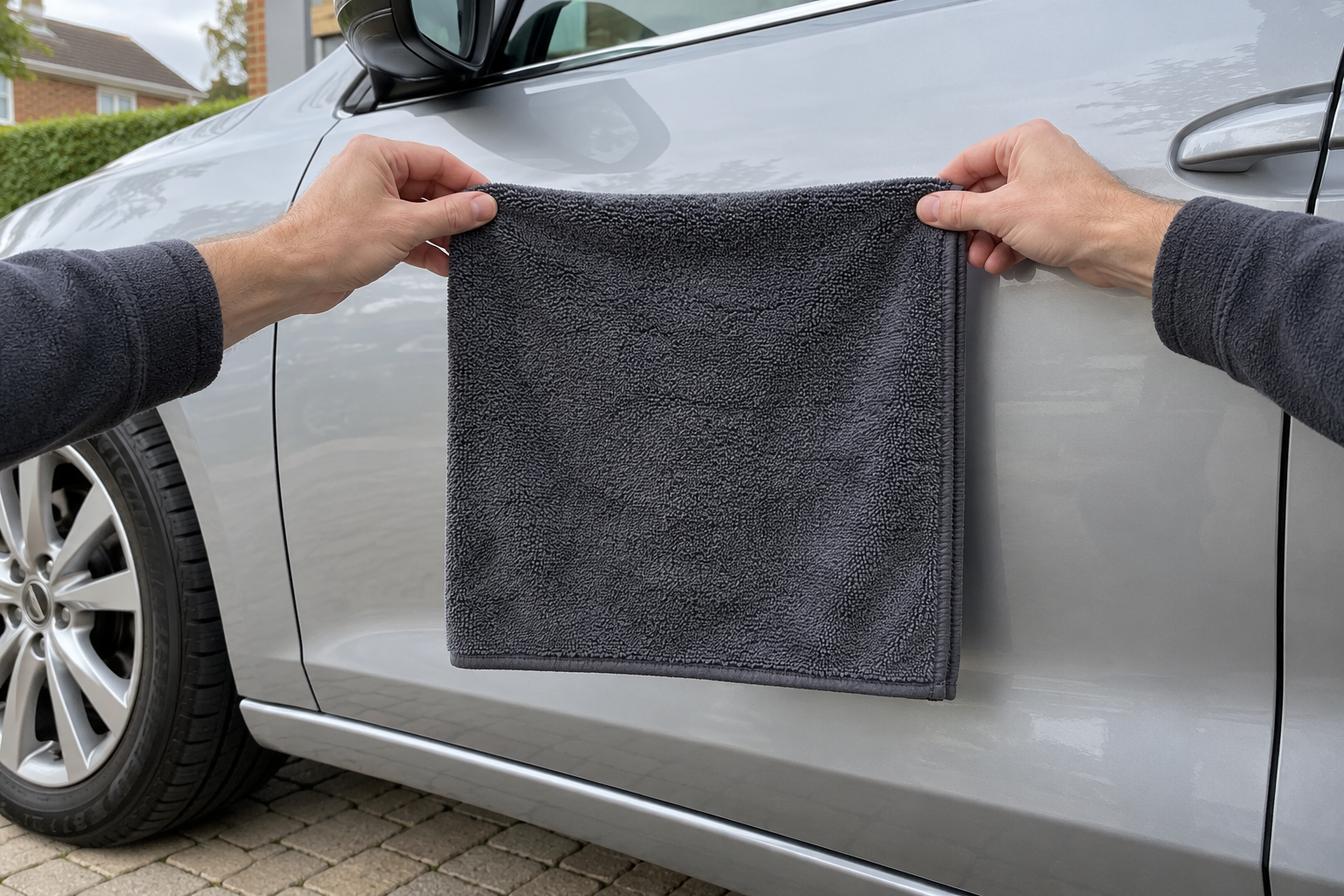
A folded towel gives you a face you can inspect before it touches the paint. When that face becomes wet or picks up residue, turn to another clean area. I find that a particularly useful habit at the end of a wash, when it’s tempting to keep wiping until the last drop has gone.
The CarMax XXL gives you a broad 90 × 60cm double-sided twisted-loop towel. On open panels you can use that width; down the sides you’ll normally want to fold it. If you spend the job trying to keep a loose corner out of the way, a smaller towel makes more sense. The drying-towel choices include the smaller version and separate finishing cloths.
You can also keep a clean spare ready without interrupting the job to rinse your main towel. That suits anyone working on a driveway where the washing machine and a clean sink are indoors. Put the used towel aside once it becomes saturated or dirty, rather than pressing it into service around the lower panels.
When a natural chamois suits you
A natural chamois appeals if you prefer rinsing and wringing a cloth during the drying stage. You work with it damp and pliable, gathering water over a manageable patch before wringing it away from the paint. It’s a familiar rhythm, and you don’t need a large folded bundle in your hand.
The Airlab chamois is genuine sheep leather. Its irregular shape matters when you fold it: bring the loose ends together so you can see what is touching the car. The nominal 90 × 60cm size doesn’t mean every edge is straight or that you’ll get the working face of a rectangular towel.
Rinse a new natural chamois according to its pack before putting it on the car. CarMax, for example, instructs owners of its own chamois to rinse out excess tanning oils in warm water before first use. The Airlab chamois directions specify hand washing in clean soapy water and natural drying, away from direct sunlight. I’d choose it if that routine suits you better than adding microfibre towels to a separate laundry load.
On lower panels, gather the cloth so you can see and control the complete working face. A loose corner can pick up dirt without you noticing.
Will a chamois or towel scratch the paint?
I wouldn’t choose either on a “scratch-free” promise. First check whether the car is actually clean enough to dry. Grit trapped in a soft cloth is still grit, and rubbing harder won’t make it harmless. If you find road film on a clean cloth after touching a panel, return to cleaning that area.
With microfibre, open the pile and inspect the edges before use. With chamois, rinse it carefully and check the folded face and tucked-in corners. If either falls on the driveway, set it aside for cleaning and inspection; don’t just shake it once and carry on over the bonnet.
Keep wheels, dirty shuts and painted body panels separate. A cloth can look presentable while carrying contamination from a different job. The wash-and-dry sequence helps avoid reaching the drying stage with dirt still on the car.
Choose the care routine you’ll keep up
CarMax’s twisted-loop care instructions specify washing at 40°C with detergent and no fabric softener. That temperature is for its towels, not a rule for every microfibre product. Check other towels individually, and keep greasy product-removal cloths out of the clean drying load.
Natural leather needs its own treatment. Don’t throw it into the microfibre load because both items happen to live in your detailing box. CarMax’s separate chamois-care page likewise uses a rinse, a little hand soap when needed and natural drying for its own leather products.
Let either material dry properly before storing it. Give the cloth room rather than folding it tightly while damp, then keep it in a clean covered place. Dust from an open garage shelf is the last thing you want to add just before drying the paint.
What about synthetic chamois and drying aids?
Check what a “shammy” actually is before ordering. A synthetic product can have different preparation and storage directions from genuine leather. Don’t apply natural-chamois care advice to it merely because the photographs and product names look similar.
A drying aid is another separate choice. It may change how you finish a wet panel, but it doesn’t turn a dirty or saturated cloth into a clean one. If the towel stops picking up water, check the cause before adding more product.
For most fresh setups, I’d buy a microfibre drying towel that’s comfortable to control, with a spare ready and a small clean cloth for the last drips. Keep a natural chamois if you enjoy its rinse-and-wring routine and can give it the right care. There’s no need to abandon something you handle well just because another material is more fashionable.