Some links in my articles are affiliate links. I may earn a commission when you buy through them.
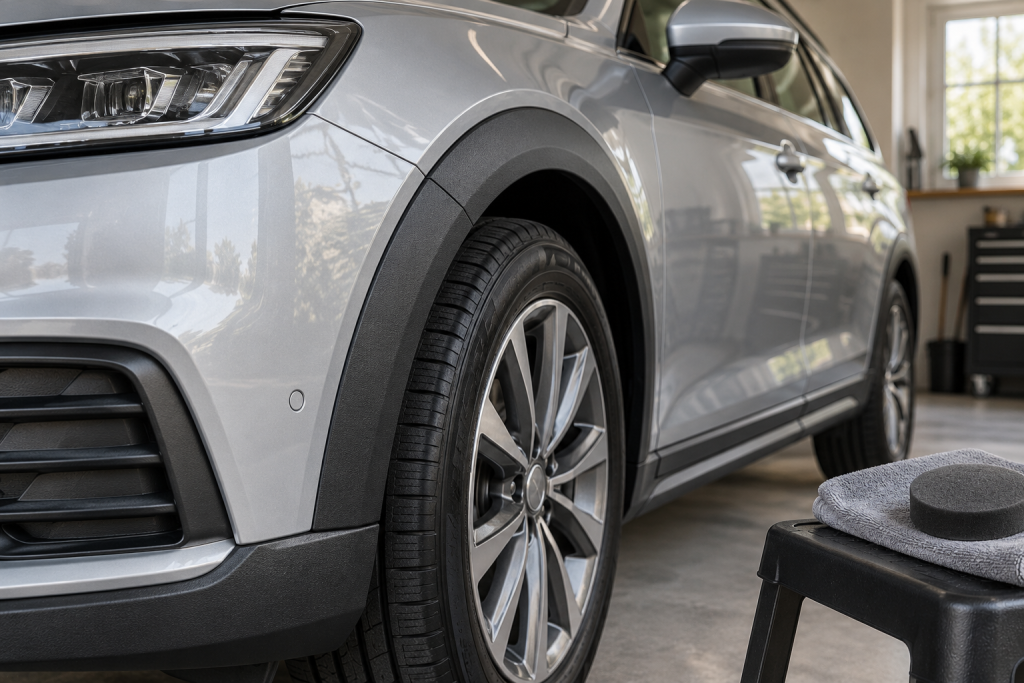
Faded bumper corners and grey mirror bases can make a freshly washed car look as though you stopped just before finishing. For regular upkeep of sound, unpainted exterior plastic and compatible rubber, I’d start with Autoglym Bumper & Trim Gel. A small applicator lets you work neatly beside the paint, then buff away the excess for an even finish.
For unpainted plastic where you want a natural-looking finish and can prepare it thoroughly, Gtechniq C4 is my coating choice here. Allow twelve hours sheltered from the elements after applying it. Keep it off rubber, glass and paint: the current UK application instructions are more restrictive than some product listings suggest.
My two trim-restorer choices
First choice for routine exterior upkeep
A dressing for exterior unpainted plastic and rubber. Useful when you want to revive the colour during normal detailing and tidy the edges with a cloth.
Before buying: Buff the excess off. Autoglym specifically links this step to preventing runs in wet weather; it’s a dressing you’ll refresh as needed.
For a planned plastic-coating job
A coating intended to restore the plastic’s appearance without adding a glossy finish. Suits clean, bare, sound unpainted plastic and an application session you can keep dry afterwards.
Before buying: Remove old dressings, remove fresh residue immediately and provide twelve hours of shelter. Avoid rubber, glass and paint.
Why the gel is where I’d start for regular care
Bumper & Trim Gel is particularly handy for the mixture of small exterior details that can let the rest of a clean car down. Its current UK directions cover unpainted plastic and rubber, so you aren’t trying to stretch a plastic-only coating across every dark piece around the bodywork.
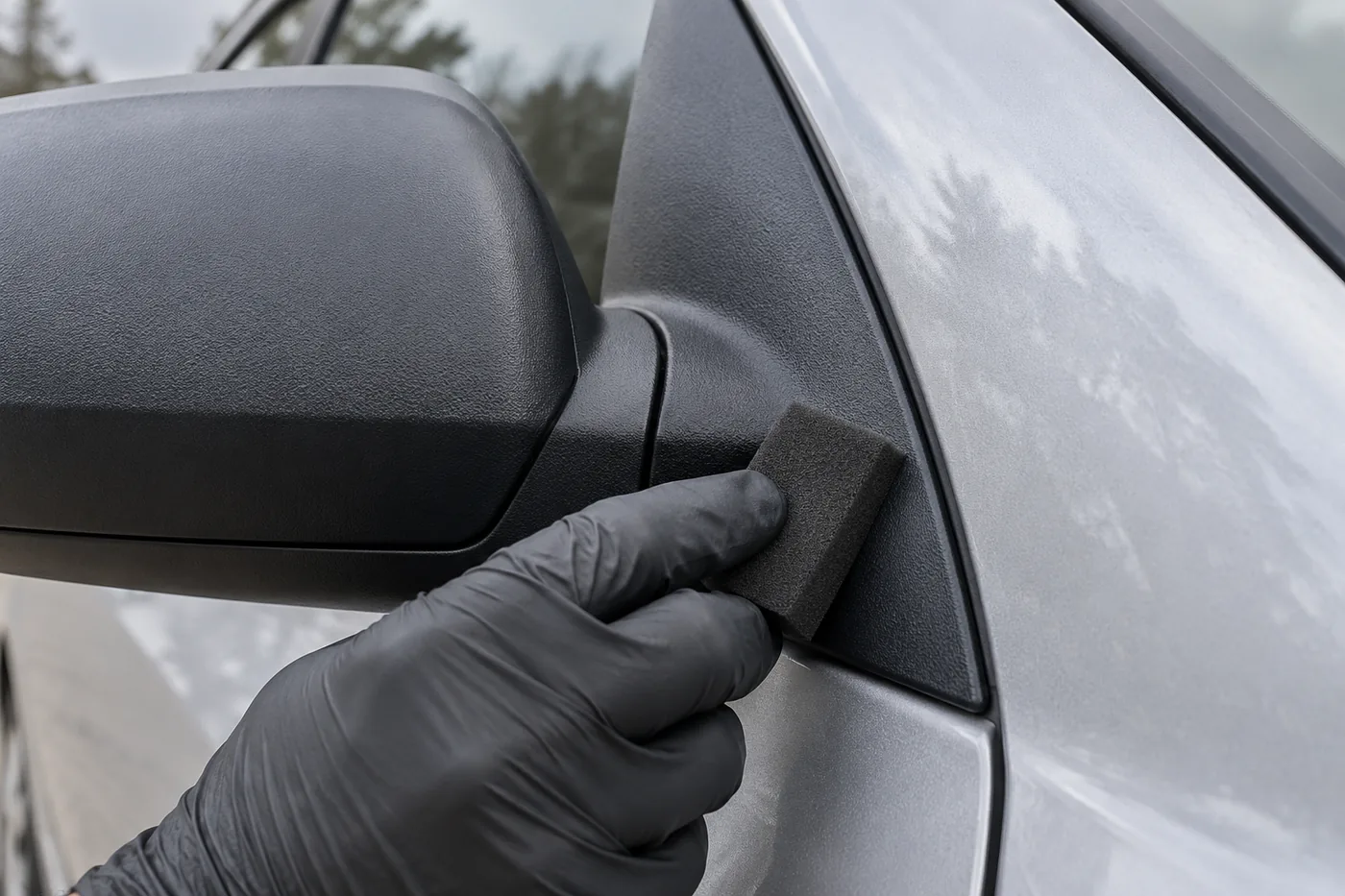
Spread it with a small pad you can guide along the texture. The useful finish check is where a more exposed grey patch meets a darker area: even out the coverage there, then look along the boundary beside the paint. A heavy wet edge can look convincing close up while leaving a line you notice as soon as you step back.
Autoglym’s method is to shake the bottle, apply to a clean dry surface, work it evenly and buff excess away with a clean microfibre. For complex grilles, it suggests a small paintbrush. Keep a separate cloth for that last wipe rather than returning a loaded applicator to the clean surface.
I’d choose the gel when you want a manageable finishing stage and are happy to inspect and refresh it as part of normal care. Check the trim after washing before automatically applying more. The general faded-trim guide covers the material and application checks.
When I’d choose C4 instead
C4 earns its place when you want to keep the plastic’s appearance natural and can give the preparation a separate session. Gtechniq describes a thin coating that restores the finish without adding an unattractive gloss. That matters if you like a tidy factory-style look rather than a freshly dressed sheen.
The surface needs to be free of contamination and old treatments, completely dry and cool. Gtechniq’s preparation method specifies its all-purpose cleaner used neat, followed by rinsing and drying. Once you start coating, spread over one piece of trim and gently remove residue immediately. It is a different job from waiting for a wax to haze.
The twelve-hour protected period is worth planning before buying. A car needed for a wet journey shortly after application won’t suit that session. The C4 application guide explains the cleaning, spreading, wiping and shelter arrangements in order.
Choose the bottle for the amount of plastic you actually have. Gtechniq’s own example puts a heavily trimmed Mini at 30ml and a Golf at 15ml, illustrating why the car’s overall size is a poor guide on its own. Its current storage guidance says to use an opened bottle within three months, so buying extra for an unspecified future job may leave you with product you cannot sensibly keep.
Identify the surface before picking the bottle
Textured unpainted plastic, glossy painted trim and rubber seals can all sit beside each other around a mirror or window. Look at the joins and check the vehicle or trim maker’s information when the finish is uncertain. Don’t assume every black surface needs the same restorer.
For C4, use the narrower UK plastic-only guidance even if a retailer mentions rubber or window seals. Wipe accidental contact with adjacent paint or rubber away immediately with a clean microfibre, as Gtechniq directs. Avoid getting it on glass.
For compatible exterior rubber, Bumper & Trim Gel is the option here. Tyres, driving controls, interior grips and fabric roofs are separate jobs; a product’s trim compatibility doesn’t make them part of this recommendation. Painted bumper sections need paint care, and damaged or lifting coatings need assessment before any appearance treatment.
Clean white deposits before treating fading
If the trim went pale after polishing or waxing, inspect the texture for a deposit before deciding it has faded. A chalky line that follows the paint boundary may be residue caught in the grain. Dressing can darken the surface while making it harder to tell what remains underneath.
For Super Resin Polish residue on unpainted trim, Autoglym specifically recommends Autoglym Fast Glass with a microfibre. The white polish-mark removal guide explains that supported route, how to assess it dry and when to stop. Other polish or wax formulas may need a different approved cleaner.
If you intend to coat afterwards, finish the coating’s complete preparation routine. Removing a visible white patch does not establish that all old dressing or other contamination has gone. In particular, the gel contains silicone, so plan to clean it away before changing to C4.
I wouldn’t routinely stack these two products. Pick the result and care routine you want, then inspect the clean trim before adding more. If colour still looks patchy after a careful test section has dried or settled, reassess the surface rather than trying to hide it under successive heavy layers.
Current directions and finish restrictions come from Autoglym’s Bumper & Trim Gel information and Gtechniq’s UK C4 instructions.