Some links in my articles are affiliate links. I may earn a commission when you buy through them.
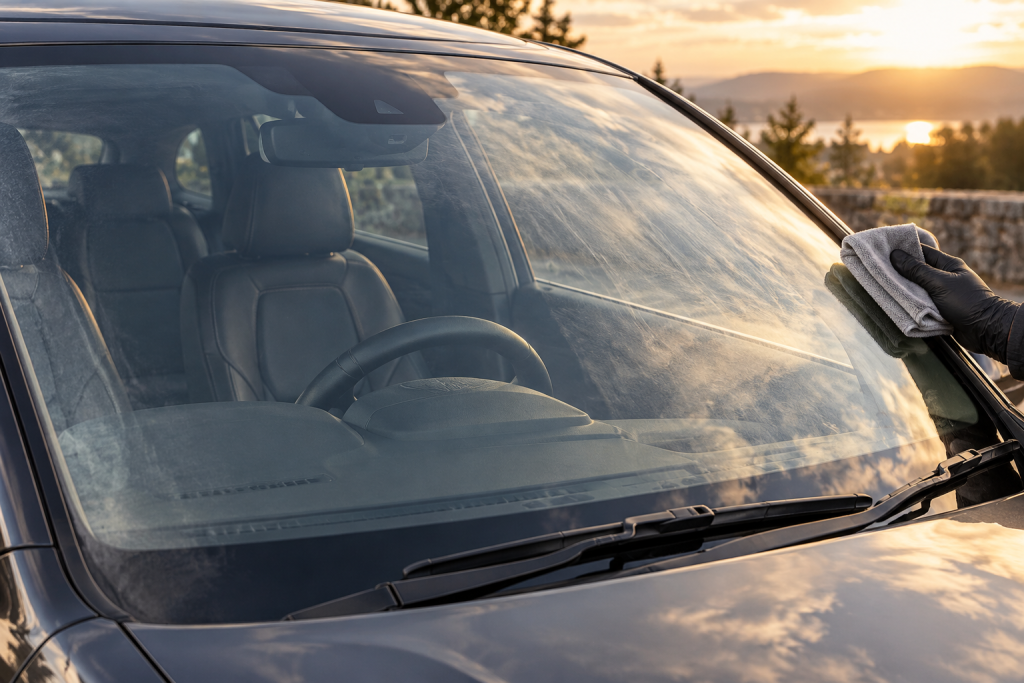
You’ve treated the windscreen, the water beads nicely, and then a smear appears as soon as the wipers pass. I’d stop adding product and work out what is moving across the glass. First identify which side holds the film, finish the exact treatment’s removal stage, then check the blades and their swept area while the car is parked.
A broad dry haze, a wet smear following the blades and a fixed line are different clues. None proves on its own that the glass needs another coating. Keep the bottle nearby so you can check the method you actually used, especially whether the final wipe should have been dry, slightly damp or followed by a second cloth.
- Park and establish whether the mark is inside, outside or following the wiper sweep.
- Identify the treatment and finish its permitted residue-removal stage with clean cloths.
- Inspect the blades and check the wet swept view using the vehicle’s normal controls.
- If the problem remains, use an identified coating’s approved reset route or get the glass and wipers assessed.
Find the side holding the haze
Look through the windscreen from the driving seat, then inspect it from outside. A greasy film on the inner face can become obvious only when the light changes, even though you have just spent time treating the outside. Use a separate clean cloth and the ordinary glass-cleaning method for that inner film.
Choose different finishing directions on the two sides so a remaining streak is easier to locate. If a line follows the direction used on the inside, check there before repeating the exterior coating. Move your viewing angle as well; a straight-on look through the centre is an easy way to miss the corners.
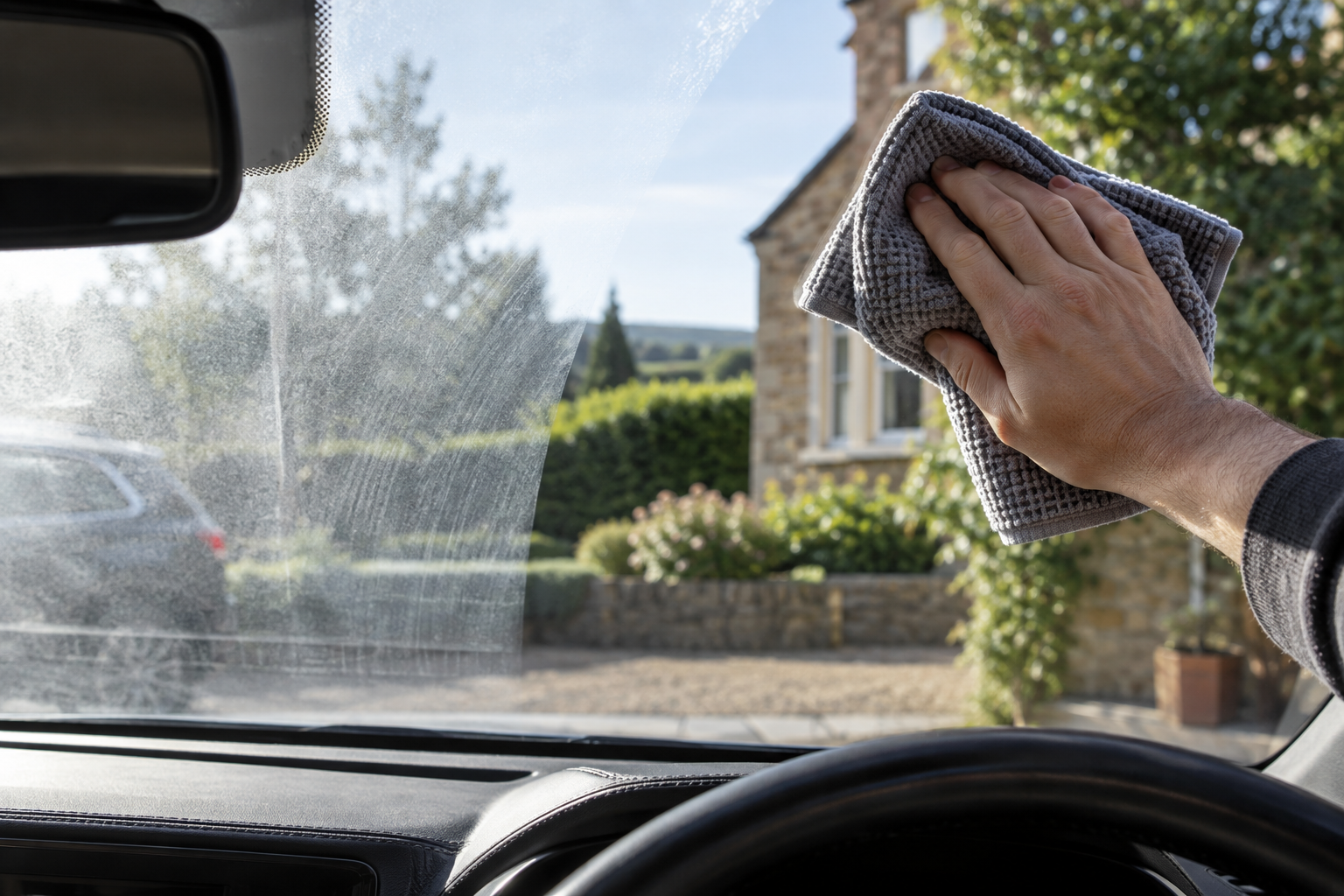
Moisture inside the car is another separate clue. If the glass clouds repeatedly while parked, follow the condensation diagnosis. An exterior treatment is not a cure for wet carpet, damp mats or an unidentified cabin moisture source.
Complete the removal stage for the actual bottle
With Rain-X 2-in-1 Glass Cleaner + Rain Repellent, the UK method is a spray followed by wiping with a dry cloth, repeating where dirt remains. If the cloth now moves a damp smear around, change to a fresh dry working face and finish the glass. A towel that has already collected product from several panes may simply be too loaded.
SOFT99 Glaco Roll On Large has a different finish: after its five-to-ten-minute application interval, residue is removed with a slightly damp cloth, then the glass receives a clean dry wipe. If you used only a dry cloth, return to the specified removal method rather than pressing harder on the remaining pale film.
Keep those methods tied to their exact products. The application guide separates the stages. An old coating that has already been left for much longer is a different removal problem; don’t assume a fresh-application wipe will remove every cured treatment.
Check the cloth before deciding the chemical is at fault. A towel used with dashboard dressing or paint sealant can bring a new film to the glass. Put it aside, use glass-only cloths and inspect one manageable area. If that area improves, continue with the clean setup rather than treating the whole windscreen again immediately.
Use the wiper pattern to narrow the next check
A mark that moves with the blade tells you where to inspect, rather than naming a single cause. Look across the full sweep and the lower resting area for remaining film or debris. A clear centre can still leave a dirty strip that is drawn back into the view on the next pass.
Inspect the visible blade edges for damage, splitting or trapped debris, using the vehicle’s access procedure if the arms need a service position. Follow its blade-cleaning instructions and keep dressing or coating products off the wiping edges. Don’t bend an arm or alter its pressure to compensate for a smear.
Use the normal washer-and-wiper controls for a parked wet check once the treatment permits water exposure. Notice whether a broad film follows both blades, a narrow line repeats at one point, or the blade skips. Those observations help distinguish a finish problem from a blade or arm issue that needs attention.
If the blades jump, leave a poor swept view or keep smearing after the permitted cleaning checks, have the glass and wiper operation assessed. Do not try to make a dry-running test harsher to prove the coating works, and don’t start a journey with the view obscured.
Reset an identified coating without guessing at a solvent
For its Original Glass Treatment, Rain-X’s UK troubleshooting guidance recommends a thorough clean with its designated cleaner before reapplication when white marks or jerking occur. That advice concerns an identified product. It does not establish that every coating, film or windscreen should receive the same removal treatment.
Where that route is appropriate on permitted exterior glass, Rain-X X-treme Clean & Headlight Restorer is the maker’s glass-cleaning product. Its UK method starts by removing loose dirt with clean water, applying to a soft cloth or the surface, working in circular movements, then rinsing and wiping dry. Include the rinse; a quick dry wipe alone is not the complete published routine.
Confirm compatibility before that deeper cleaning, especially if the glass has an additional coating or film. Keep the cleaner off painted surrounds and control the rinse. An unidentified finish is a reason to establish its care requirements, not to try household solvent, wire wool or a random abrasive pad until the beading disappears.
If the repellent is a Glaco coating, use that exact product’s preparation and removal route. Glaco Glass Compound Roll On is an abrasive preparation cleaner in the range, so do not use it merely as a routine finishing wipe over a coating you want to retain. Check that the underlying glass permits it before resetting the surface.
When the mark stays put
A fixed scratch, chip or cloudy patch unchanged by cleaning needs a separate assessment. More repellent will not repair the glass. Record where the mark is and whether it is visible on dry glass, wet glass or only during the wiper pass; that is much more useful than a list of bottles applied afterwards.
If you are starting again after an approved reset, clean and inspect the glass before applying the next layer. Keep the method consistent and note the final wipes completed. Check the dry view and the permitted wet sweep before considering the job finished.
For future treatment, the rain-repellent choices compare a convenient combined spray with a separate applicator coating. Choose one routine you can complete and maintain.