Some links in my articles are affiliate links. I may earn a commission when you buy through them.
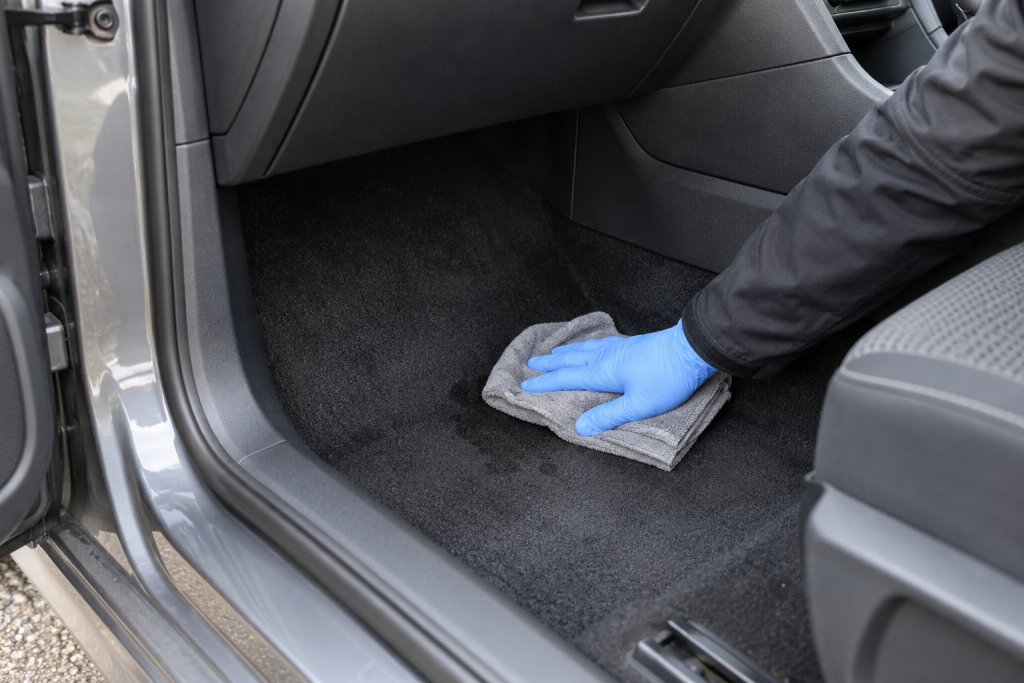
A wet patch in the footwell can look small until you press a towel into it and realise how much water is still there. Getting the visible pile dry is only part of the job: the backing and padding underneath may stay damp after the top looks respectable.
For a small clean-water spill or rain-damp footwell, remove the mats, blot up the water, use a vacuum rated for liquid pickup if needed, and dry with safe airflow. Check whether moisture remains beneath the pile and whether water returns after rain. A dehumidifier bag comes later, once the liquid water is dealt with.
I’d resist the temptation to shampoo it straight away. First find out how wet it is and where the water came from. That saves you adding another round of moisture to something you’re already struggling to dry.
Decide whether this is a home drying job
A knocked-over bottle of clean water or a little rain brought in on shoes is very different from standing water, a flooded car or a leak that has been soaking the floor for weeks. Start by identifying the source and checking how far the damp extends.
For floodwater, sewage, heavy mould, water near electrical equipment or a broadly saturated floor, arrange professional assessment. Don’t start a flood-damaged car until it’s been checked. The AA’s floodwater guidance explains why electrical and other damage can go beyond what you can see.
Don’t remove seats, disconnect airbag wiring or pull trim apart to follow a general cleaning guide. If the backing can’t be checked without dismantling the car, a garage or suitably equipped interior specialist is the sensible next step.
If the cause is unknown, note when the patch appeared and whether it follows rain or a wash. My condensation guide gives you accessible moisture checks without starting to dismantle the interior.
Take the mats out and map the wet patch
Remove the loose mat and check both sides. Dry it separately in a suitable place at home, away from the cabin you’re trying to dry. Carpet mats and rubber mats need different cleaning approaches; use the mat guide if they’re dirty as well as wet.
Press a clean dry towel into several spots on the fitted carpet: the centre, the edge by the sill and the area farther beneath the mat. Use fresh dry sections so you can tell where moisture is transferring. Don’t just run your fingertips across the top; that can miss water which appears under pressure.
Make a quick note of the damp boundary. If it grows again after you’ve dried it, or returns in the same place after rain, that’s useful information for whoever investigates the ingress. Drying repeatedly without checking recurrence can turn into a very tedious hobby.
Keep removed mats out until the fitted carpet is ready. A waterproof rubber mat laid back over a damp patch makes checking and evaporation more difficult.
Remove water before adding cleaner
Press folded absorbent towels down firmly, lift them and replace or turn them as they become wet. Blotting draws water into the towel; scrubbing a soaked patch around mainly spreads the work. Take wet towels out of the car as you go.
For more than towels can reasonably collect, use a machine explicitly rated for wet pickup and set it up according to its manual. Filters, bags, attachments and tank limits vary. An ordinary dry-only household or cordless car vacuum mustn’t be used to suck up liquid.
Kärcher’s wet-and-dry range illustrates the type of liquid-pickup equipment involved. If you’re deciding what to buy or hire, my wet-and-dry vacuum and extractor comparison explains the distinction. A spray extractor adds liquid as part of cleaning; you don’t need to spray more water into an already clean, wet patch just to remove what’s there.
Keep the nozzle on suitable carpet surfaces and away from exposed wiring, connectors and controls. Empty and clean the machine as its manual directs, then make further suction-only passes where the equipment permits them. The aim is to leave less water for the air to remove.
Check the layers beneath the pile
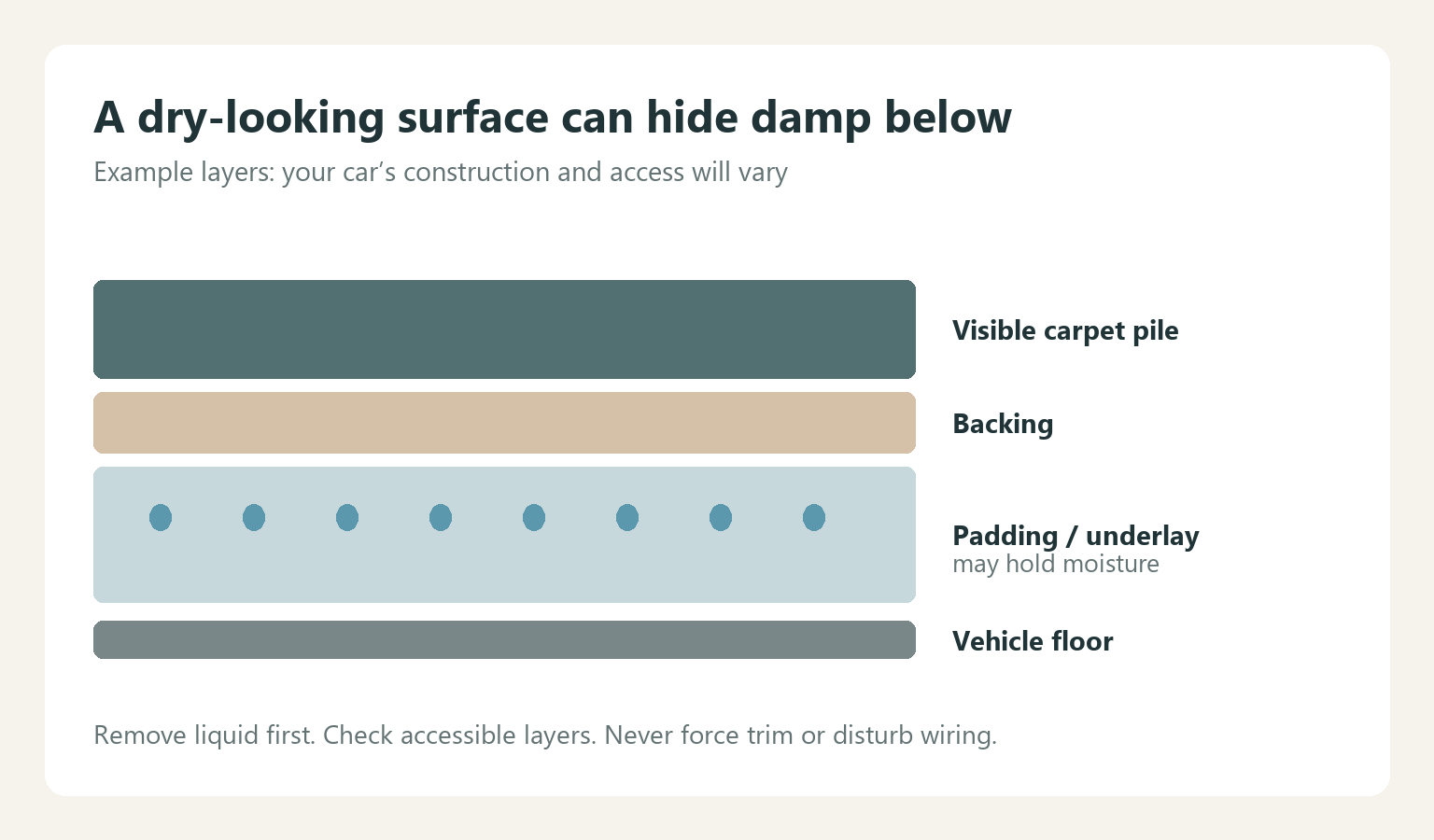
Car interiors vary, but fitted carpet often has backing or absorbent material beneath it. That lower material can remain wet even when the visible fibres feel much better. The diagram shows why a surface check alone can be misleading; it isn’t a dismantling plan for your particular car.
Where an edge is already accessible without removing fixed trim or disturbing wiring, check for moisture underneath. Don’t force it up. If pressing still brings moisture back to the surface, or you can’t assess a persistently damp area safely, arrange proper inspection and drying.
A dry top followed by a returning musty smell or heavy overnight misting is a reason to revisit the hidden moisture, not simply add fragrance. Equally, condensation alone doesn’t prove the underlay is wet. Use the towel checks and what you can inspect safely, rather than diagnosing the car from its smell.
Give the moisture a safe route out
Once you’ve removed as much liquid as practical, use airflow while the car is safely parked in a dry, secure setting and you can supervise it. Open doors or windows only when the weather and location allow; don’t leave the car open unattended or let another shower undo the work.
A suitable fan can move air across an accessible surface, with electrical equipment and leads kept dry and arranged safely. Don’t put a portable heater in the footwell, aim intense heat at trim, or leave heating equipment running unattended. Don’t idle the engine in a garage or other enclosed space.
Drying time depends on how much water remains, the layers involved, temperature, humidity and ventilation. A small spill and a soaked backing won’t follow the same timetable. I’d plan around repeated checks rather than a promise that everything will be dry by teatime.
Check again after a pause, using a fresh dry towel and the same areas as before. Returning dampness or a wet backing means the job isn’t finished, even if the pile looks ready for a photograph.
Clean residue once you can control the drying
Plain clean water may leave no cleaning job beyond drying. A drink spill, dirty water from shoes or an existing stain may need further treatment, but identify the contamination and the carpet material first. Milky drinks and persistent odours can need professional attention, particularly if liquid has soaked into inaccessible padding.
For suitable fabric, use the appropriate cleaner sparingly and follow its directions, testing an inconspicuous area first. Don’t saturate the whole footwell to chase one mark. Kärcher’s upholstery guidance explains spray extraction for suitable textiles; your vehicle and machine instructions determine what you can clean safely.
If you’re also tackling fabric seats, use the seat-cleaning and drying routine. Keep the work manageable enough that you have time and somewhere suitable to dry everything afterwards.
Refit the mat only after the final checks
Before the mat goes back, check the surface and any safely accessible backing again. Refit it correctly on its original retention points, with no loose towels or equipment near the pedals. Then check the same area after the next rain or wash if ingress was suspected.
Once the carpet is dry and any source has been dealt with, a reusable car dehumidifier bag can help with background moisture while parked. It isn’t equipment for removing the water you can still squeeze into a towel.
If you’re handing the car to a specialist, tell them where the damp started, what liquid was involved and what you’ve already done. That small amount of preparation is more useful than a cabin that smells strongly of freshener but still has a wet floor.