Some links in my articles are affiliate links. I may earn a commission when you buy through them.
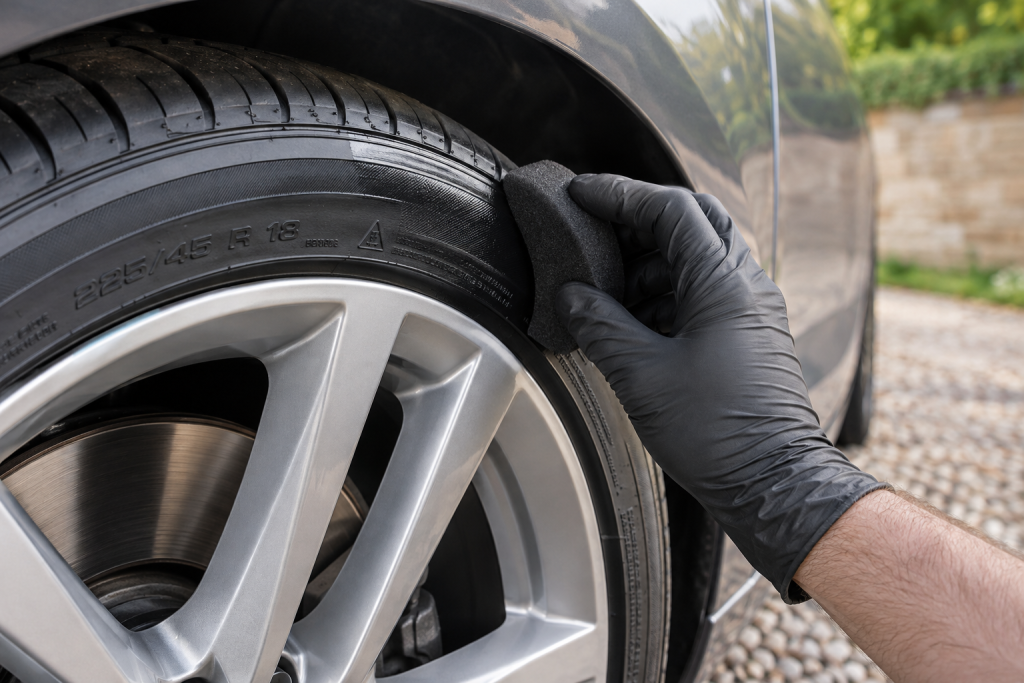
A freshly washed car can still look slightly unfinished when the tyres are grey and patchy. A good dressing brings the sidewalls back into the picture. The useful choice is whether you want an understated black finish or a noticeable gloss, and how you prefer to apply it.
My first choice for a restrained finish is Autoglym Instant Tyre Dressing, with the excess wiped back. I’d choose Meguiar’s Endurance Tyre Gel if you want glossy tyres and the control of a gel on an applicator. For a quick finish on clean wet sidewalls, the spray is also the more convenient choice here.
Best for a natural-looking finish
Instant Tyre Dressing suits the car owner who wants the tyres to look clean, dark and well cared for without drawing attention away from the wheels. You can control the appearance by how you finish the application: leave it to dry for a light sheen or remove the excess for a matt finish.
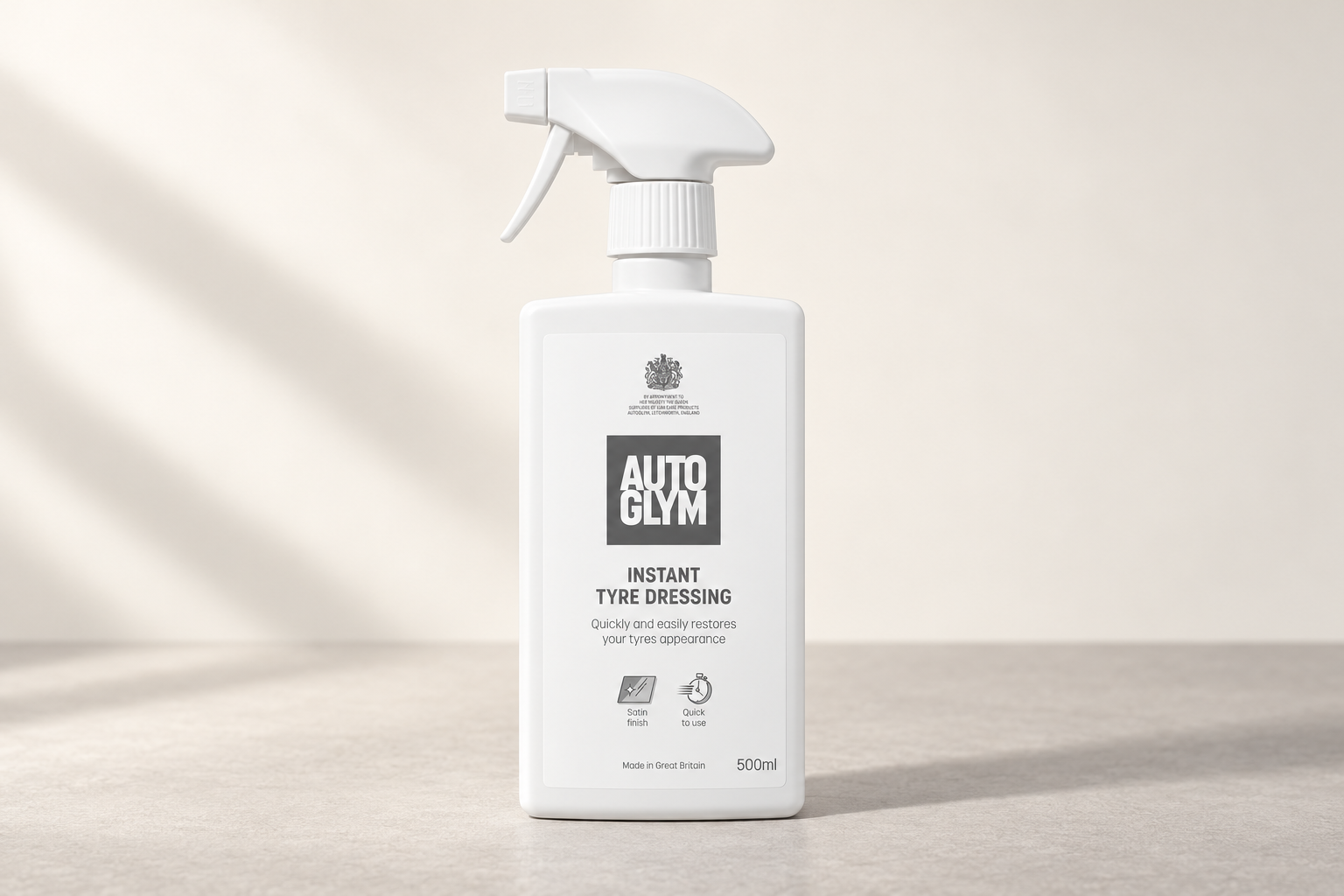
Wipe back the excess for a restrained, even finish. Check from a few steps away: the sidewalls should look tidy without drawing attention away from the wheels.
Autoglym’s directions permit use on clean wet or dry sidewalls. You can put the spray on a suitable sponge first and wipe it around the tyre when you want to keep the wheel and surrounding paint clear of overspray.
I’d choose Instant Tyre Dressing for everyday use and for a tidy finish after a maintenance wash. Its wet-sidewall application is useful if you don’t want to turn the final tyre step into a separate drying exercise. Clean rubber still matters: dressing over old grime won’t give you the even appearance you bought it for.
If you like a little shine rather than a fully matt finish, leave the product to dry as directed. You don’t need a different bottle just to move between those two finishes.
Best for a more obvious gloss
Endurance is the one I’d buy when the gloss is part of the look you want. The gel goes on with an applicator, which gives you deliberate control around the sidewall lettering and the rim edge.
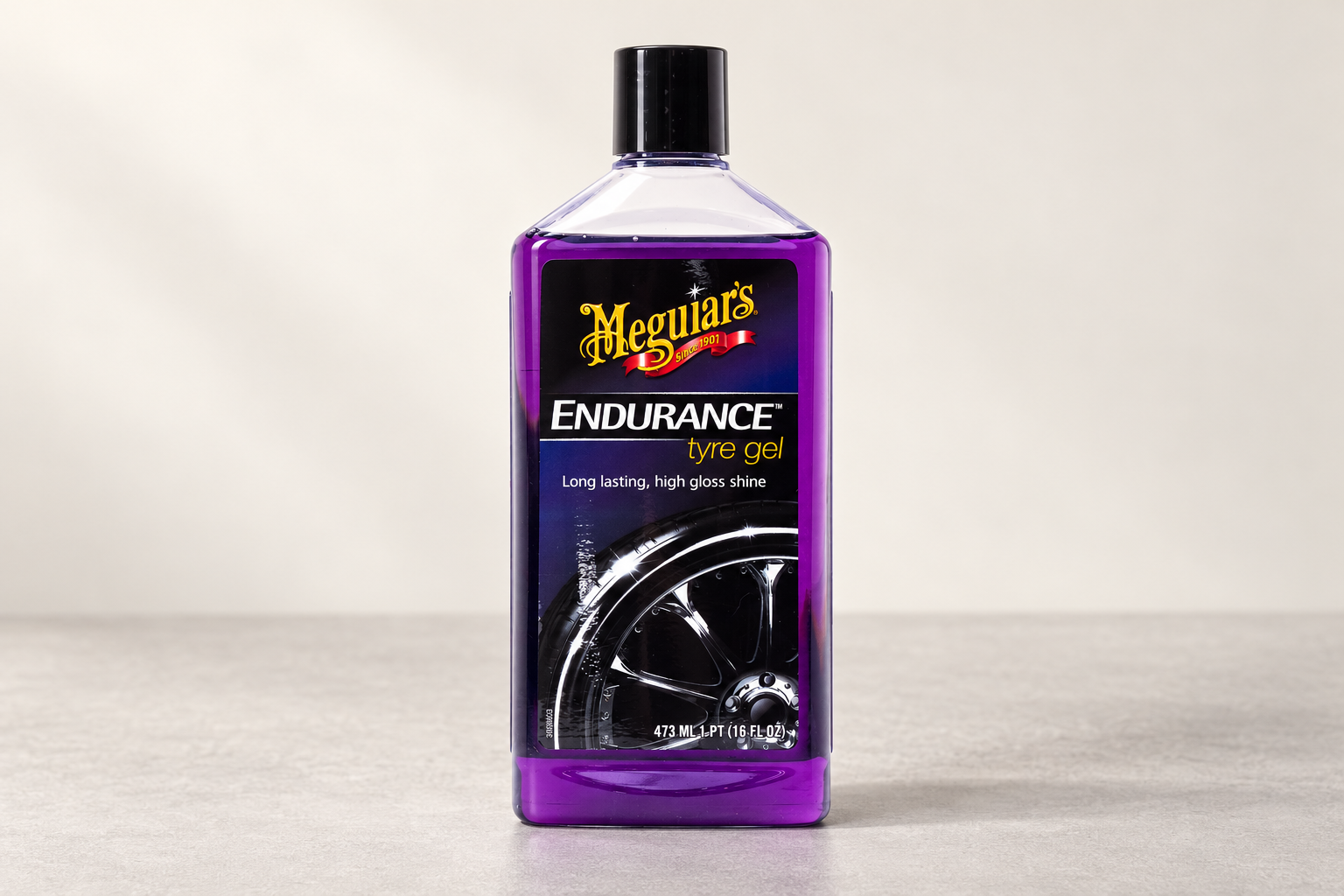
Use a small amount on an applicator for careful control. Level any heavier patch before adding more; that gives a more even finish than another generous layer everywhere.
Meguiar’s UK description positions it as a high-gloss tyre gel. The appearance and applicator control are my reasons for choosing Endurance here.
Apply to clean, dry tyre sidewalls following the bottle’s directions, spread evenly and remove excess before driving. The applicator lets you work close to the rim without misting the face of the wheel. It needs its own storage afterwards: a dressing-loaded sponge shouldn’t share a bag with the cloth you use on your windscreen.
If you’re after satin rather than gloss, I’d start with the wipe-back spray choice. Reducing the amount of a glossy gel can temper the appearance, but it doesn’t make every high-gloss formula equivalent to a product chosen for a subtler finish.
Best for a quick finish after washing
If your tyres are clean but still wet, Instant Tyre Dressing earns this recommendation as well. Autoglym specifically allows wet-sidewall use, so you can dress the tyres without waiting for the same dry application conditions as the gel.
I’d still apply it through a sponge when control matters. Spray onto the sponge, spread around the sidewall and decide whether to leave the light sheen or wipe back. That gives you the convenience of the formula while keeping the nearby wheel, brake area and bodywork clear.
If you finish several cars in a day, plan the application around the drying time and finish each sidewall consistently. A quick spray is only convenient if you don’t have to spend the next ten minutes cleaning overspray off the wheel.
Preparation makes the finish much more consistent
Clean the sidewalls before dressing them. Old dressing, road film and the brown contamination a cleaner lifts off can otherwise give you uneven absorption and patches. Use a suitable tyre cleaner or approved wheel-and-tyre product, work it with a dedicated brush as directed and rinse thoroughly.
Check the surface once the dirty rinse water has gone. Don’t keep putting dressing over a patch you haven’t cleaned properly. If you’re choosing a combined wheel cleaner, the wheel-cleaner guide explains the finish-specific choices and why wheel compatibility comes first.
If you also want to protect the alloys after cleaning, compare wheel waxes and sealants before dressing the tyres.
For the gel, dry the sidewalls before application. For the spray, follow its wet-or-dry directions. A routine built around those actual requirements is more reliable than applying both products identically because they share a shelf in the shop.
How to get an even finish without sling
Put the product where you want it
Use a dedicated applicator and spread around the sidewall, including the recesses in the lettering. Keep it off the tread, brakes and other grip surfaces. Avoid a wet ridge of product at the rim edge or around raised letters.
Step back before adding more
The tyre can look uneven while you’re inches away from it. Let the application settle as directed, then look at all four tyres in the same light. If one patch is heavy, level or remove the excess there rather than making the other three equally saturated.
Give excess product somewhere to go
Follow the product’s drying and wipe-back instructions before moving the car. A puddle in a moulded recess can be thrown onto the wheel or paint once the tyre rotates. An even application is much easier to manage than trying to clean up sling afterwards.
Keep the tools separate
Use tyre-only applicators and cloths, and keep them away from wash mitts, drying towels and glass towels. Label a container if you need to. Mixing these tools can turn a neat finishing job into greasy paint or smeary glass at the next wash.
Our tyre-dressing method takes you through the application sequence and awkward areas. If the tyres need another round of cleaning first, do that before polishing off the wheel faces.
Does a tyre dressing restore damaged rubber?
Dressing improves the appearance of suitable sidewalls; it doesn’t repair cracking, cuts, bulges or worn tread. Inspect the tyre as you clean it and treat damage as a tyre issue. A darker surface can make the car look cared for, but it shouldn’t hide a problem you need to deal with.
How often would I reapply it?
Reapply when the cleaned sidewall needs the finish again, following the product instructions. Weather, miles driven, how you clean the tyre and how much you apply all influence how it looks. Inspect after cleaning before automatically adding another layer over the old one.