How to Use a Clay Bar—and Decide Whether You Need One
Some links in my articles are affiliate links. I may earn a commission when you buy through them.
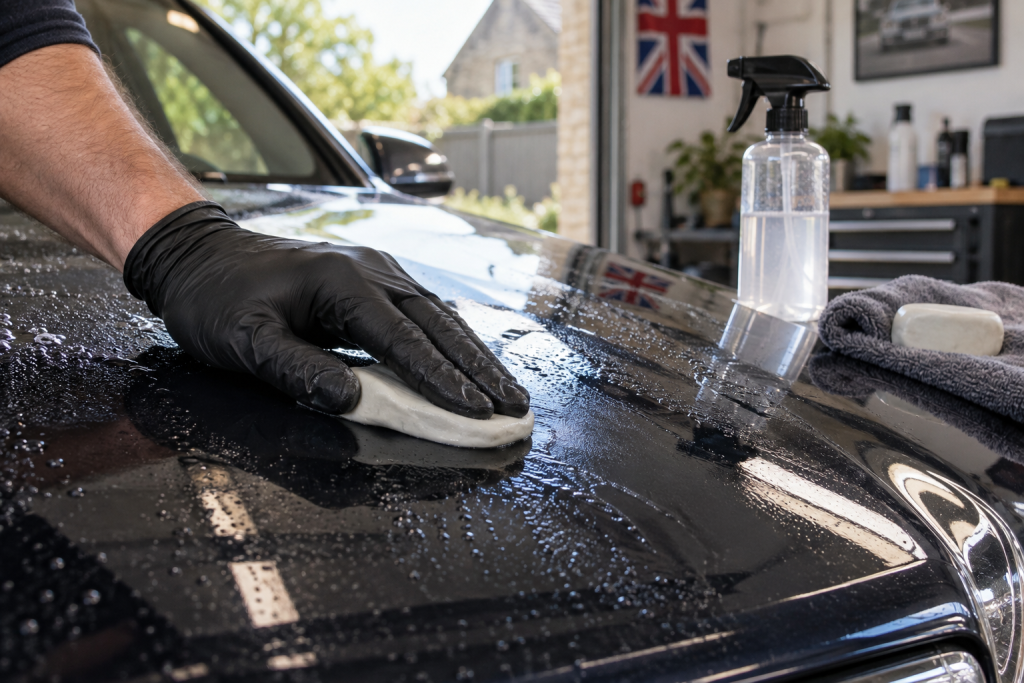
If the car is clean but the paint still feels rough, clay may be the missing preparation step. I’d try a small area first, after washing and appropriate targeted cleaning. That tells you whether claying is useful and what the finish needs afterwards.
Put clay in the right part of the job
Wash thoroughly and remove relevant tar or iron contamination first. Clay works on bonded material remaining on suitable surfaces. Keeping obvious deposits out of its path makes the inspection and handling easier.
Check the finish and the clay system’s instructions. Matte paint and specialist films have their own requirements. For gloss paint, allow time to inspect the appearance after claying as well as the feel.
The kit I’d start with
The Autoglym clay kit reduces bonded roughness with light, lubricated passes. A matched kit is convenient for occasional preparation because the clay and its specified lubricant are already together.
Read the contents before buying extra bottles. The included polish is available for a separate finishing decision after inspection; its presence in the box doesn’t mean every panel automatically needs polishing.
Try one manageable section
Prepare the clay as directed and apply the specified lubricant generously enough for smooth movement. Use light passes over a small area, keeping the surface lubricated. If the clay drags, stop and address that before continuing.
Inspect the working face frequently. Fold or reshape it as the system directs to expose a usable clean face. A piece dropped on the ground should be discarded from paintwork use rather than kneaded with hidden grit inside.
Wipe away residue as instructed and assess the section. Look at the surface under useful light and check the feel carefully. The goal is a cleaner, smoother preparation surface, without ignoring any new visible marking.
Let the test decide how much to do
If the section improved and the rest of the panel has the same bonded roughness, continue systematically. If some panels are already smooth, there may be no benefit in giving them identical treatment just to complete a lap of the car.
If the test creates visible marring or shows a finish problem, revise the plan before continuing. Clay is a preparation tool, and the paint may need subsequent attention before protection.
Finish the preparation properly
Complete the chosen system’s cleanup and inspect the dry paint. Decide whether hand polishing is appropriate for light finish improvement, or whether the surface is ready for the planned protection.
Clean and store any reusable material according to its instructions, keeping it away from dirt. For the next routine wash, inspect rather than automatically repeating the process. The kit earns its place when the washed paint needs that extra preparation.