How to Remove Tar Spots from Car Paint
Some links in my articles are affiliate links. I may earn a commission when you buy through them.
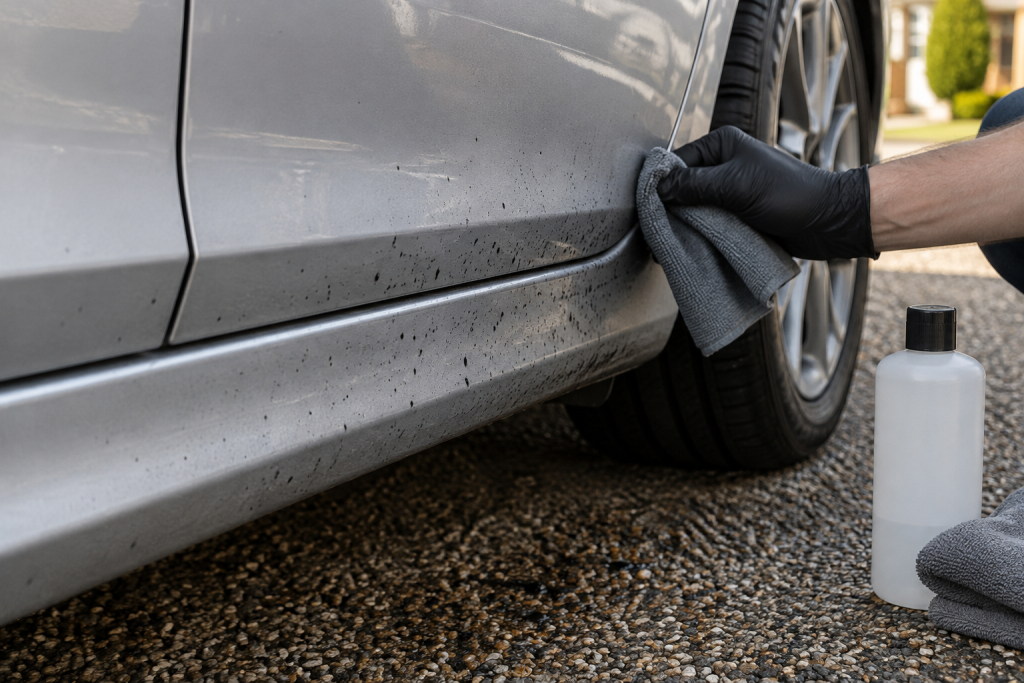
Those black specks behind the wheels can survive a perfectly good wash. If they’re tar, a targeted remover can soften them so you can lift them away without picking at the paint. Intensive Tar Remover is useful for that extra job once the wash has made the remaining deposits easy to see.
Make sure you’re treating a deposit
Wash the area and inspect it on suitable, cool paint. Look for material sitting on the surface rather than a dark chip or a mark within the finish. Take one identifiable speck as your starting point.
Check the product’s approved surfaces, particularly around plastic, film, coatings and repairs. Keep the application controlled near seams and trim. A product useful on sound gloss paint does not automatically belong on every adjacent material.
Work on the specks you can see
Apply Intensive Tar Remover to the affected spots so progress is easier to judge. You can see which deposits respond without covering a clean door in solvent.
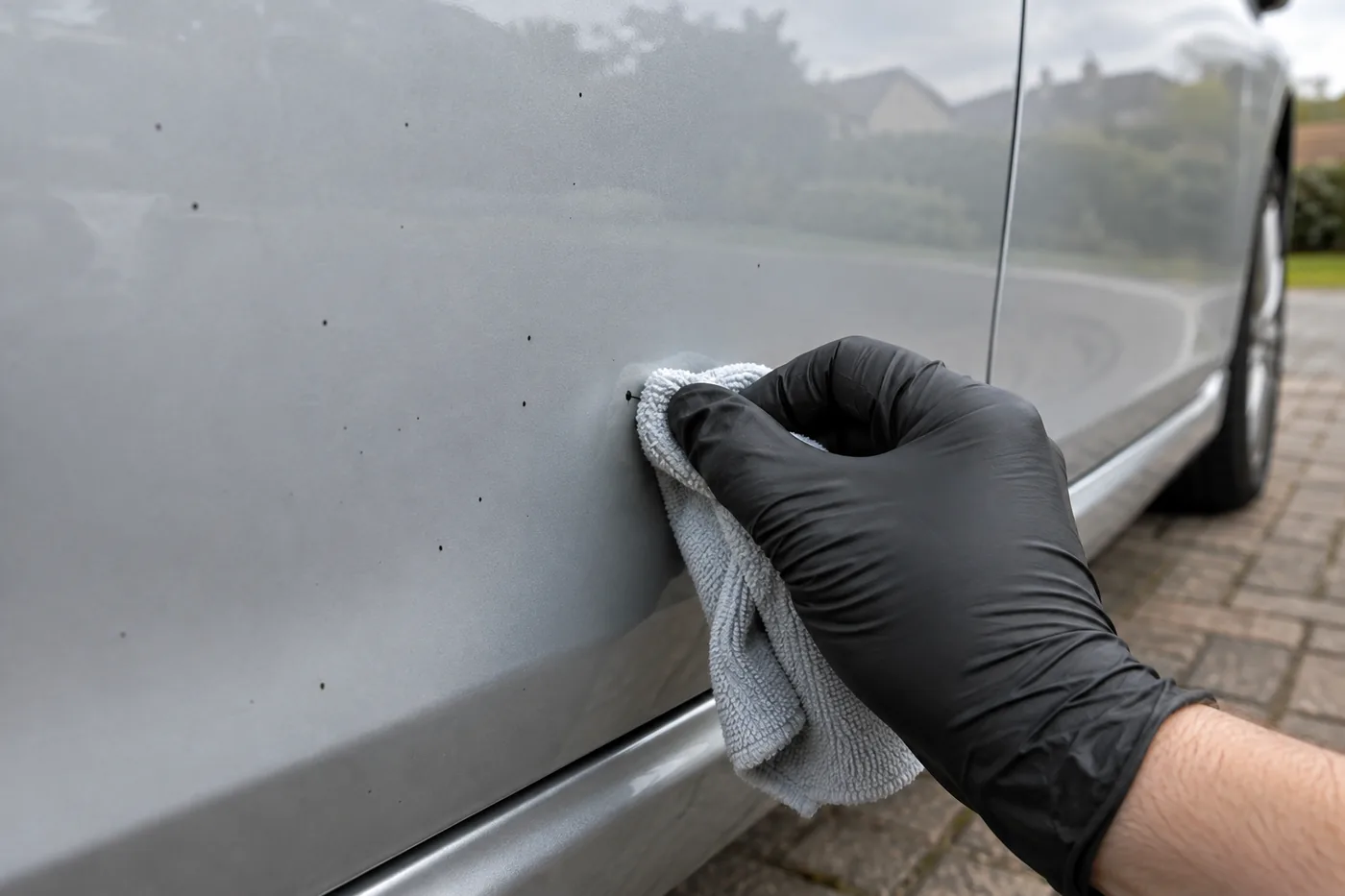
Use the product’s stated application and contact time. Allow it to soften the deposit, then lift the residue with a suitable clean cloth. Turn to a fresh face as sticky material transfers, and finish the required cleanup or wash stage.
Keep that cloth out of the clean drying pile. Once it carries softened tar, it is a specialised dirty-job cloth until it has been properly dealt with.
Inspect before repeating
After cleanup, dry the patch and look again. If the speck has changed, another label-supported application may be useful. If it is unchanged, identify it again before extending contact or rubbing harder.
| What remains | What to consider |
|---|---|
| Softened sticky deposit | Fresh cloth face and the permitted removal method |
| Tiny bonded particles of another kind | Whether iron contamination is the actual problem |
| A dark mark with no removable material | Paint condition or a chip rather than more tar |
| Roughness after targeted treatments | Whether clay preparation is warranted |
Decide what follows the removal
For a maintenance wash, a handful of tar spots does not require a full-car decontamination programme. Treat the affected areas, clean up properly and follow any requirement to restore protection there.
If you are preparing the car for polishing or a coating, place tar removal within that system’s preparation order. It is easier to assess bonded contamination when the sticky deposits have already been dealt with.
Make the next inspection easier
During the next wash, give the lower doors, rear quarters and area behind the wheels a deliberate look. Early attention to visible spots keeps the job manageable and makes it less tempting to scrub an entire panel looking for a change.
Intensive Tar Remover is my useful starting bottle for compatible tar deposits. The technique is controlled softening and clean removal, followed by a fresh look at the actual surface.