How to Clean Leather Car Seats Without a Greasy Finish
Some links in my articles are affiliate links. I may earn a commission when you buy through them.
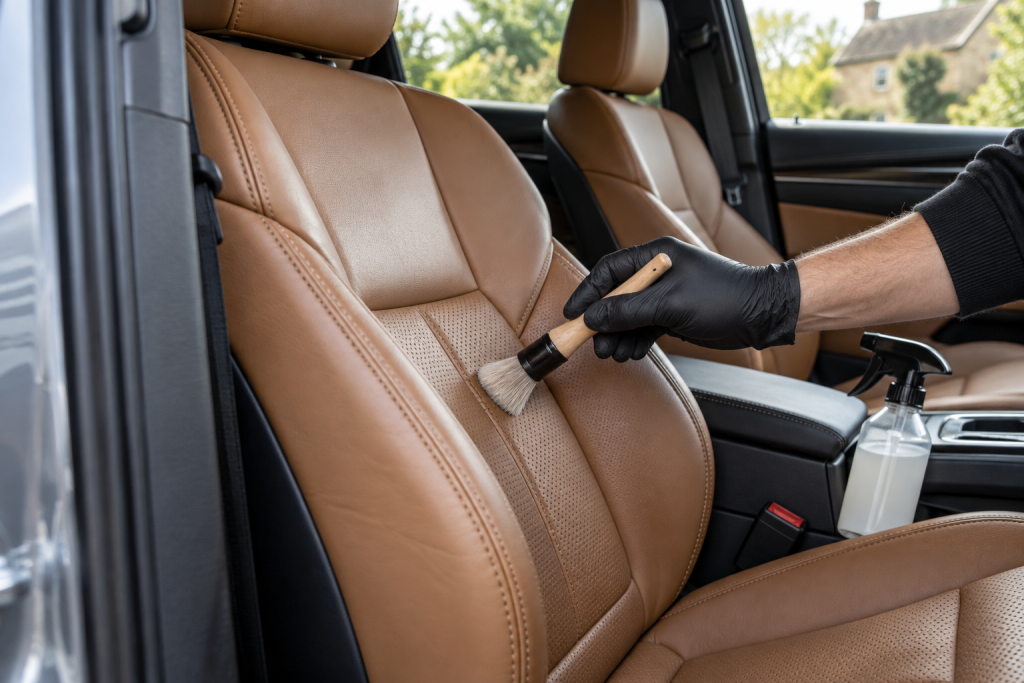
Leather seats can look shiny because they need cleaning, especially on the steering-side bolster and the places you touch most. Start by identifying the material and cleaning a small section gently. The finish to aim for is even, comfortable and appropriate to the seat, rather than wet-looking for its own sake.
Check what the seat is made from
Confirm the vehicle’s leather-care instructions. Smooth finished leather, coated synthetic upholstery, suede-like panels and specialist finishes can need different methods, even on the same seat. Treat each material separately.
Look closely at the bolster, seams and perforations. Soil can be cleaned; worn colour, cracking or damaged coating may need repair. Knowing which you are looking at helps you choose the next step sensibly.
My starting cleaner for compatible leather
Autoglym Leather Cleaner has given me a more even appearance after a light clean and removal of the excess. The useful check was once the seat dried, particularly at the bolster and beside an untreated crease.
Set out a soft vacuum attachment, the compatible cleaner and several clean cloths. Keep a dry cloth ready for residue, and test an inconspicuous area before working across the visible panel.
Remove the loose dirt first
Vacuum crumbs and grit from seams and accessible creases with controlled contact. Open the creases gently where the seat allows it, without pulling at stitching. This stops loose particles travelling under the cloth during cleaning.
Work with the seat cool and enough light to see the finish. Around perforations, controls and seat fittings, keep liquid carefully controlled.
Clean a natural section at a time
Apply the cleaner according to its method, using a modest amount. Work lightly across a cushion or bolster section, then collect loosened soil and product with a clean cloth. Turn to fresh faces as they become loaded.
Give seams and panel edges deliberate attention, but avoid leaving pools of cleaner in them. Finish residue removal as directed, then allow the area to dry before judging colour and feel.
If a patch still appears different, compare it in the same light. A shiny worn area may remain visually different after the dirt is gone. Repeated scrubbing is unlikely to make worn coating look new.
Decide separately about conditioning or protection
Use the seat maker’s advice and the care system intended for the material. A clean modern coated seat does not automatically need an oily-looking finishing layer. If you choose a compatible treatment, apply it at the proper stage and give it the required settling time.
For frequent use, pay attention to high-contact areas before they become heavily soiled. Keep the result dry and comfortable to sit on, and avoid transferring excess product onto clothing.
If your seats mix leather with Alcantara, follow the Alcantara route for the textile panels. For the rest of the cabin, the interior-cleaning order helps you finish the seats without dropping fresh dust onto them afterwards.