Some links in my articles are affiliate links. I may earn a commission when you buy through them.
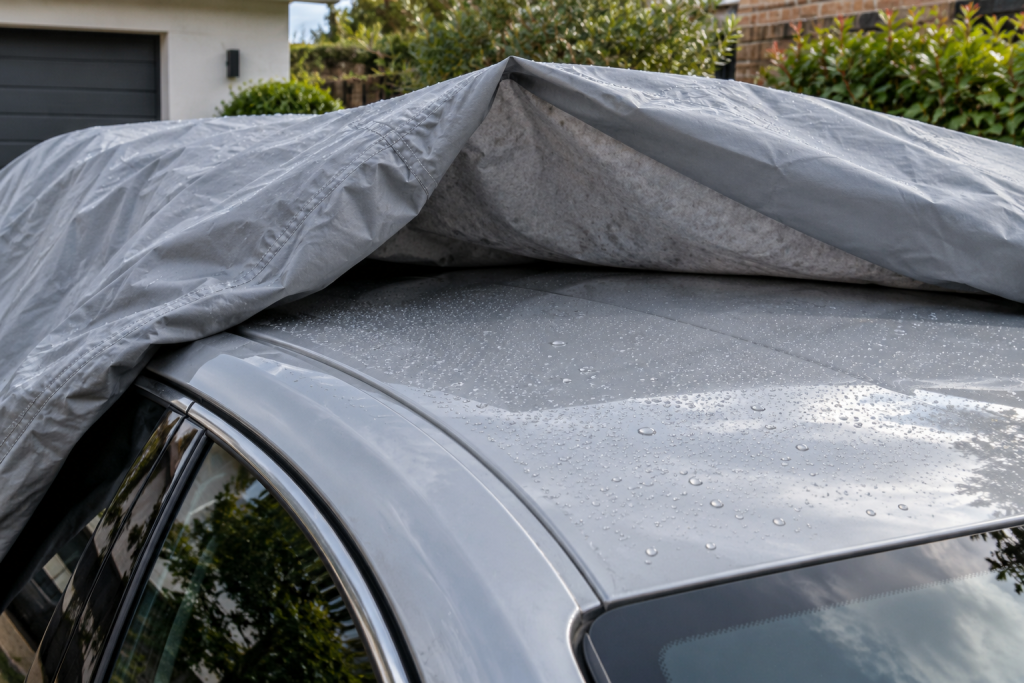
If you find moisture beneath a car cover, take the cover off when conditions allow and inspect both the car and the inside of the fabric. Don’t assume the cover has failed, but don’t leave water trapped indefinitely either. A damp patch can come from condensation, water entering at a seam or opening, or a cover and car that were damp when fitted.
Dry and inspect the car and cover before refitting them in line with their instructions. If the same area keeps getting wet, look at the seam, fit and parking position rather than buying a replacement on the strength of the word “breathable”.
First, find where the water is
Water on the outside of a cover after rain is expected. Moisture between cover and bodywork is a separate question: note whether it is spread over several panels or concentrated below a seam, pocket or fold. A puddle in a sagging section deserves a fit check. Photographing the same area after different weather can help you explain the problem to the supplier without guessing the cause.
Water inside the cabin is different again. A cover cannot diagnose a leaking door seal, wet carpet or blocked drain. Check the cabin moisture separately and tackle the source before relying on a dehumidifier bag.
Condensation can form beneath a cover
Water vapour can condense on a cool surface. Classic Additions says condensation can occur beneath its outdoor covers and advises regular checks and removal on dry days where possible. Its explanation concerns its own products and is not a guarantee that moisture will evaporate safely under every cover or on every finish.
If you see persistent dampness, lift the cover in suitable weather, inspect the finish and allow the car and cover to dry. Check the supplier’s recommendations for your material and parking surface. Classic Additions asks owners to check suitability where the car is not on hardstanding and for several specialist finishes. A freshly repainted or unusual finish deserves particular care: speak to the paintwork specialist and cover supplier before continuing.
Look for a route in
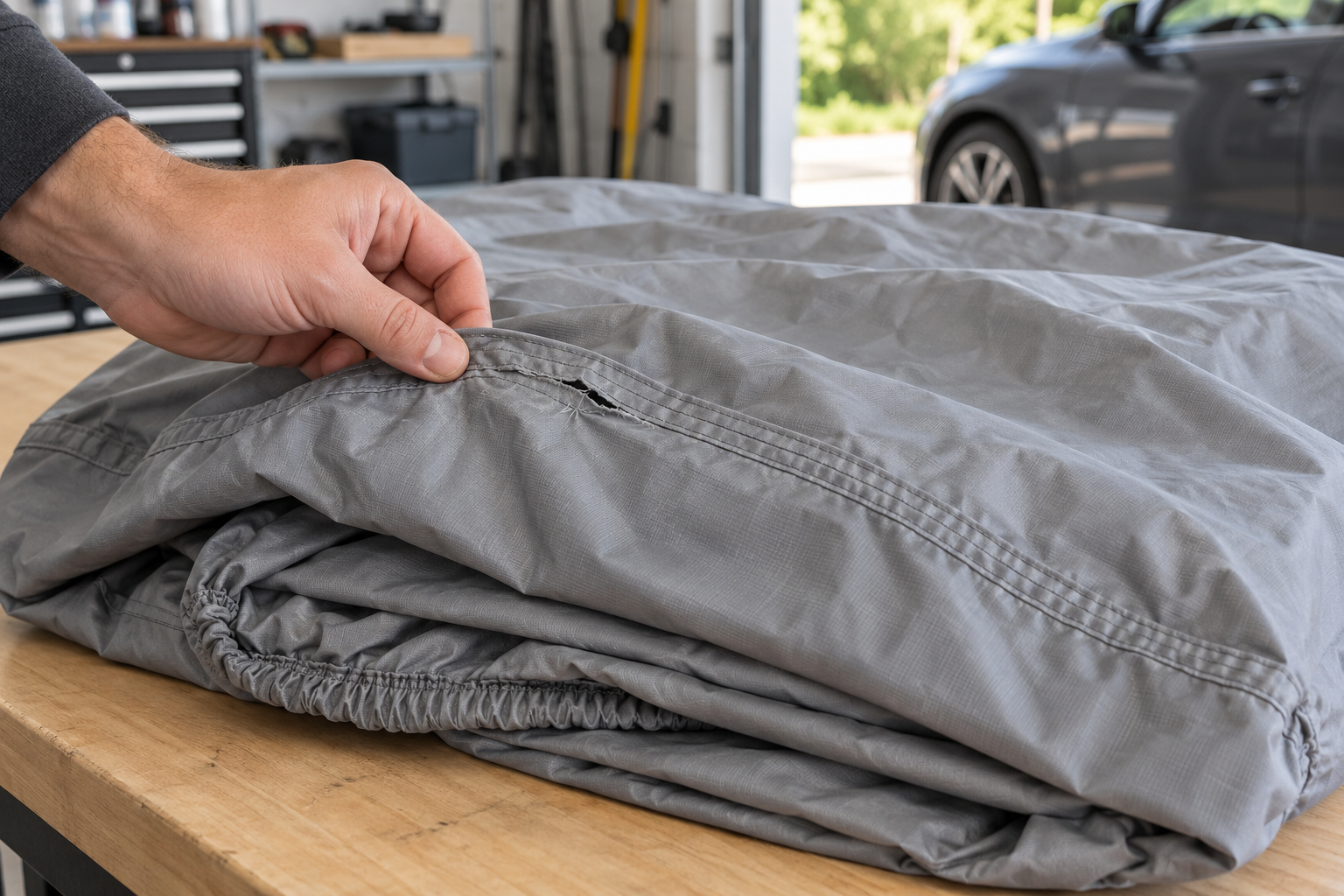
Inspect seams, mirror pockets, fixings and any tears. A damp patch beneath one seam after rain may point towards ingress, but its position alone does not prove it. Classic Additions notes that occasional seam seepage is possible even with the waterproof fabric used in its Ultimate outdoor covers.
Check whether the cover is intended for sustained outdoor exposure. A showerproof occasional-use cover and a full outdoor cover can have different limits. A cover that has shifted or collected a deep fold may need its fit and straps checked; don’t pull or modify the cover beyond the supplier’s instructions to force it into place.
Clean and dry the cover correctly
Dirt on the inside matters as well as water. Keep that face away from the ground when removing and folding the cover. Clean it using its own care instructions, then let it dry before storing it. Classic Additions describes hosing and gently sponging its Ultimate outdoor fabric with mild car shampoo, rinsing and natural drying; its indoor covers have different instructions. Don’t transfer that method automatically to another product.
If the cover repeatedly holds water against the car, the lining is contaminated, or the fit cannot be secured as instructed, stop using it while you investigate. Contact the supplier with the model, vehicle, parking position and photos, and ask whether that combination is suitable. If the finish has changed, get advice from the person responsible for the paintwork before rubbing or polishing it.