Some links in my articles are affiliate links. I may earn a commission when you buy through them.
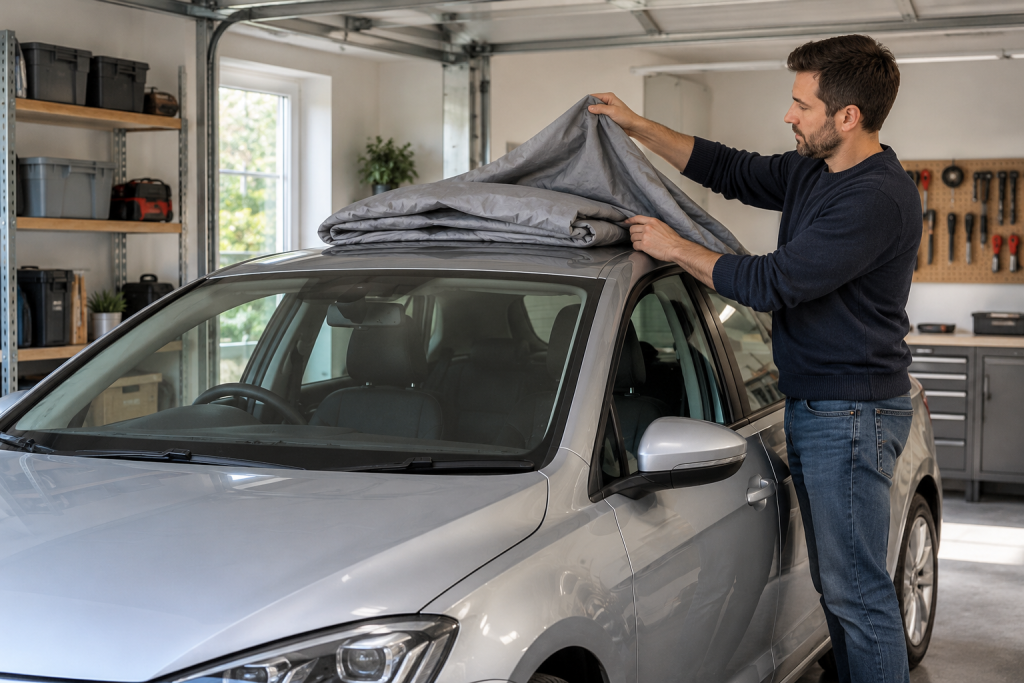
You’ve washed and dried the car, the cover is ready, and now you’re wondering how to get a big sheet of fabric over the roof without picking up half the driveway. Start with a clean car and a clean, dry cover, and plan where the cover will go when you take it off. Work gently with manageable folds and keep any straps away from the paint while you position it.
If the car is already dusty or gritty, clean it before covering it. A soft lining can still carry whatever is trapped against the panel. If you don’t have enough time to clean the car or deal with a wet cover when it comes off, leaving it uncovered until you can do the job properly may be the easier choice.
Before you unfold anything
Check that the cover is intended for the place where the car is parked. An indoor dust cover and an outdoor cover do different jobs. If you are still deciding, compare full, half and indoor car covers first. Classic Additions specifies indoor use only for its indoor covers, and says not to put those particular covers underneath an outdoor one.
Look at the cover’s own instructions for the correct front and rear, attachment points and any conditions for use. Check your finish too. Classic Additions asks owners to check its outdoor cover’s suitability for certain finishes and materials, including recently resprayed paint and fibreglass. Ask your cover supplier and paintwork specialist if you are unsure.
Give yourself room to walk around the car and somewhere clean to set the folded cover. If the weather makes it hard to control the material, wait for a calmer opportunity rather than letting it flap across the paint.
Fit it in manageable folds
Identify the front and rear using the maker’s label or instructions. Place the folded cover on the clean car only where the instructions allow, and unfold it a section at a time. Keep an eye on the part still in your hands as well as the part over the car: a loose strap can trail along the ground.
Guide the cover over mirrors, aerials and any spoiler without forcing it. If it snags or won’t reach its intended position comfortably, stop and check the fit. A cover that’s long enough on paper may still have the wrong shape around a tall roof, mirror positions or a body kit. Don’t pull hard on a mirror to make the rest of the fabric reach.
Fasten the straps and fixings supplied or approved for your cover using the maker’s routing. The tension matters: Classic Additions recommends a snug fit for its Ultimate outdoor cover, while Coverzone says its Stormforce underbody straps should not be pulled tight. Check the instructions for your own cover. Look along both sides for a displaced corner, a buckle against paint or a strap caught on something beneath the car.
For Stormforce, Coverzone suggests laying the detachable straps in the parking space before parking, then fitting the cover and clipping the straps to it. That can save feeding them under the car afterwards, provided there is a safe, clear space to do it. Keep the straps and buckles away from the wheels as you park and check them before fastening.
When you remove it, think about the inside face
Choose a dry opportunity if possible. Release the fixings first and keep their ends under control. Coverzone’s Stormforce method is to release the elasticated hems, fold the side panels onto the roof and roll the cover up, keeping the dirty outer face away from the clean inner surface. Keep it off the ground as you work. A second person can help with a large or awkward cover, especially where there isn’t much room beside the car.
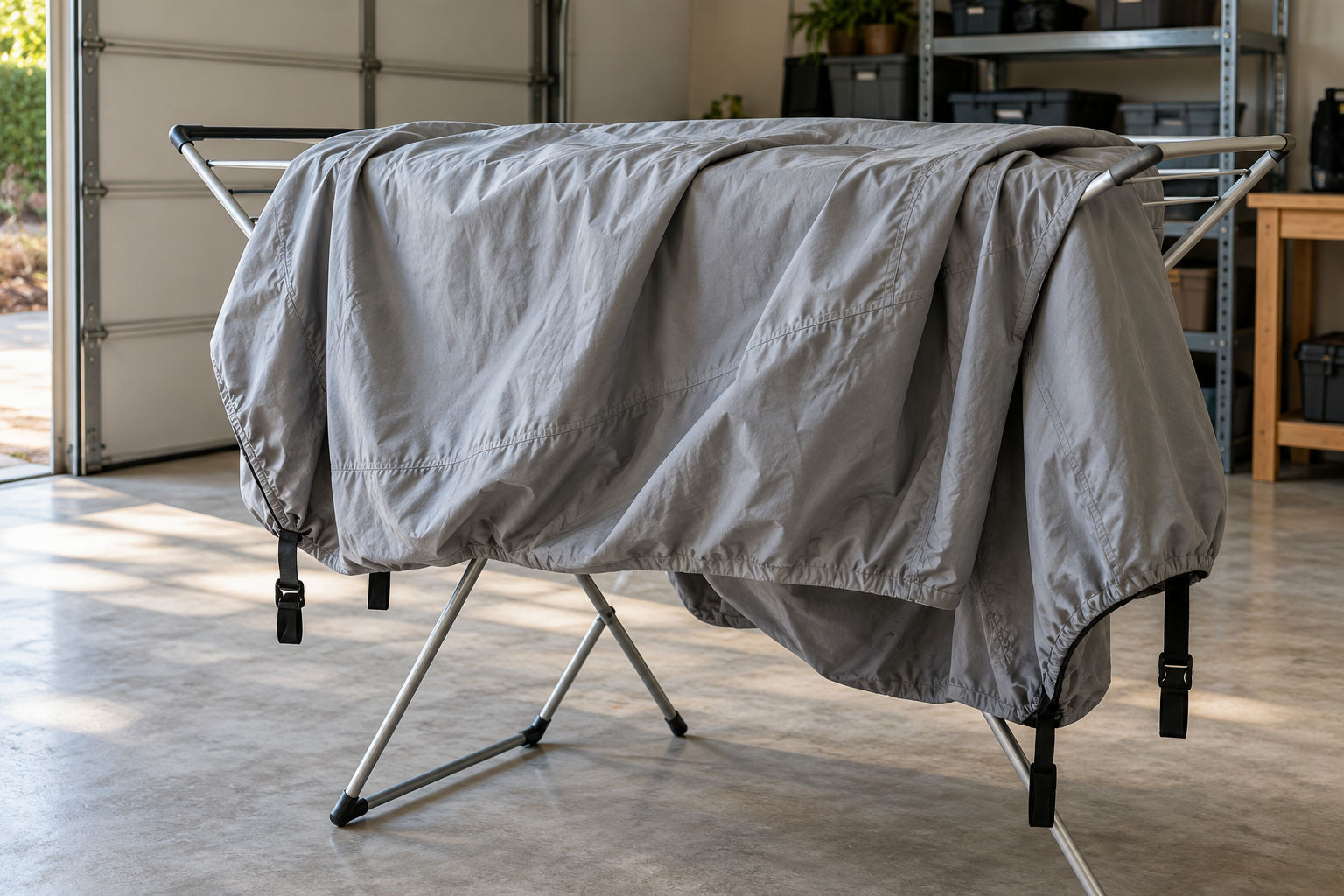
Don’t pack it straight into a bag if the inside is damp. Spread or hang it somewhere clean and suitable for the material until it is dry, then store it according to its instructions. Inspect the car and the cover before the next use. If the inside has collected grit, clean it by the maker’s approved method rather than brushing the dirt over the next panel.
Check underneath instead of leaving it for months
An outdoor cover still needs regular checks. Classic Additions advises removing its cover on dry days when possible and notes that condensation can form underneath during inclement weather. Look for water held in folds, places where fabric has moved, debris trapped at the edge and anything caught under straps.
Take the cover off when conditions allow, dry and inspect the car and cover, then check whether the cover and parking position are right for the job. If you find water beneath the cover, check for condensation, a shifted fit or a route in through a seam. Persistent water inside the car needs separate cabin-moisture checks.
Clean the cover in the way its maker specifies
Don’t assume the car cover can go into the same wash as a microfibre towel. Classic Additions gives different instructions for its own products: some indoor covers can be machine-washed at the specified temperature, while its outdoor covers are cleaned on the car with a hose and mild car shampoo, then rinsed and dried naturally. Those are examples for those particular products, not a washing-machine setting for every cover.
Check the care label on yours before choosing water temperature, detergent or drying method. Allow it to dry fully, and inspect any straps and seams as you fold it.