Some links in my articles are affiliate links. I may earn a commission when you buy through them.
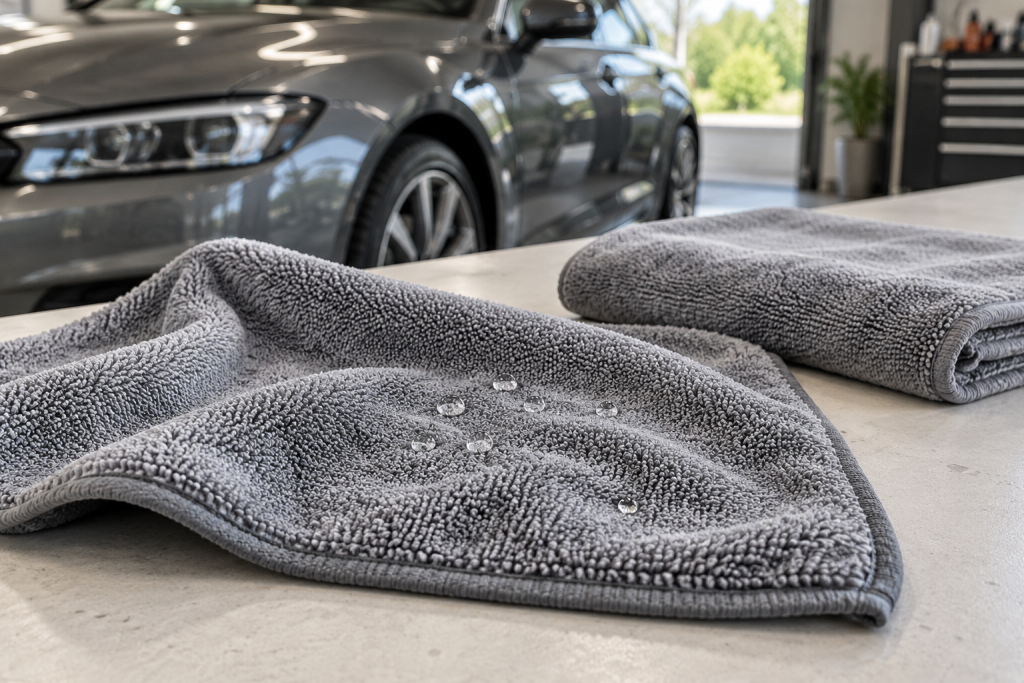
When a drying towel starts pushing water around, don’t immediately bin it or add more drying spray. First swap to a clean, dry towel on the same freshly washed area. If the spare picks up the water, investigate the first towel: it may simply be full, carrying product residue or overdue for a proper wash.
If you haven’t got a dependable spare, a CarMax XL drying towel gives you a manageable main drying towel; Amazon Basics three-pack cloths are useful for smaller finishing jobs. But buying another cloth won’t help for long if fabric softener or dirty storage is causing the trouble. Work through the checks below before deciding what needs replacing.
A towel that dried the roof happily but starts leaving wet trails down the doors may have reached the point where it needs changing. Feel how wet it is, open the fold and try a previously unused clean area. If that doesn’t collect water cleanly, put it aside and use the spare.
Don’t assume every wet trail means the fibres are ruined. A big car, plenty of water left after rinsing and finishing around dripping mirrors all add to the job. A small cloth can be useful and still be the wrong tool to dry every panel without a change.
I keep turning the cloth as moisture and residue build up, rather than squeezing every last patch of drying out of the same face. It also makes it easier to notice an unwanted mark before it travels across the next panel.
Was it poor from the first wipe?
Look back at what happened between the last good wash and this one. Did the towel go through a mixed laundry load? Was fabric softener added? Did you use it to buff a wax or spray sealant, then put it back with the drying towels? These clues give you a much better starting point than the age of the cloth.
CarMax explicitly says fabric softener reduces absorbency in its twisted-loop towels. Its care directions specify a 40°C detergent wash without softener. If yours is that towel, return to that routine. For a different make, use its stated wash temperature rather than turning up the heat in the hope of rescuing it.
Check the detergent dose for the load and your water hardness. A small towel load doesn’t need the amount intended for a full drum of clothes. If the rinse is still visibly sudsy, rinse again; don’t dry the towel with that detergent still in it. Clean the machine’s softener dispenser according to its instructions if it has been feeding softener into previous loads.
Inspect the fibres before trying a recovery wash
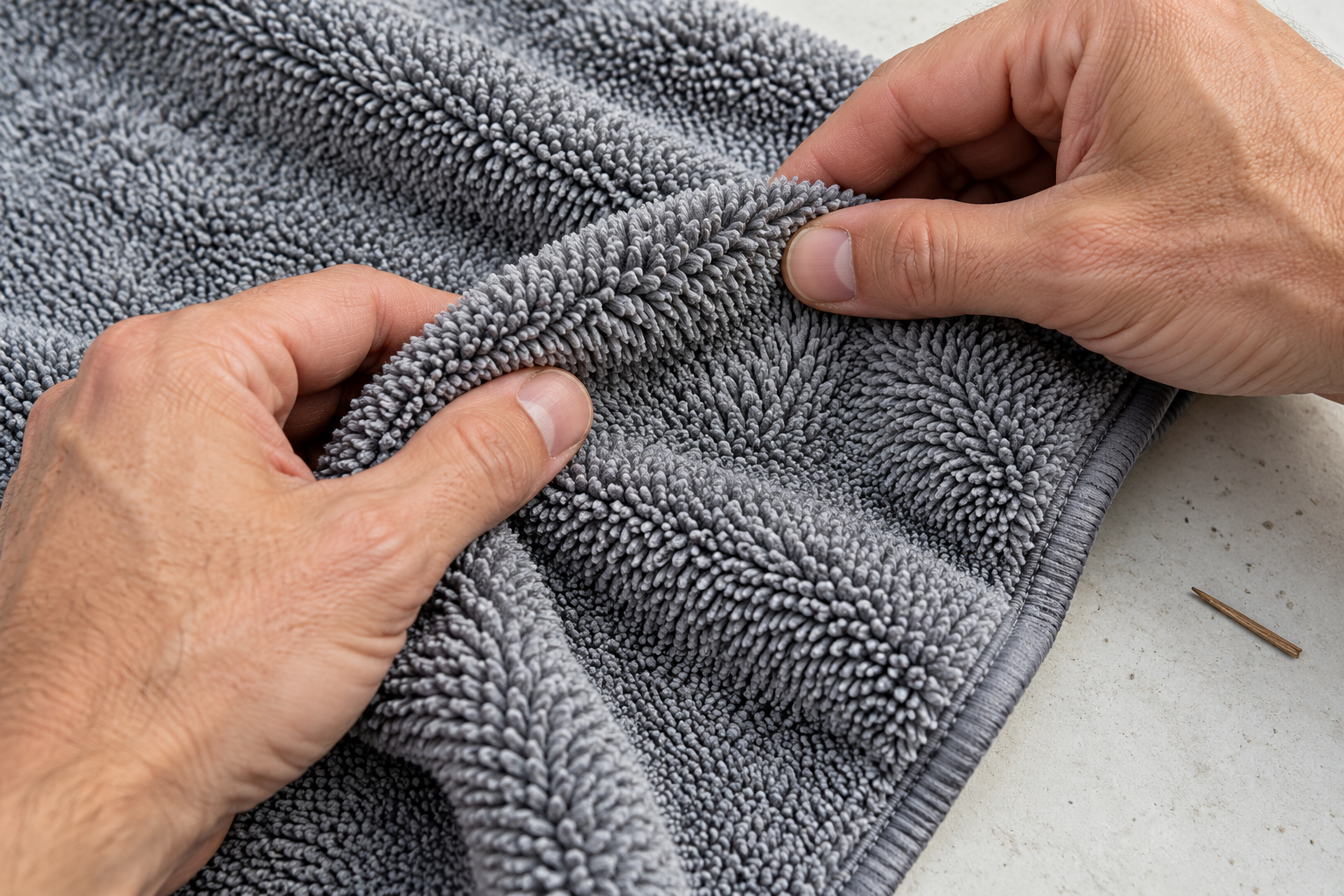
Spread the towel in good light and work through both faces and the edges. Part the pile gently, looking for grit, tiny plant fragments or hard patches. A pale speck buried in a dark cloth can be much easier to spot when you open the fibres than when you glance at the folded towel.
Open the pile and check the edges in good light. A soft-feeling towel can still contain a small hard fragment.
If something remains trapped, keep that towel away from paint. Washing is not proof that every particle has gone. Reassigning a questionable cloth to painted door shuts can move the same problem to another painted surface, so mark it clearly and choose a task where its condition is acceptable.
Check for torn stitching, fraying and permanently stiff or matted areas as well. If a hard patch survives cleaning and you can’t identify or remove it, retire the towel from paintwork. Don’t try to flatten it by pressing harder during drying.
Try one careful wash, then check it away from the car
Wash the affected towel separately from greasy or heavily product-loaded cloths, using its own care directions. Leave out fabric softener. For the CarMax twisted-loop range, the maker specifies detergent and 40°C; it doesn’t provide a universal chemical rescue recipe, so I wouldn’t add solvents, boiling water or a homemade mixture.
An extra rinse is useful when suds remain. Dry the towel by a method its label allows, with enough room to dry fully. Keep it off a dirty radiator, garage floor or dusty bench while you do it. The microfibre-washing guide covers the normal sorting and laundry routine.
Before returning it to paint, compare it with your clean spare using a little plain water on a clean non-painted surface, such as a clean glazed plate. Use a fresh area of each cloth. You’re checking whether the disappointing behaviour is still obvious, not measuring capacity or proving either cloth is safe for paint. Inspect the fibres again afterwards.
If it still pushes water around and you can’t establish a clean, usable face, replace it for the drying job. Repeating increasingly aggressive washes is a poor way to look after a towel you no longer trust.
Is the water actually coming back out of the car?
A panel can dry properly and then acquire a fresh line of water from a mirror housing, badge or trim edge. Watch where the line starts. If it appears after you’ve finished, particularly when a door opens or the car moves, a new main towel is unlikely to solve it.
Use a separate small cloth to catch those drips, keeping it away from dirty recesses. The Amazon Basics cloths are handy for this because you can hold a compact folded face beneath the drip rather than poke the main towel into a gap. Give the car a final walk-round before applying wax or putting the clean towels away.
Also distinguish movable water from a fixed mark. If the panel is dry but a ring remains, stop rubbing it with the drying towel and use the water-spot guide. More dry wiping won’t establish what the mark is.
Replace for the right reason
Replace a towel when it remains contaminated, damaged or unreliable after appropriate care. If the only problem is that it becomes full partway around the car, add a clean spare or choose a different size. The drying-towel buying guide compares broad-panel coverage with easier handling.
Keep the replacement strictly for drying clean panels, wash it before residue accumulates and store it covered once completely dry. That way you’re fixing the cause as well as replenishing the towel shelf.