Some links in my articles are affiliate links. I may earn a commission when you buy through them.
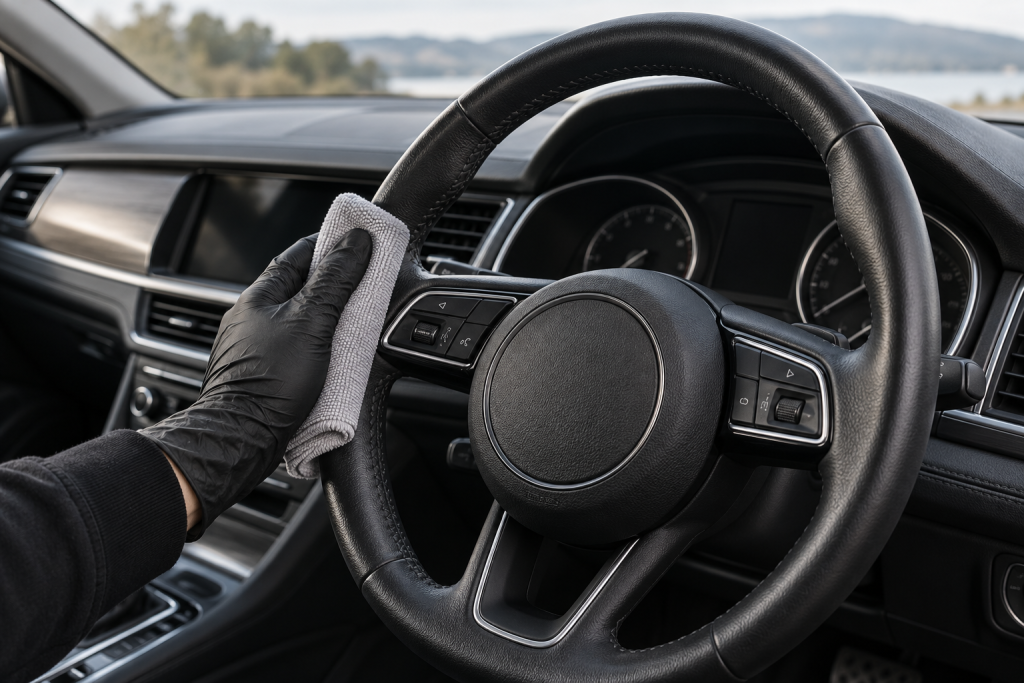
A steering wheel can feel grubby while the rest of the cabin still looks respectable. The places your hands hold need deliberate cleaning, but I wouldn’t scrub the entire wheel as though the rim, buttons and centre cover were one material. Identify the rim first, then use a controlled cloth method and let it dry before judging the grip.
For sound finished automotive leather, Autoglym Leather Cleaner is a cleaner to consider where your vehicle permits it. For an ordinary compatible plastic or vinyl rim, a suitable interior cleaner may be the appropriate route. Alcantara, suede-like coverings, wood and specialist coatings need their own care method. Keep dressings and tyre-shine products off the grip.
- Park safely, switch the car off and check the rim material and condition.
- Lift loose dust, then try the approved cleaner on a small inconspicuous area.
- Work around the rim in short sections, collecting residue without soaking seams or controls.
- Allow it to dry fully and check the whole grip before driving.
Work out what the rim is made from
Check the vehicle handbook or original specification if you are unsure. Stitching does not establish that every part of a wheel is the same leather, and a soft-feel covering may be a synthetic material. A wheel can combine a leather rim, gloss-black spokes, painted buttons and a separate centre cover.
Look for peeling, worn colour, cracking or a sticky coating before cleaning. Photograph a doubtful area. If the finish is coming away, cleaning harder to chase a uniform matt appearance may make the difference between the good and worn sections more obvious.
Remove rings or anything that could catch the covering. Volvo’s leather-wheel guidance specifically flags sharp objects such as rings. Keep the cleaning cloth clear of jewellery as you change your hand position.
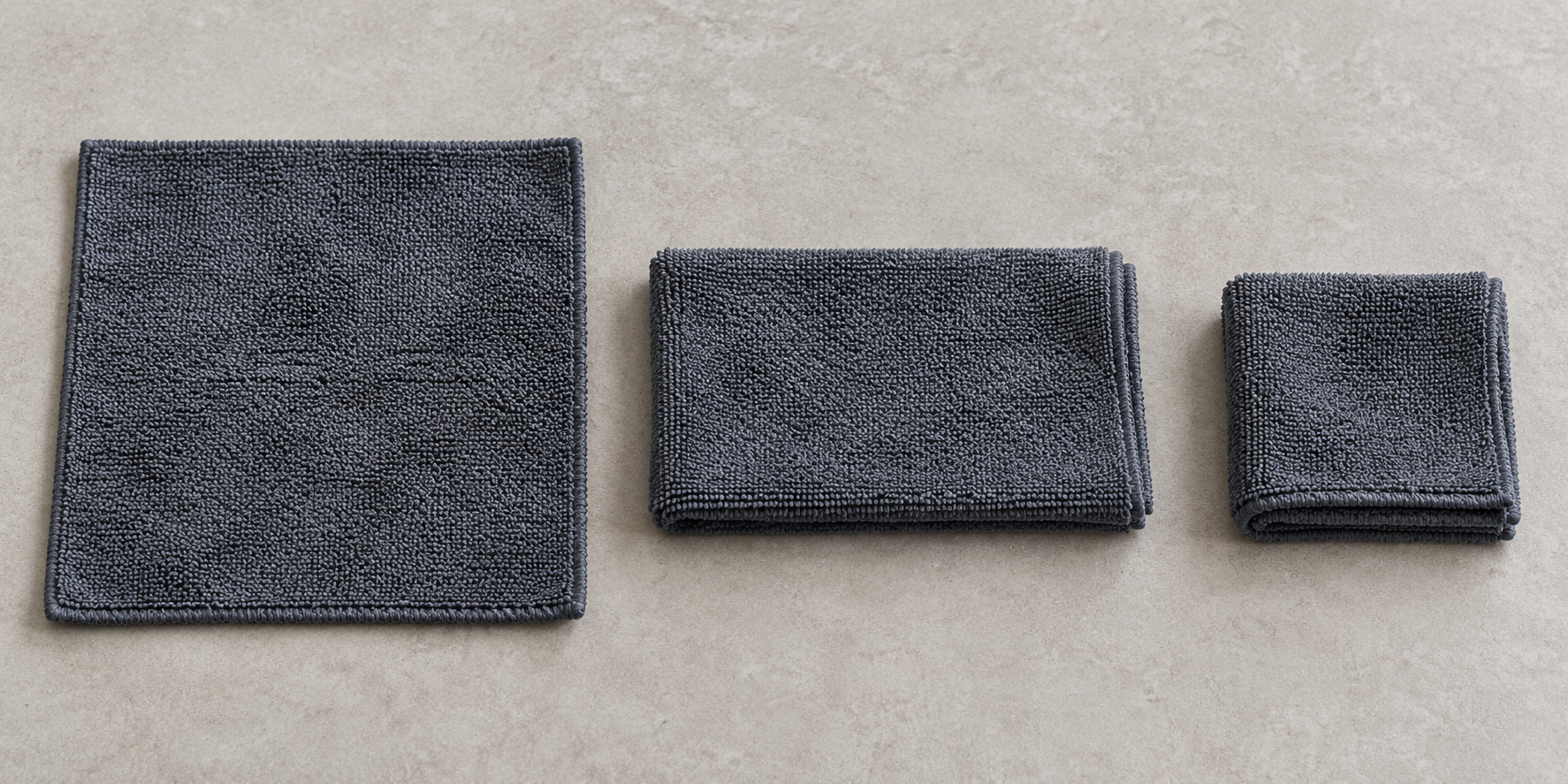
Set out a clean application cloth, a separate damp removal cloth where the product requires one, and a dry finishing cloth. A dashboard-dressing cloth is a poor choice here, even if it appears clean.
Clean a finished leather rim in short sections
Start with the vehicle maker’s approved care route. If Leather Cleaner is suitable for the particular finish, its current UK method calls for shaking the bottle, checking an inconspicuous area, applying sparingly through a microfibre and removing the remaining cleaner after two minutes with a clean damp cloth. Let the surface dry naturally. It excludes unsealed leather, suede and highly porous finishes.
Use a short accessible section of the outer rim for the trial. Apply enough through the cloth to work the area without leaving liquid collecting at stitching or running towards a spoke. Use gentle contact around the curve and remove the lifted dirt as you go through the product’s removal stage.
Work the inside of the rim as deliberately as the front. The section under a thumb and the back of the rim can need attention even when the visible face looks tidy. Change your grip and cloth face to reach them; do not pull hard on a seam to expose a deeper edge.
My leather-cleaning check is the dry colour and feel after the excess has been removed. A wet section can look impressively rich while telling you very little about the finish you will be holding later. Assess the trial before continuing around the rest of the rim.
Autoglym’s general leather routine also includes a later balm stage. A steering-wheel grip needs a separate decision about any conditioning product: use only what the vehicle permits there, and do not automatically transfer a seat-finishing treatment onto the wheel.
Plastic, vinyl and textile rims need different decisions
For a sound plastic or vinyl rim, start with the car’s specified gentle cleaning method. When a compatible cleaning product is needed, apply it through a clean cloth, collect its residue and finish dry. The interior-cleaner guide explains the difference between maintenance sprays and a more thorough cleaning session.
Do not copy a random APC ratio onto an unfamiliar covering. The dilution guide can calculate a permitted mixture, but the bottle and surface instructions establish whether that mixture belongs on the wheel at all.
Alcantara and suede-like material need attention to the pile rather than a leather conditioner. Use the vehicle’s instructions for that particular covering; the Alcantara material guide explains the different handling principles, but a seat-cleaning recipe is not automatic permission to wet a wheel.
Wood, lacquer and carbon-look inserts may have a surface coating that needs a separate method. Treat the visible finish, not the name of the material underneath it.
Keep the buttons and centre cover separate
Wipe accessible switch faces with a controlled cloth and keep moisture out of their edges. Do not spray cleaner into the scroll wheel or work liquid around the buttons with a saturated brush. Check that you are cleaning dirt rather than rubbing away the printed symbol.
Use a separate clean face for piano-black spokes and other glossy details. The rim cloth may contain enough collected dirt to mark a delicate insert. Work where you can see the contact rather than pushing the cloth blind behind a control.
The centre boss is an airbag cover, not another leather panel to scrub. Follow the vehicle’s surface-cleaning instructions there, without prising seams, applying solvent or dismantling anything. Ford’s instrument-panel and wheel guidance excludes strong detergents and chemical solvents around these components.
Judge the dry grip, not a showroom shine
Before driving, check that the entire rim is dry, with no slippery residue or dampness in the areas you hold. Wipe and inspect any missed section using the approved removal method. If the grip still feels wrong, resolve that before using the car.
Some shine may remain after cleaning because the finish has worn or become polished through use. Do not try to erase it with a melamine block, sanding pad or stronger rubbing. An even, sound grip matters more than making a worn wheel match a new product photograph.
Keep the wheel cloth separate for future cleans. A light, regular clean is easier to inspect than waiting until several products, hand creams and accumulated dirt have become one uncertain film.