Choosing a Wheel Brush: Check the Gaps Before You Buy
Some links in my articles are affiliate links. I may earn a commission when you buy through them.
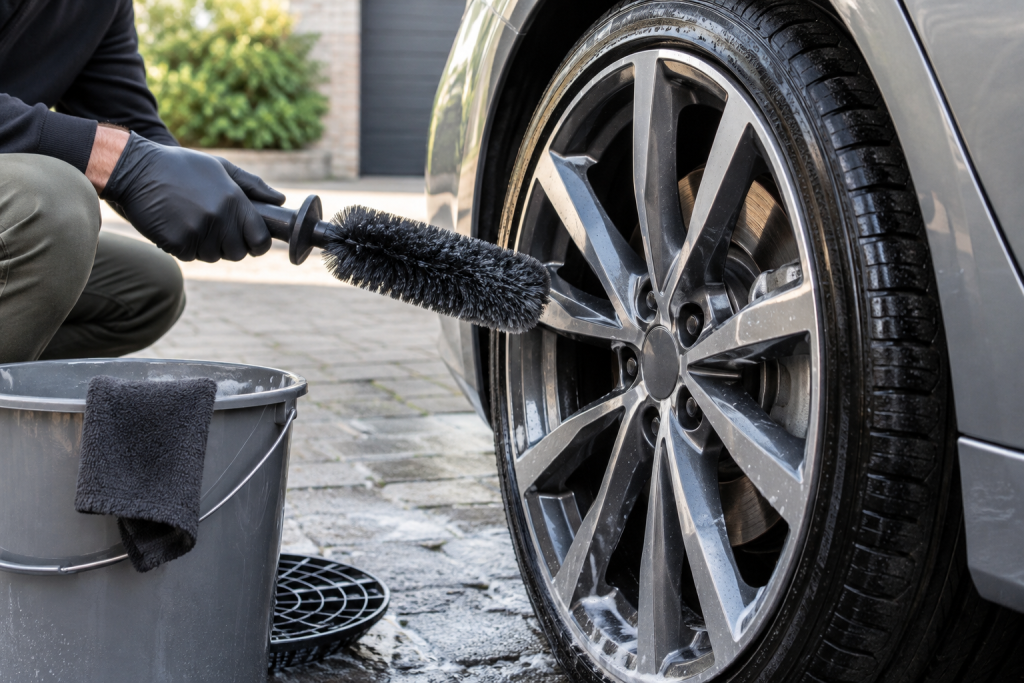
The best-looking wheel brush in the packet is no help if it jams beside your brake caliper. I’d choose the shape for the wheel first, then think about softness and handle length. A brush that fits freely makes the dirt behind the spokes much easier to reach.
My starting choice when the clearance suits it
The medium Meguiar’s Supreme wheel brush is controllable around awkward wheel edges. Its microfibre head is useful for the barrel, with the tool kept strictly in the wheel kit.
Before buying it, check the narrowest route into your own wheel. The obvious large opening between spokes may have much less room behind it once the caliper is taken into account.
Measure the path the brush has to travel
Look through several spoke openings. Notice the distance to the barrel, the gap beside the caliper and any tight angles behind the spoke itself. You need space for the head to enter and move without forcing it against neighbouring components.
Compare those clearances with the product’s actual head dimensions and usable reach. Allow room for the working material rather than treating a compressible head as something to ram through a slot. If a listing omits the dimension you need, get that measurement before choosing the size.
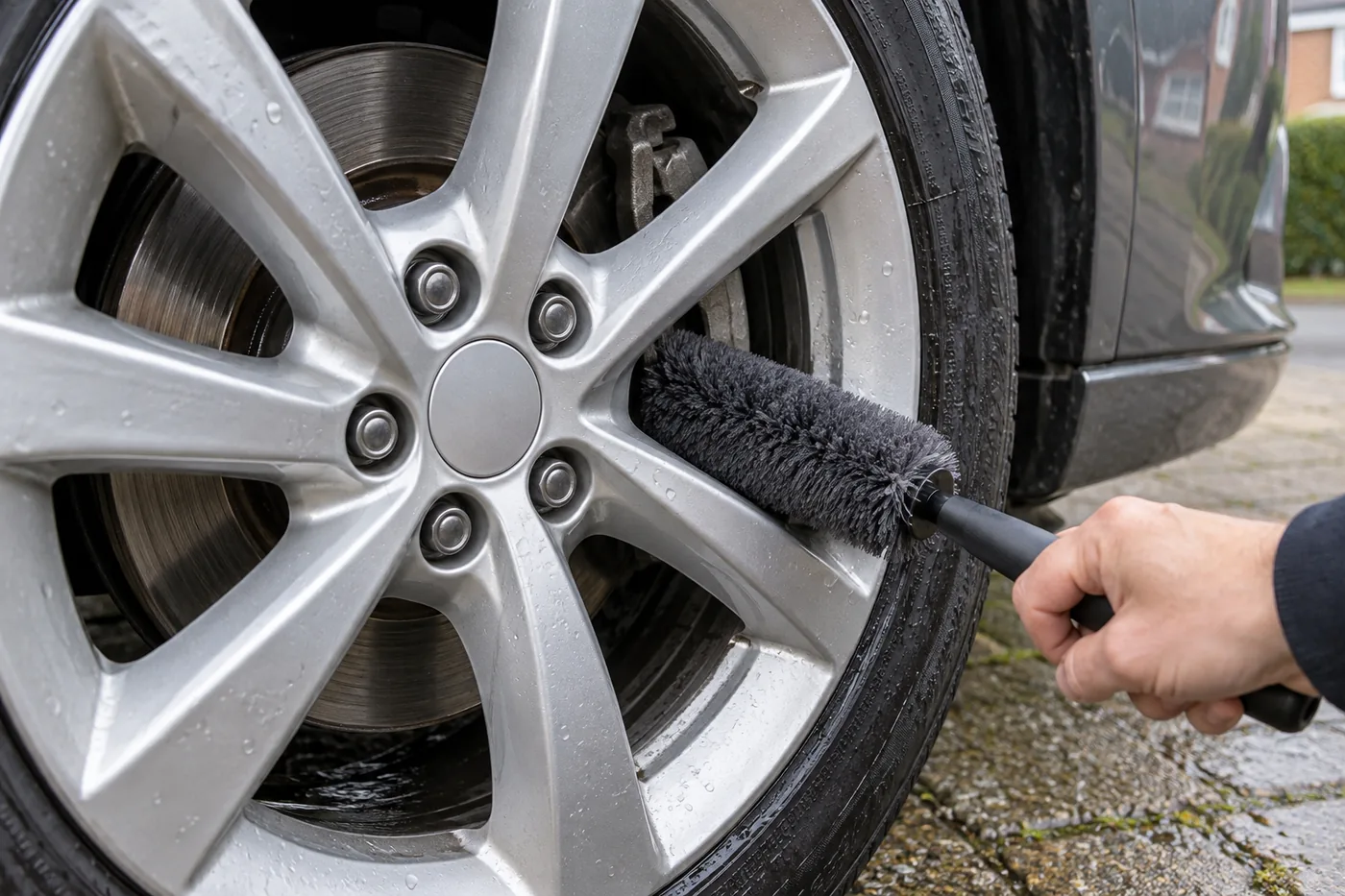
Different shapes earn different jobs
| Tool shape | Where it helps | What to look for |
|---|---|---|
| Medium barrel brush | Open spoke patterns and accessible barrels | Head clearance and controlled withdrawal |
| Slim barrel brush | Narrow openings or reduced caliper clearance | Enough reach without excessive handle flex |
| Soft face brush or mitt | Broad spoke fronts and wheel faces | Easy control around badges and edges |
| Small detailing brush | Bolt recesses and intricate joins | A clean, wheel-only head that fits the recess |
You may need two different shapes. A barrel brush and a small recess brush complement each other; three similar large heads may leave the same inaccessible area untouched.
The handle matters once the brush is wet
Look for a grip you can hold comfortably with wet hands and enough reach to keep your knuckles away from the wheel. Consider how the head moves when you push and pull lightly. You want to know where it is touching, especially behind a spoke.
Withdraw the brush slowly. A fast pull can throw dirty water back across the freshly rinsed face—or your clothes, if the wheel is feeling generous.
Give the cleaner and brush separate roles
Use a compatible cleaner to loosen the soil, then the brush to reach and agitate the accessible areas. Custom Wheel Cleaner is a useful option for compatible wheels; inspect around bolts and spokes after rinsing.
Work one cool wheel at a time. Keep the product within its working time, rinse the brush as it loads up and finish with a thorough rinse of the wheel. No amount of brush reach makes a cleaner suitable for an incompatible finish.
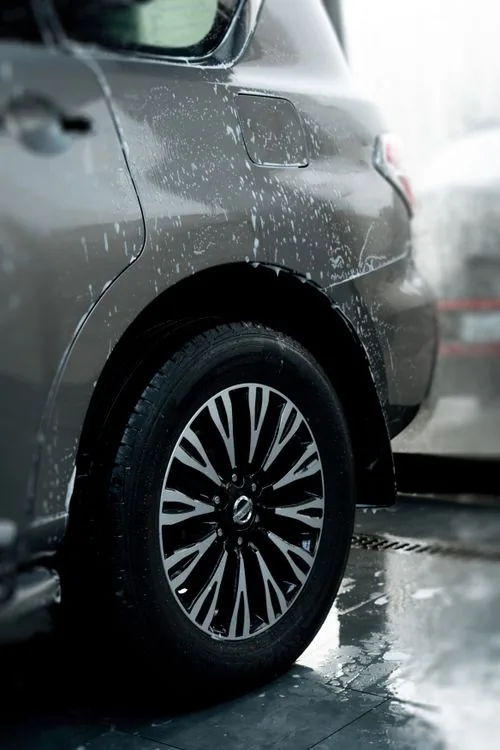
Choose for cleaning afterwards, too
Rinse the tool thoroughly and inspect the head for retained grit. Follow its care instructions and let it dry before storage. Keep it separate from bodywork mitts and interior brushes throughout.
For wheels with enough space, the medium Supreme brush is my starting recommendation. For narrower designs, choose a slimmer head by measurement. The wheel-cleaning guide shows where each tool fits in the complete routine.