Car Microfibre Cloths: Which Towel for Which Job?
Some links in my articles are affiliate links. I may earn a commission when you buy through them.
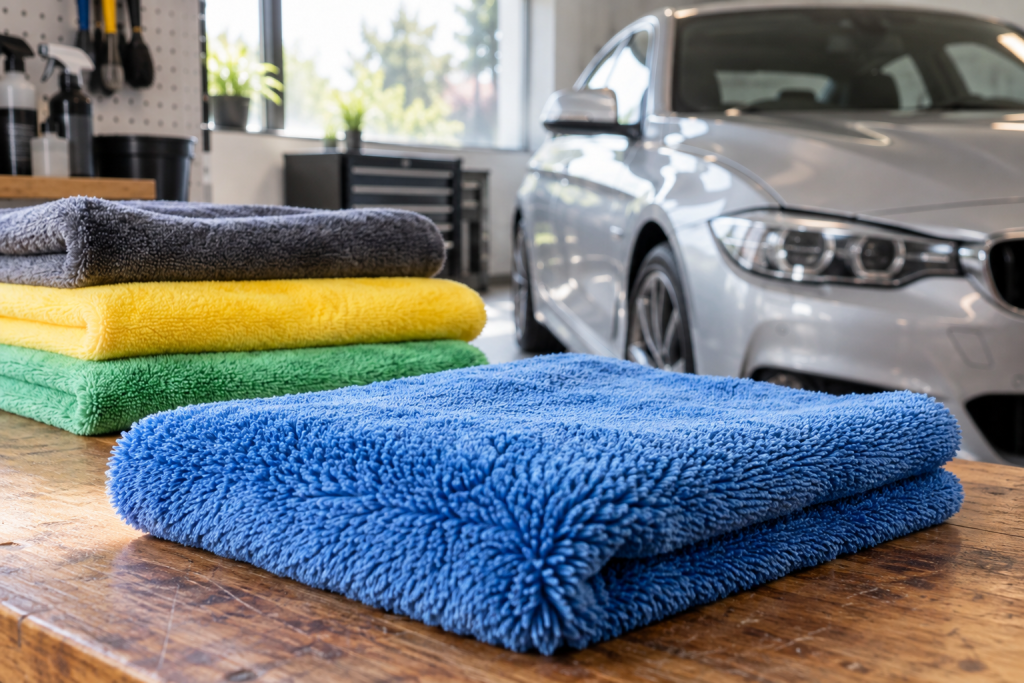
If a cloth leaves streaks, the answer isn’t always a different cleaner. It may be carrying residue from the last job, or simply be the wrong shape for this one. Give drying, glass, interior work and wheels their own cloths and the whole clean becomes easier to control.
Choose by the work, then by the size
| Task | Useful cloth features | The detail to notice |
|---|---|---|
| Drying clean paint | Absorbent drying weave, enough area for the panel | Can you keep the edges off the ground? |
| Glass finishing | Low-lint cloth with a manageable fold | Does it leave a clear view in angled light? |
| Interior cleaning | Soft general-purpose cloths in several clean changes | Can you see when the working face is carrying soil? |
| Wax or spray finishing | Cloth specified by the finishing product | Keep application and final buffing roles distinct |
| Wheels and dirty shuts | Dedicated cloths stored separately | Never return them to the clean paint pile |
Turn the CarMax drying towel to a fresh area as it takes up moisture. On a roof or bonnet, a broad towel can be useful. Around a mirror or low sill, a smaller cloth is often easier to handle.
GSM tells you weight, not the whole story
GSM means grams per square metre. It helps describe the fabric, but it doesn’t tell you whether a cloth will suit glass, release polish residue or fit around a door handle. Weave, pile, edges and cleanliness all matter.
A thick towel can hold plenty of water and also become heavy when wet. A flat glass cloth may look less luxurious while being easier to fold tightly. Choose a cloth for the task rather than treating the highest number as the winner.
Make every clean face easy to find
Fold a suitable cloth into quarters and you have eight faces available. Work through them in an order you recognise. Once a face has collected dirt or residue, fold it inward before moving on. When the usable faces are spent, change the cloth.
That simple routine is especially helpful with glass and interior cleaner. A cloth can still look reasonably clean while carrying enough product to smear the next area. For glass, keep one cloth for cleaning and another dry cloth for the final pass.
How many should you have?
Start with enough to complete each task without borrowing from another pile, plus a clean reserve. The number depends on the car and the condition you start with. A muddy family car needs more changes than a lightly dusty two-seater.
For repeat work, count how many you actually use during a complete clean. Add the time they spend in the wash and drying before buying the next batch. A neatly colour-coded collection is no help if all the drying towels are still wet when the next car arrives.
Store them so the next wash starts clean
Keep fresh towels covered, away from grit and open chemicals. Put used cloths straight into their own container. A towel dropped on the driveway needs proper cleaning and inspection before returning to paintwork; shaking it out isn’t a useful test for embedded grit.
Wash cloths according to their care instructions, separate heavily contaminated jobs and avoid fabric softener. The microfibre washing guide covers sorting, rinsing and drying. If a cloth retains hard particles, rough edges or stubborn oily residue, retire it from delicate surfaces.
The useful upgrade is often a few more clean changes. You can feel a lovely towel in the packet; you judge a good cloth routine by the finish at the end.